
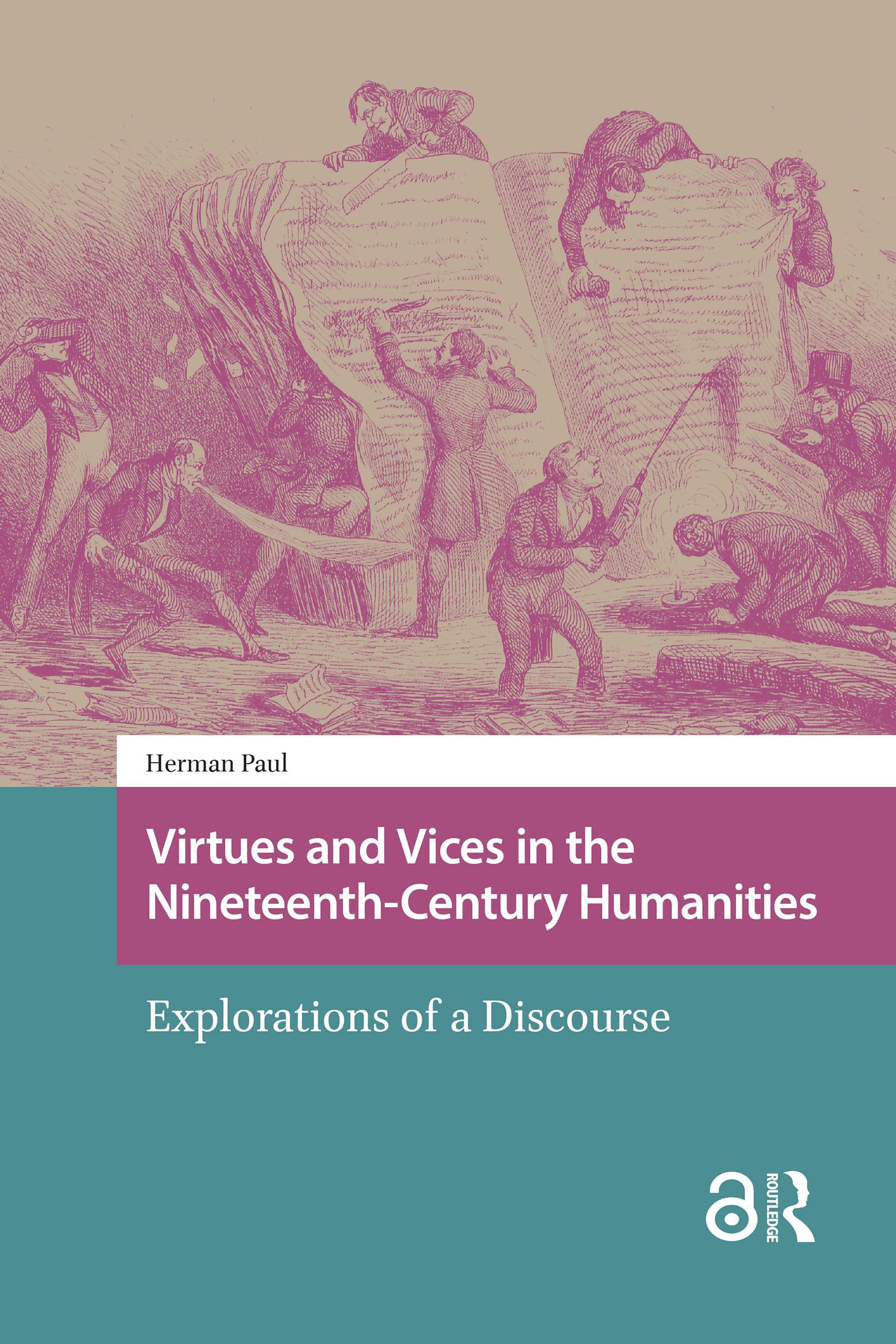
What do scholars do when they talk about virtues (impartiality, accuracy) or vices (dogmatism, prejudice)? Against the common view that such high-minded talk is largely irrelevant to actual scholarly practice, this volume proposes to treat it as a practice in its own right. Drawing on case studies from the nineteenth-century humanities (with occasional forays into physics, chemistry, and medicine), Paul shows that notions of virtue and vice were an evaluative discourse used across the academic spectrum. Paul argues that this evaluative idiom is best studied from a rhetorical point of view, with due attention to repertoires on which scholars drew, explicit or implicit appeals to authority, multi-layered meanings of virtue and vice terms, different uses to which these concepts were put, and societal contexts that lent plausibility to scholars' invocations of virtue and vice. Based on more than a decade of research, this volume will be a key reference for scholars interested in virtues, vices, and the history of the humanities.
Betala smidigt med kort, Klarna, Apple Pay eller Google Pay. Är du inte nöjd har du alltid 14 dagars ångerrätt. Läs mer i våra villkor. Har du några frågor, mejla oss på hello@memmo.org.
Memmo gör det enklare att plugga – var du än är i världen. Hos oss samlar du kursböcker och smarta studieverktyg på ett och samma ställe: sammanfattningar, quiz, poddar och flashcards. Och så Ted, din studiekompis som svarar på allt du undrar. Över 50 000 studenter pluggar redan här – byggt för att du ska lära dig snabbare och stressa mindre.
Du kanske också gillar
Köp boken0