
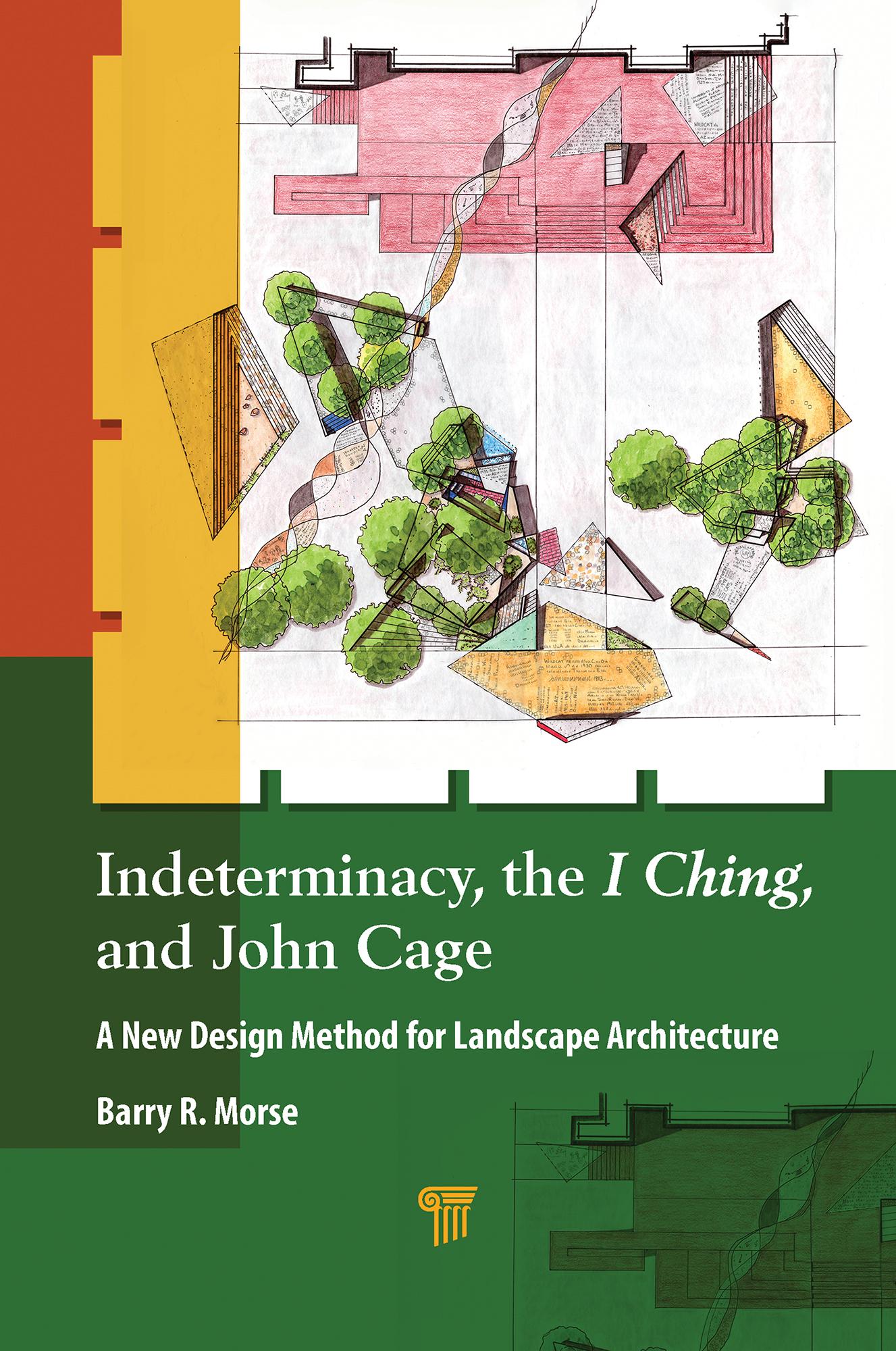
The creative use of indeterminacy, that is, “chance,” is an often-overlooked design opportunity despite the universality of chance in art, nature, science, and life. How can “chance,” a seemingly capricious phenomenon, be made to work for someone? One controlled use of chance is through the Chinese I Ching “chance operations” method of composer and artist John Cage (1912–1992). This book addresses the questions of how one might approach using this method in landscape architectural design, what the outcome of such an indeterminate design would be, and whether or not it could lead to a viable constructed landscape.
In addition, this book answers the question: What is the relationship between the I Ching, John Cage, and the constructed landscape anyway? The final product of the exploration of this method is a new hypothetical redesign of an existing plaza using Cage’s techniques and a comparative evaluation of the new indeterminate concept and the two pre-existing designs, using the original program objectives as a guide against which the three designs can be judged for effectiveness.
Betala smidigt med kort, Klarna, Apple Pay eller Google Pay. Är du inte nöjd har du alltid 14 dagars ångerrätt. Läs mer i våra villkor. Har du några frågor, mejla oss på hello@memmo.org.
Memmo gör det enklare att plugga – var du än är i världen. Hos oss samlar du kursböcker och smarta studieverktyg på ett och samma ställe: sammanfattningar, quiz, poddar och flashcards. Och så Ted, din studiekompis som svarar på allt du undrar. Över 75 000 studenter pluggar redan här – byggt för att du ska lära dig snabbare och stressa mindre.