
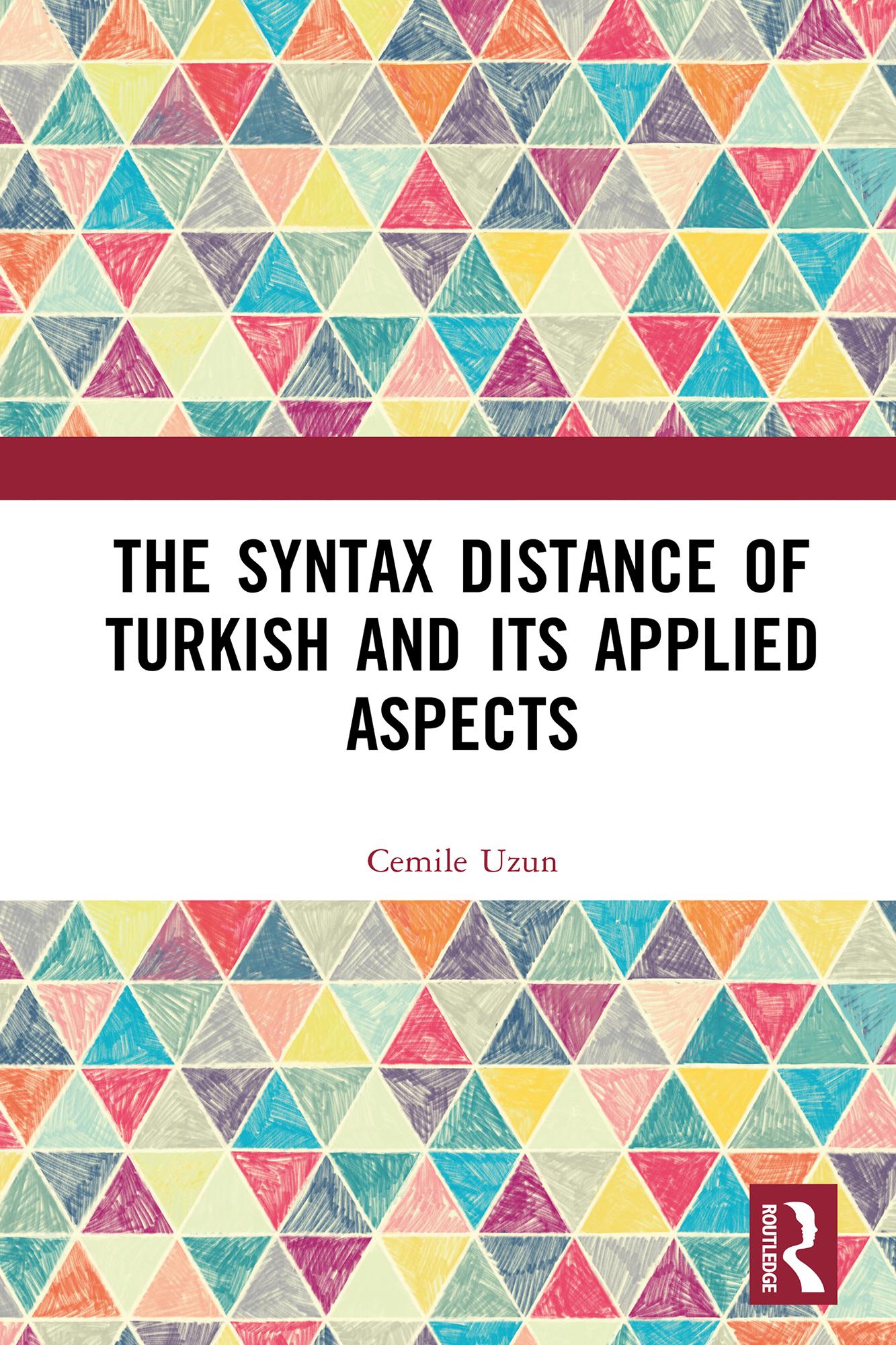
This book offers a comprehensive examination of the syntactic structures of Turkish across its historical periods, from Old Turkish to Chagatai Turkish. Moving beyond traditional descriptive approaches, it applies dependency grammar and quantitative methods to reveal structural variation and diachronic change.
Drawing on carefully prepared corpora representing seven key stages of Turkish, the analysis addresses measures such as syntactic distance, nucleus–actant relations, bridge–node ratios, and structural centrality. Through computational models and natural language processing tools, it provides a systematic profile of how Turkish sentence structures have evolved over time. This perspective highlights not only formal and functional aspects but also the communicative and narrative needs that shaped expression in different periods.
The book sheds light on the formal and functional dimensions of Turkish syntax and builds a bridge between theoretical linguistics and the digital humanities. By introducing the GSM-4 model, it offers a reproducible framework for measuring syntactic complexity in historical texts. In this respect, the volume serves as an important resource not only for Turkologists and historical linguists but also for researchers in computational linguistics, language typology, and cognitive linguistics.
Betala smidigt med kort, Klarna, Apple Pay eller Google Pay. Är du inte nöjd har du alltid 14 dagars ångerrätt. Läs mer i våra villkor. Har du några frågor, mejla oss på hello@memmo.org.
Memmo gör det enklare att plugga – var du än är i världen. Hos oss samlar du kursböcker och smarta studieverktyg på ett och samma ställe: sammanfattningar, quiz, poddar och flashcards. Och så Ted, din studiekompis som svarar på allt du undrar. Över 75 000 studenter pluggar redan här – byggt för att du ska lära dig snabbare och stressa mindre.