
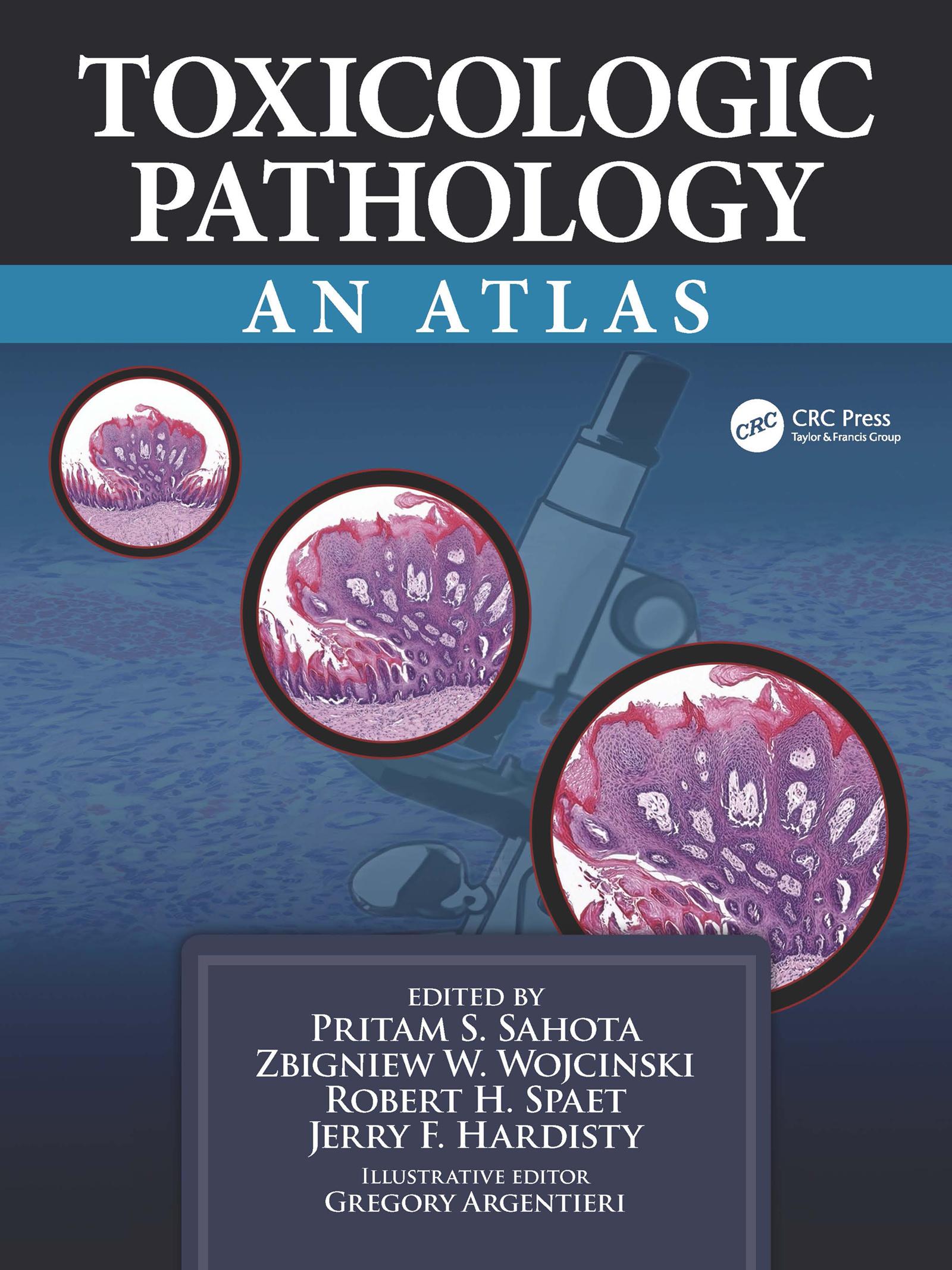
Over the past few decades, there has been an exponential growth of interest in the field of toxicologic pathology, a critical field in safety science, particularly as related to its impact on nonclinical safety in global drug development and care of the environment. Photomicrographic examples of selected nonproliferative and proliferative lesions are necessary to complement the written narratives in textbooks on toxicologic pathology. Toxicologic Pathology: An Atlas fits that need with input provided by top experts in the field. It will become a valuable reference, not only for toxicologic pathologists, but also for a wide variety of nonclinical safety scientists, especially in the pharmaceutical and biotech industries.
This book provides illustrations and descriptions of commonly observed findings in toxicologic pathology (i.e., over 1100 photomicrographic examples). These illustrations add visual context to the terms and descriptions commonly used in the field. The illustrations and accompanying descriptions were prepared and peer reviewed by editors and contributors who are known experts in toxicologic pathology, toxicology, and drug development. The Atlas is designed to be practical, easy to use and written with the hope that it will become a reliable "go-to" reference that will be of interest to students and nonscientists (e.g., individuals serving on animal care and use committees) as a key, single source to understanding terminology and visualizing tissue changes described by toxicologic pathologists.
Betala smidigt med kort, Klarna, Apple Pay eller Google Pay. Är du inte nöjd har du alltid 14 dagars ångerrätt. Läs mer i våra villkor. Har du några frågor, mejla oss på hello@memmo.org.
Memmo gör det enklare att plugga – var du än är i världen. Hos oss samlar du kursböcker och smarta studieverktyg på ett och samma ställe: sammanfattningar, quiz, poddar och flashcards. Och så Ted, din studiekompis som svarar på allt du undrar. Över 50 000 studenter pluggar redan här – byggt för att du ska lära dig snabbare och stressa mindre.