
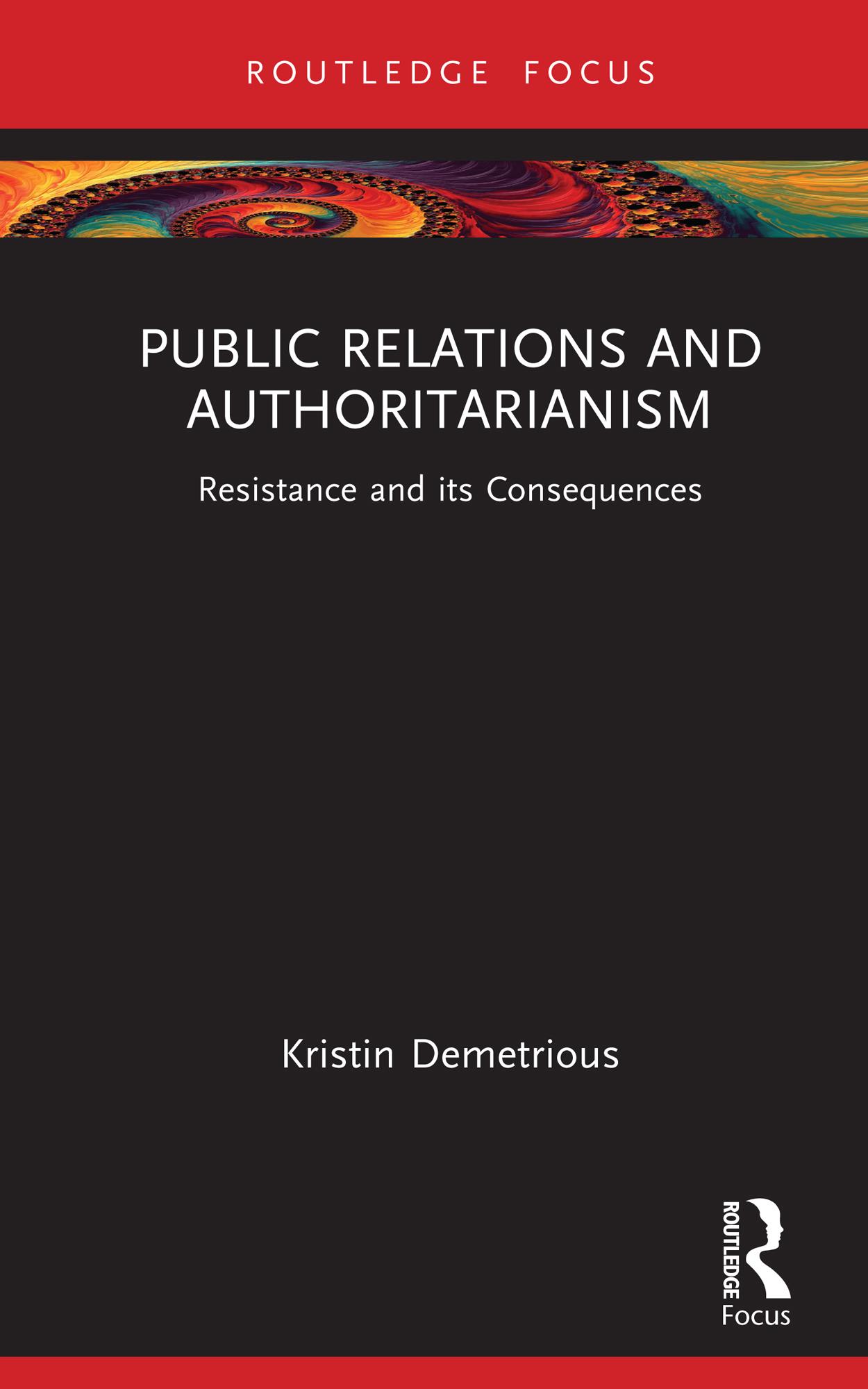
This book traces a resistance to public relations (PR) from the postwar period that sought to expose it as a dangerous, but little understood political dynamic. Critically exploring authoritarianism as a key concept, it argues “PR”’s market-friendly but oppressive and concealed language practices have systematically led to many of the divisive and polarised communication styles that we see today, and has had wider damaging effects for society.
Rich with illustrative examples, the chapters set out the limits of "PR" in relation to "truth" and show how literature and websites opened an important but under-recognised space in which neoliberal dogma was challenged. Offering a major new theory, it introduces a radical way to think about public relations and its relationship to democracy and society, and to understand its legacies like climate change denial.
This accessible book renews critique and is a valuable reference for undergraduate and postgraduate students studying and researching media and communication, politics, sociology, cultural sociology, cultural studies and history, and for those working in the communication industries.
Betala smidigt med kort, Klarna, Apple Pay eller Google Pay. Är du inte nöjd har du alltid 14 dagars ångerrätt. Läs mer i våra villkor. Har du några frågor, mejla oss på hello@memmo.org.
Memmo gör det enklare att plugga – var du än är i världen. Hos oss samlar du kursböcker och smarta studieverktyg på ett och samma ställe: sammanfattningar, quiz, poddar och flashcards. Och så Ted, din studiekompis som svarar på allt du undrar. Över 50 000 studenter pluggar redan här – byggt för att du ska lära dig snabbare och stressa mindre.