
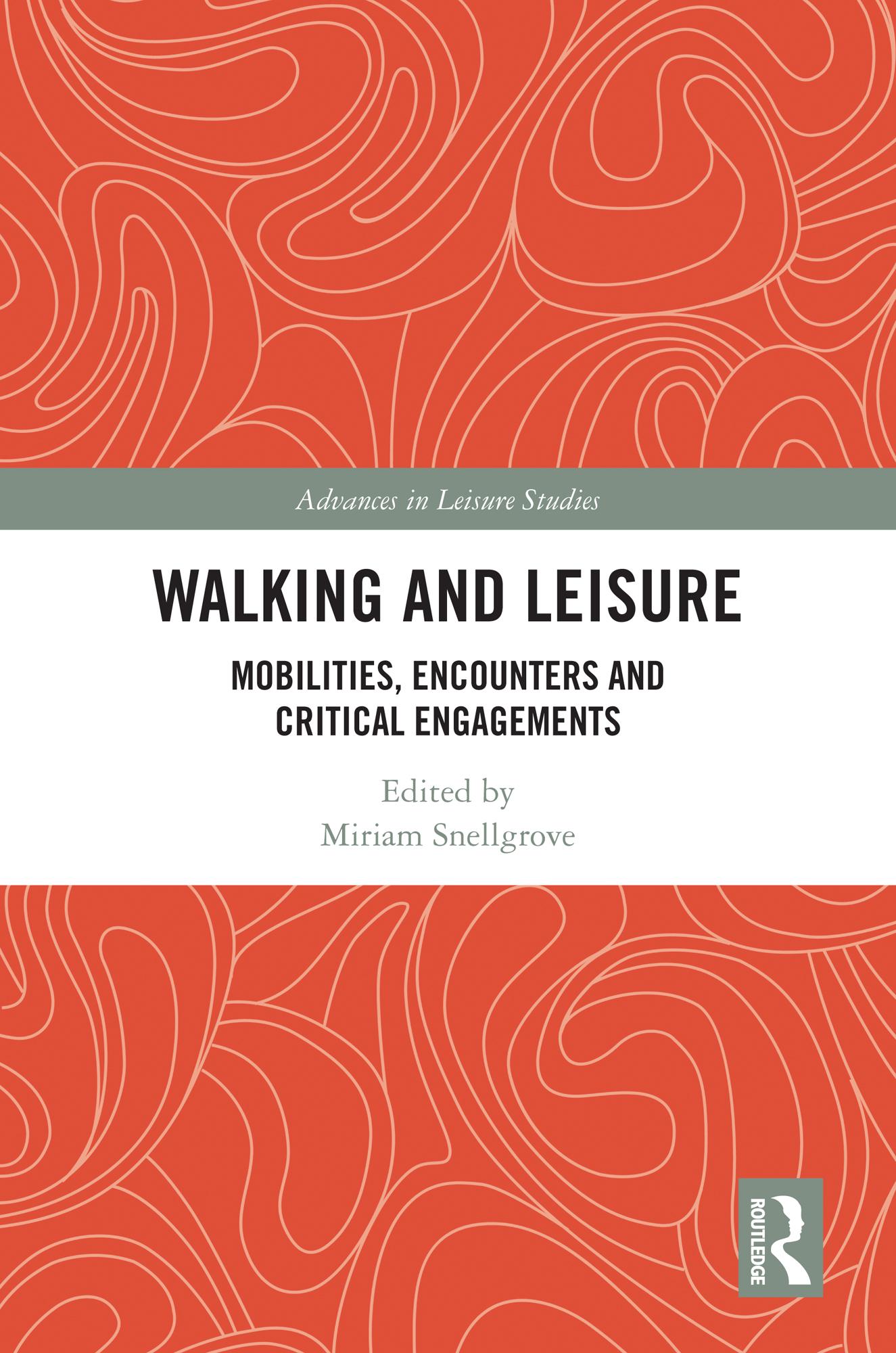
This book critically examines walking as a socially and politically situated leisure practice, exploring how movement through urban and rural spaces is shaped by broader structures of power and inequality.
While walking is often framed as a leisure activity with physical and mental health benefits, this book foregrounds its role as an embodied practice deeply influenced by intersecting factors such as class, race, gender, age and disability. Drawing on interdisciplinary theoretical perspectives and innovative methodological approaches, the chapters present empirically rich case studies from diverse global contexts—including the UK, Australia, Canada, Ireland, the Czech Republic, Austria, Hong Kong and Thailand. These studies range from pandemic walking and app-guided navigation to the experiences of mothers, disabled individuals, older adults, people with cancer, black women and those walking with animals. Together, they illuminate how walking practices negotiate space, place, identity and belonging, while also exposing spatial exclusions and embodied constraints.
Walking and Leisure offers a significant contribution to the sociology of leisure, human geography, cultural studies and critical disability studies. It will be of particular interest to scholars and students engaged in research on mobility, embodiment and the everyday politics of place and space.
Betala smidigt med kort, Klarna, Apple Pay eller Google Pay. Är du inte nöjd har du alltid 14 dagars ångerrätt. Läs mer i våra villkor. Har du några frågor, mejla oss på hello@memmo.org.
Memmo gör det enklare att plugga – var du än är i världen. Hos oss samlar du kursböcker och smarta studieverktyg på ett och samma ställe: sammanfattningar, quiz, poddar och flashcards. Och så Ted, din studiekompis som svarar på allt du undrar. Över 50 000 studenter pluggar redan här – byggt för att du ska lära dig snabbare och stressa mindre.