
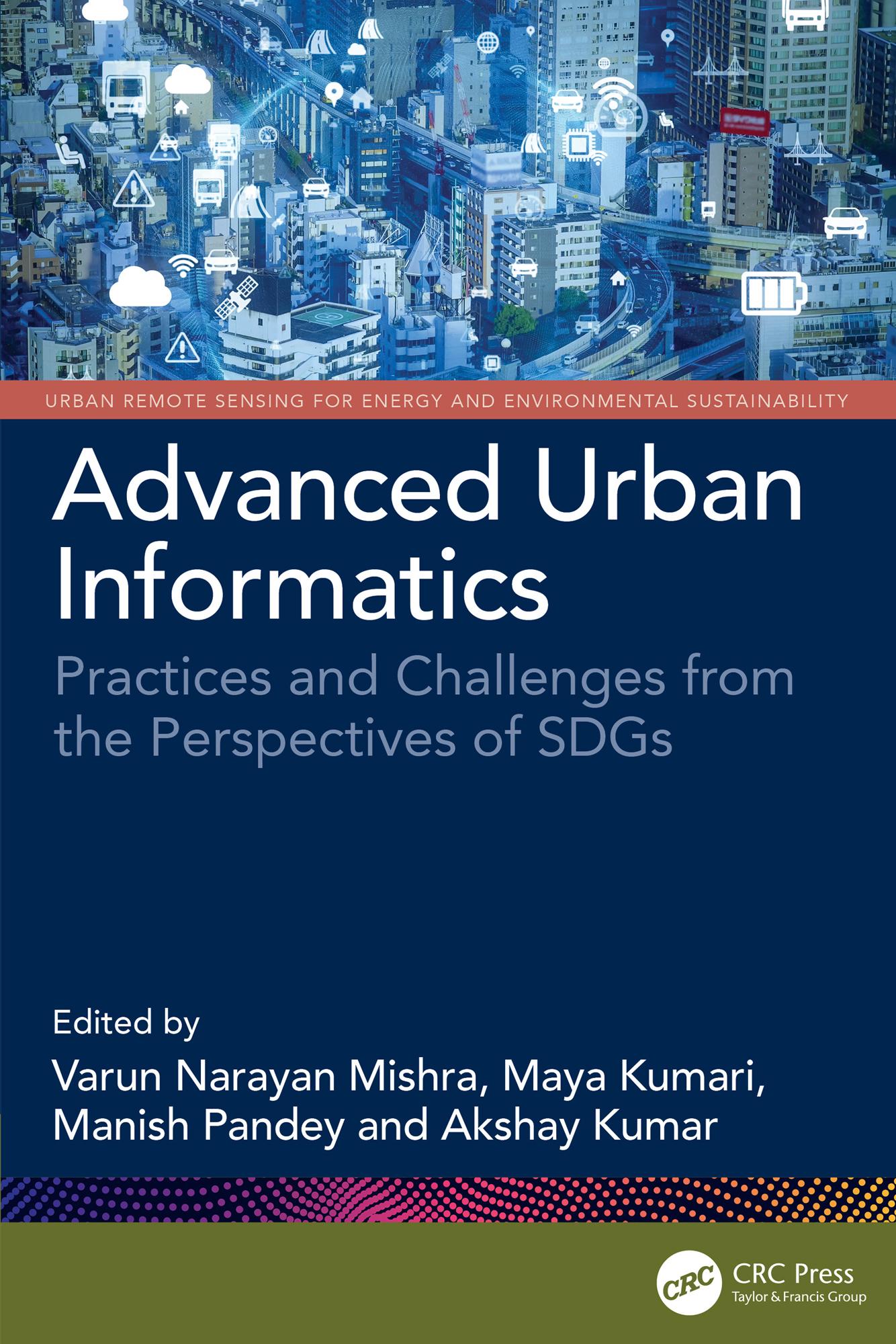
Urban informatics is an interdisciplinary approach to understanding, managing, and designing cities using methods based on advanced geospatial methods, computer-based information technologies and other emerging tools. This book provides understanding of developments in geospatial and computational techniques, focusing on the growth/pattern of cities and its implications for the development of smart and sustainable cities from the perspectives of Sustainable Development Goals (SDGs). It covers sustainable development, land use patterns, urban growth analysis, environmental impacts, infrastructure management, and policy. The book focuses on interdisciplinary approach using geospatial data, geographic information systems (GIS), and advanced computational methods to address the challenges in urban informatics.
- Addresses the problems in implementing smart city initiatives, designing more adaptive, responsive, and resilient cities
- Offers insightful dimensions to better understand the spatial urban pattern and future projection of for suitable planning and management
- Discusses theoretical and applied research practices along with background information on the use of advanced technologies in the domain of urban studies
- Includes practical examples, case studies, and methodologies
This book is aimed at graduate students and researchers in environmental engineering and remote sensing.
Betala smidigt med kort, Klarna, Apple Pay eller Google Pay. Är du inte nöjd har du alltid 14 dagars ångerrätt. Läs mer i våra villkor. Har du några frågor, mejla oss på hello@memmo.org.
Memmo gör det enklare att plugga – var du än är i världen. Hos oss samlar du kursböcker och smarta studieverktyg på ett och samma ställe: sammanfattningar, quiz, poddar och flashcards. Och så Ted, din studiekompis som svarar på allt du undrar. Över 75 000 studenter pluggar redan här – byggt för att du ska lära dig snabbare och stressa mindre.