
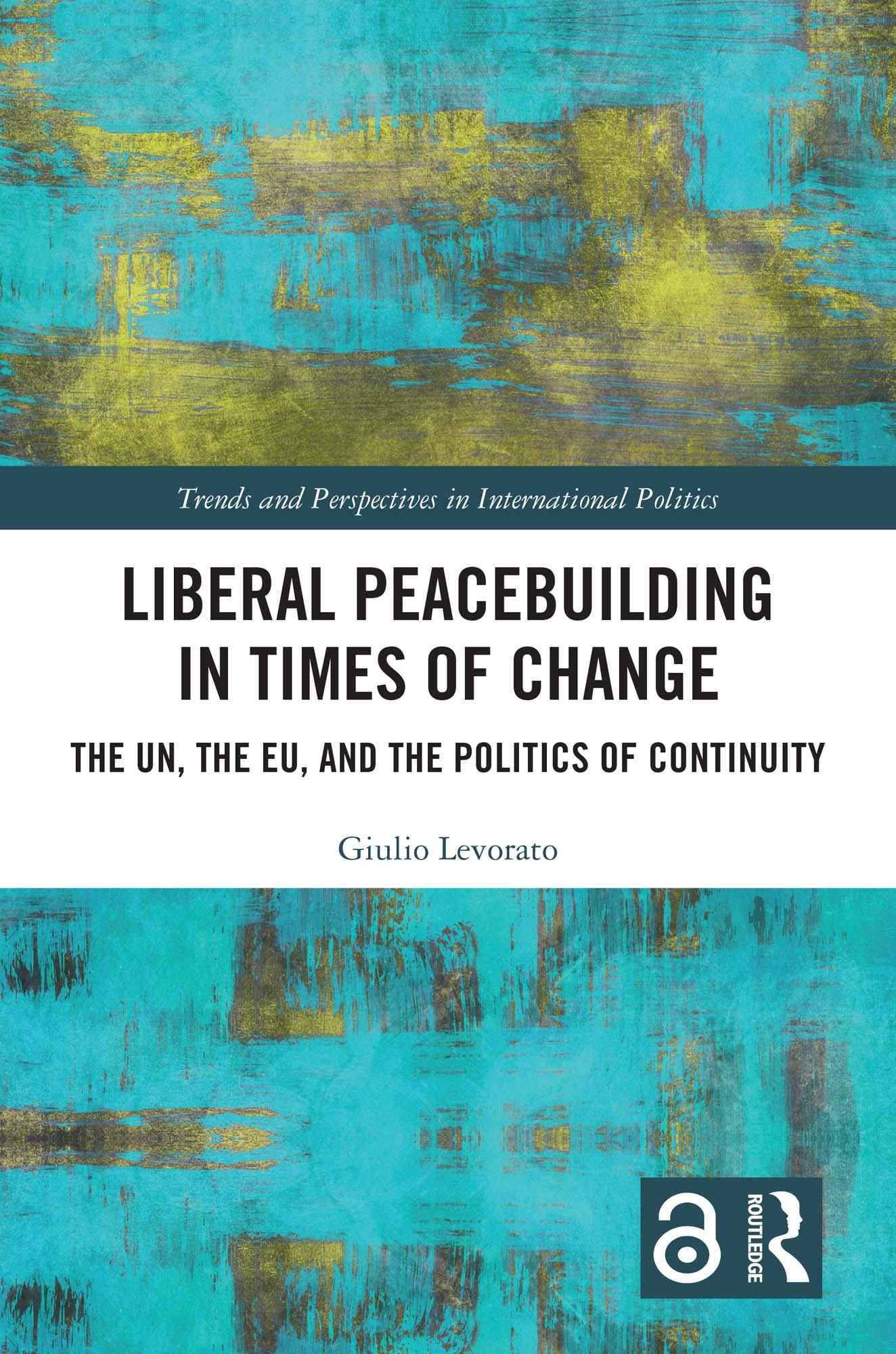
This book explores why and how, in an era in which conflicts are turning into arenas of strategic competition, international organizations have become the ultimate guardians of liberal peace.
International organizations display policy continuity at a time when authoritarian models of conflict resolution are gaining traction thanks to streamlined objectives, fast-paced solutions, and reduced normative commitments. Confronting the challenges posed by illiberal actors, the United Nations and the European Union have entrenched their survival with that of the liberal international order and of liberal peace in particular. In a novel reading of organizational behaviours amid crises, policy continuity is interpreted as the result of “strategic inertia”. This book demonstrates how bureaucratic rules and procedures, including organizational pathologies, are strategically employed to reproduce problem schema and counter illiberal contestation.
Combining public policy theories to peace research, this text explores the use of strategic inertia through the crucial case of the United Nations and the European Union in the Sahel. It offers an innovative perspective on the inner mechanisms through which international organizations are adapting to preserve their role and mission within an ever more competitive international environment.
Betala smidigt med kort, Klarna, Apple Pay eller Google Pay. Är du inte nöjd har du alltid 14 dagars ångerrätt. Läs mer i våra villkor. Har du några frågor, mejla oss på hello@memmo.org.
Memmo gör det enklare att plugga – var du än är i världen. Hos oss samlar du kursböcker och smarta studieverktyg på ett och samma ställe: sammanfattningar, quiz, poddar och flashcards. Och så Ted, din studiekompis som svarar på allt du undrar. Över 50 000 studenter pluggar redan här – byggt för att du ska lära dig snabbare och stressa mindre.