
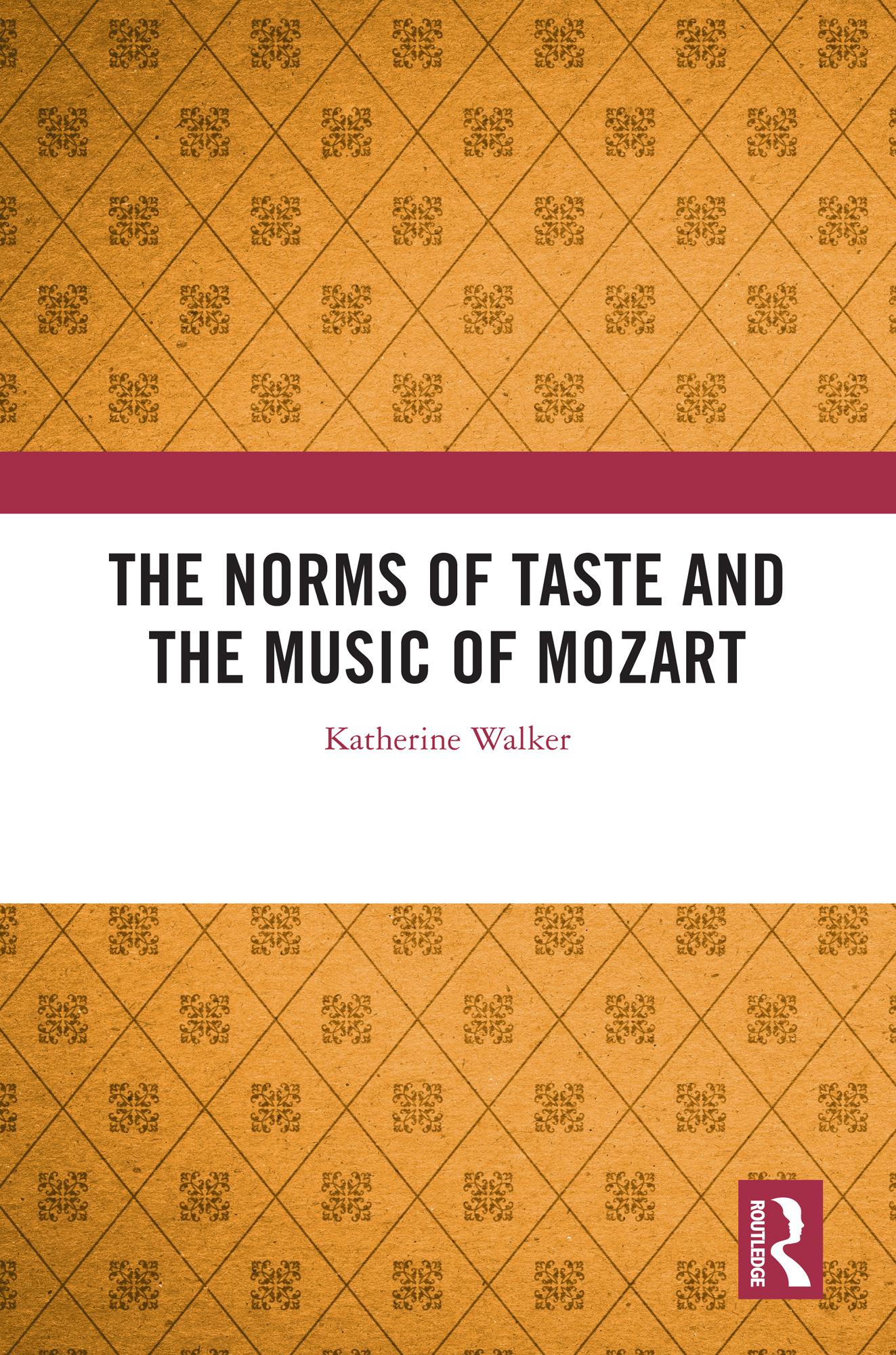
The Norms of Taste and the Music of Mozart uncovers what contemporaries meant when they praised composers like Mozart for their “good taste” and, in the process,
illustrates how judgments of taste were intertwined with developments in the social, cultural, and political arenas.
Taking as its starting point Haydn’s purported reference to Mozart’s Geschmack und Compositionswissenschaft, this book offers an in-depth analysis of the shifting
connotations of taste in eighteenth-century European music. It bridges a gap in music scholarship by offering new perspectives on how music, philosophy,
literature, and politics intersected through the language of taste. The discourse of musical taste opened pathways from the individual to the collective and framed
pressing debates about the sources and meanings of human flourishing. As the author argues, the century of taste denotes a period in which art and aesthetics were
bound up with moral philosophy; when artistic, ethical, and social aspects of life merged and overlapped, bringing good taste and goodness into alignment.
Offering insights into the history of music and aesthetics as well as the work of Mozart, this book presents a study filled with new perspectives for musicologists
and scholars of eighteenth-century culture.
Betala smidigt med kort, Klarna, Apple Pay eller Google Pay. Är du inte nöjd har du alltid 14 dagars ångerrätt. Läs mer i våra villkor. Har du några frågor, mejla oss på hello@memmo.org.
Memmo gör det enklare att plugga – var du än är i världen. Hos oss samlar du kursböcker och smarta studieverktyg på ett och samma ställe: sammanfattningar, quiz, poddar och flashcards. Och så Ted, din studiekompis som svarar på allt du undrar. Över 50 000 studenter pluggar redan här – byggt för att du ska lära dig snabbare och stressa mindre.