
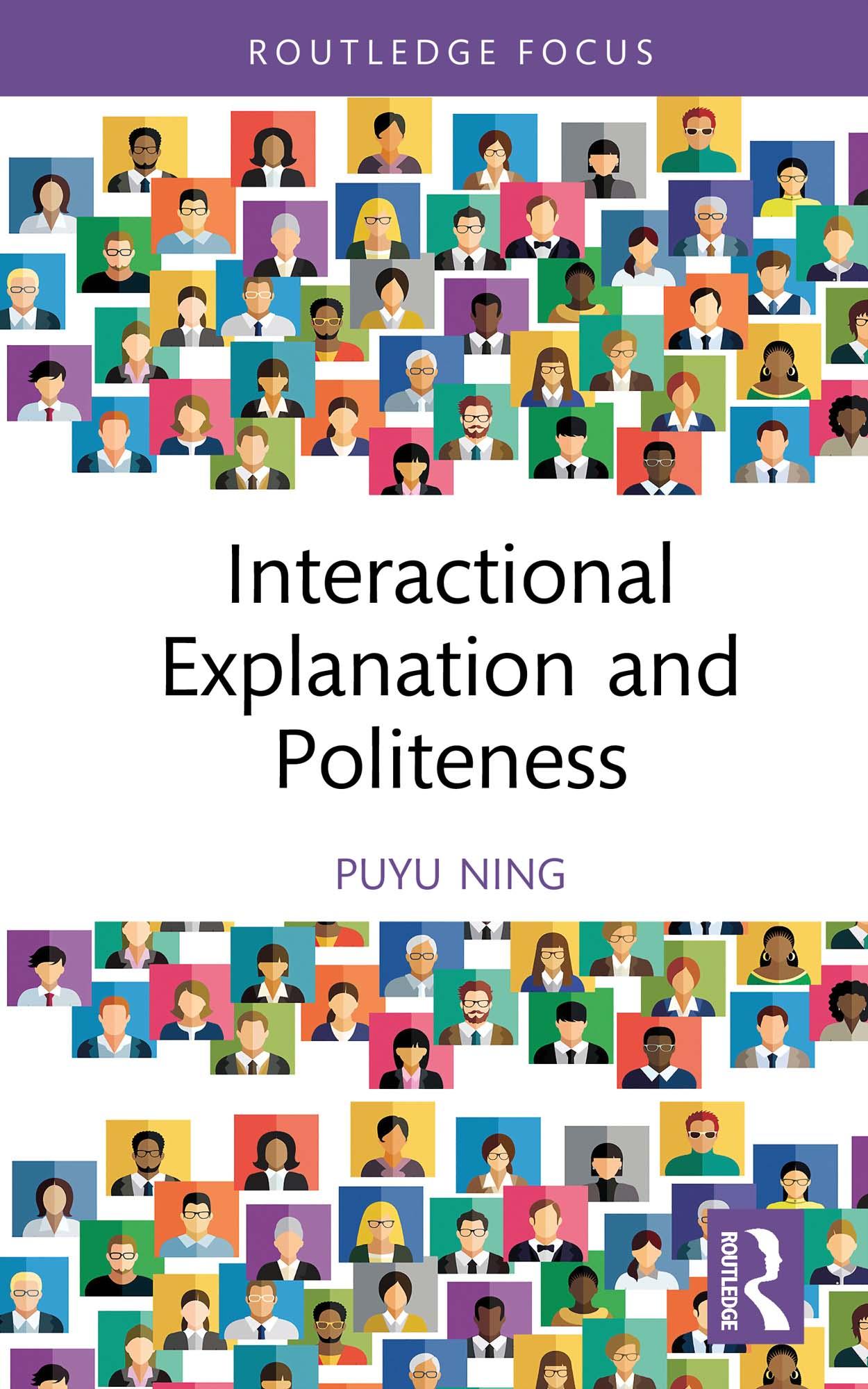
This book explores the pragmatic concept of interactional explanation (IE) in linguistic (im)politeness research.
This volume establishes a working understanding of IE, understood as the response to a perceived appeal for information in an interaction. This book considers how IE is pragmatically sought, given, interpreted, and evaluated in interactions, processes which give rise to linguistic (im)politeness. This book highlights two case studies on Chinese linguacultural nuances, building on the foundational work of Brown and Levinson and more recent contribu-tions of Chen. In showcasing this particular context, Ning not only extends Chen's work on self-politeness theory, in which the desire to "save face" impacts what and how one speaks, but also underscores the importance of studying linguacultural variations in order to deepen our understanding of the connections between IE and linguistic (im)politeness research.
This book will appeal to students and researchers interested in interac-tional phenomena, in such areas as pragmatics, language and communication, and second and foreign language and teaching.
Betala smidigt med kort, Klarna, Apple Pay eller Google Pay. Är du inte nöjd har du alltid 14 dagars ångerrätt. Läs mer i våra villkor. Har du några frågor, mejla oss på hello@memmo.org.
Memmo gör det enklare att plugga – var du än är i världen. Hos oss samlar du kursböcker och smarta studieverktyg på ett och samma ställe: sammanfattningar, quiz, poddar och flashcards. Och så Ted, din studiekompis som svarar på allt du undrar. Över 75 000 studenter pluggar redan här – byggt för att du ska lära dig snabbare och stressa mindre.