
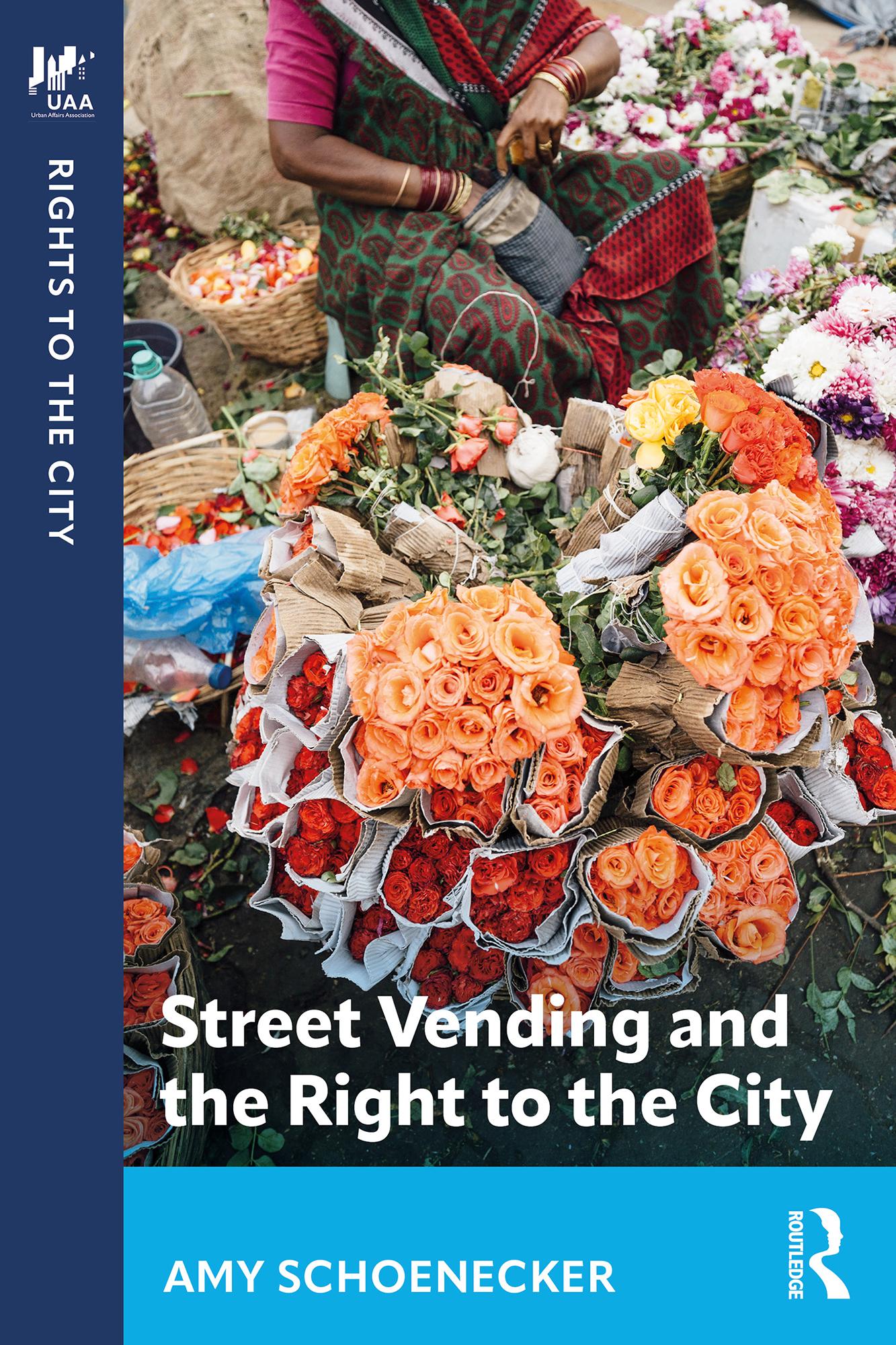
Street vendors often face disproportionate state violence not simply for their use of public space, but because of who they are as users of public space. Through a multicity comparison, Street Vending and the Right to the City demonstrates how vendors blur the lines of in/formality through their resistance tactics, and fight for their rights to the city not only as economic agents, but as residents seeking urban belonging. Given the state violence that people living and working informally face, claiming the right to exist in urban space is indeed a radical act. Cities and states, from New York City to Uruguay, have begun to formalize street vending, with many advocates arguing for this approach, but this book highlights why formalization is not a cure. With international examples and an in-depth case study featuring a comparison of Chicago and Mumbai, the chapters explore how urban informalities are produced and offer perspectives on roadblocks and pathways to gaining legitimacy. This book is essential for academics and students in urban planning, urban studies, anthropology, sociology, urban design, geography, and political science, as well as practitioners and policymakers.
Betala smidigt med kort, Klarna, Apple Pay eller Google Pay. Är du inte nöjd har du alltid 14 dagars ångerrätt. Läs mer i våra villkor. Har du några frågor, mejla oss på hello@memmo.org.
Memmo gör det enklare att plugga – var du än är i världen. Hos oss samlar du kursböcker och smarta studieverktyg på ett och samma ställe: sammanfattningar, quiz, poddar och flashcards. Och så Ted, din studiekompis som svarar på allt du undrar. Över 75 000 studenter pluggar redan här – byggt för att du ska lära dig snabbare och stressa mindre.