
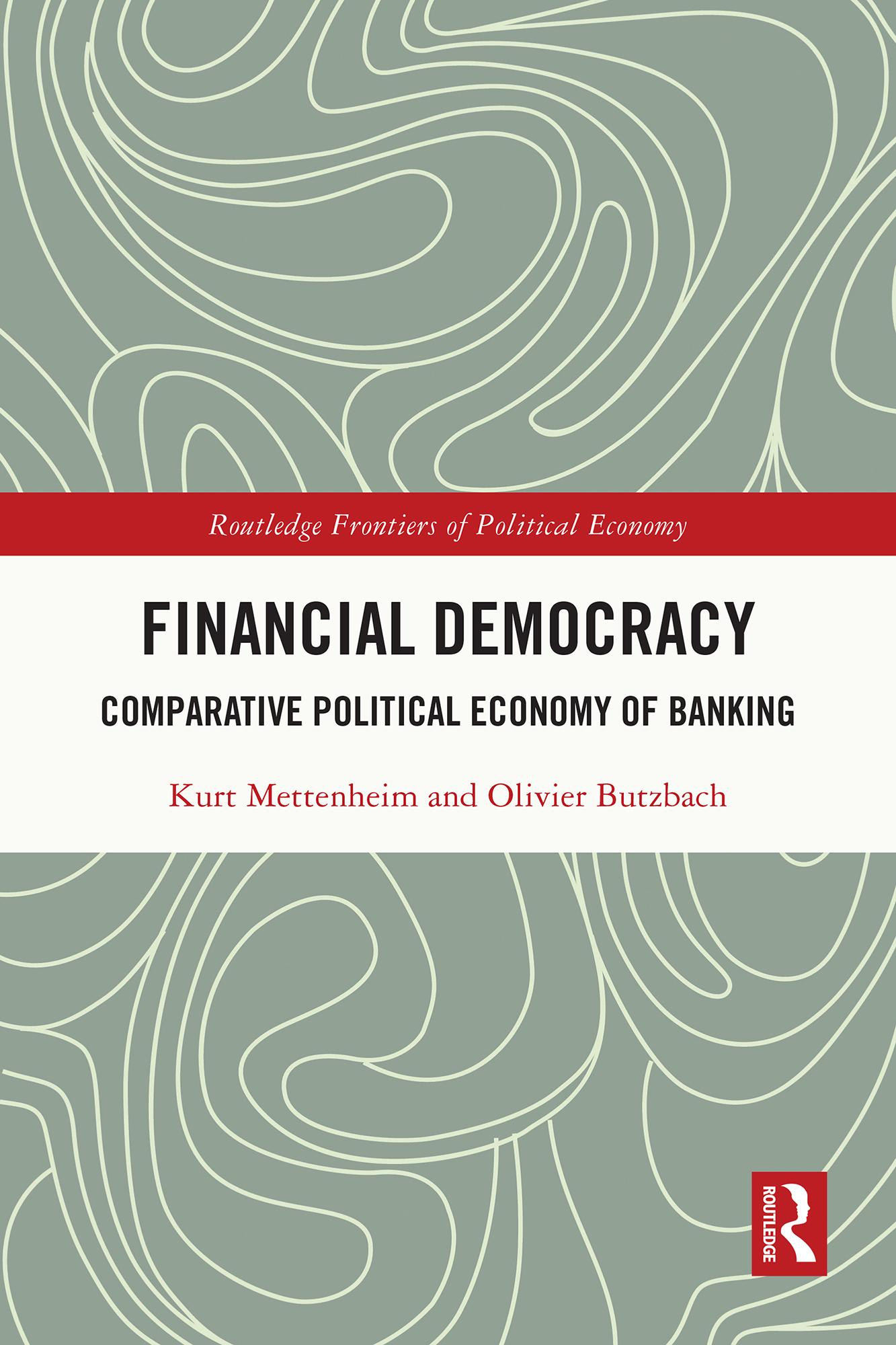
Elaborating a new approach to the comparative political economy of banking, Financial Democracy presents evidence of both the recent return to traditional bank management and the resurgence of alternative banks with social and public policy missions.
The book begins with a critique of contemporary approaches to banking, finance, and money in political economy, financial economics, and, indeed, the major schools of economics since 1945. In this analysis, traditional banks were expected to be replaced with market-based banking and new types of non-bank entities able to tap market efficiencies. Drawing on a unique combination of participatory democratic theory, comparative political economy, theories and concepts on banking and finance, and the varieties of democracy, democratization, and regime change in political science, the findings of this book are precisely the contrary. Historical-institutional methods and balance-sheet analysis reveal change in the opposite direction: a back-to-the future return to traditional strategies of deposit taking and loan making and public finance at banks. A variety of social reactions of self-defense, especially since 2010, are documented in case studies of six large advanced and underdeveloped economies; reactions against the commodification of credit, finance, and banking caused by the liberalization of domestic markets for credit and banking.
This book will be of interest to readers in political economy, banking, finance, and democratization.
Betala smidigt med kort, Klarna, Apple Pay eller Google Pay. Är du inte nöjd har du alltid 14 dagars ångerrätt. Läs mer i våra villkor. Har du några frågor, mejla oss på hello@memmo.org.
Memmo gör det enklare att plugga – var du än är i världen. Hos oss samlar du kursböcker och smarta studieverktyg på ett och samma ställe: sammanfattningar, quiz, poddar och flashcards. Och så Ted, din studiekompis som svarar på allt du undrar. Över 50 000 studenter pluggar redan här – byggt för att du ska lära dig snabbare och stressa mindre.