
'We are workers who are adding to the growth of objective knowledge as masons work on a cathedral'
- Karl Popper, Objective Knowledge
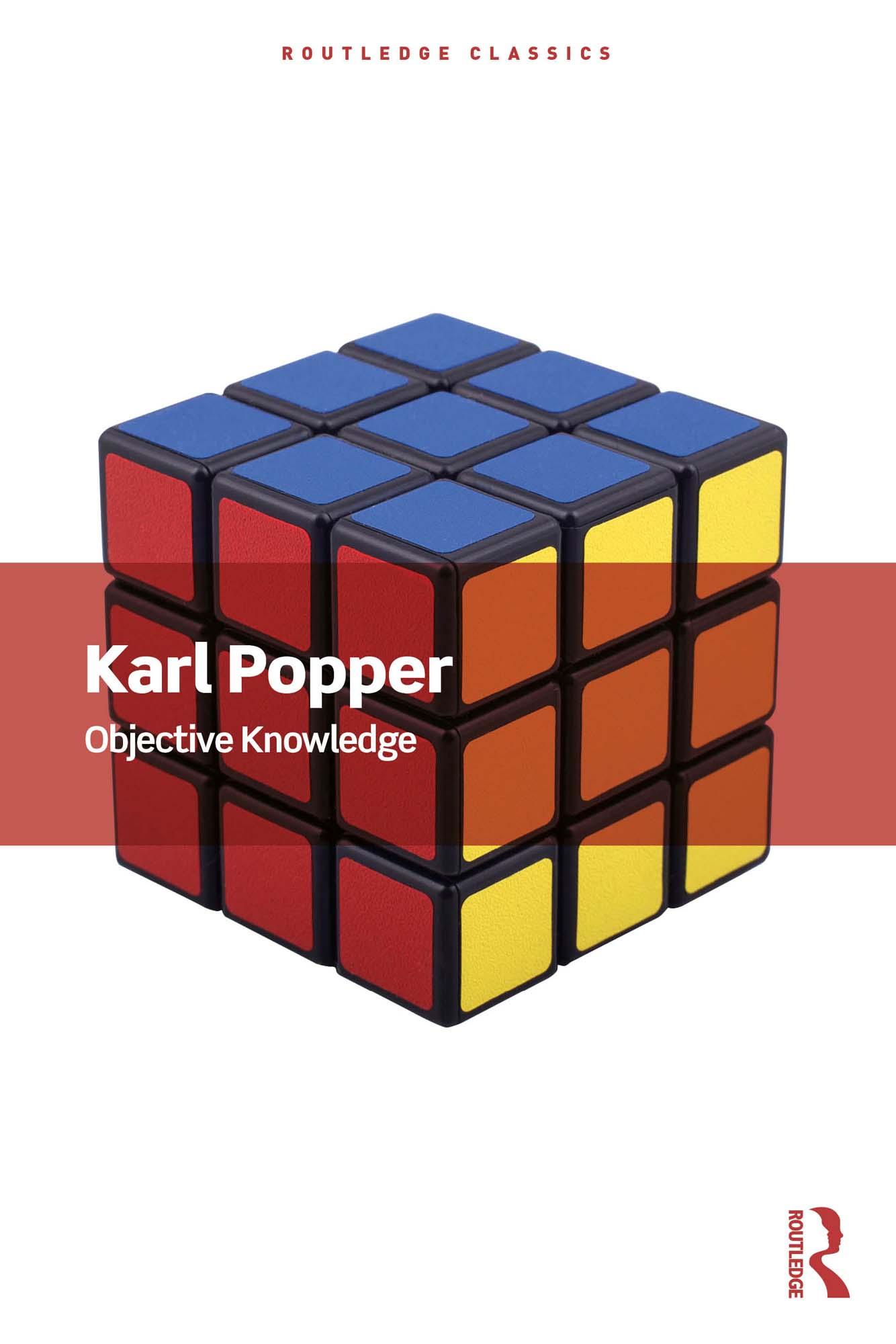
The extent and scope of human knowledge is arguably one of humankind's greatest achievements. Since Descartes, however, the theory of human knowledge has been mainly what philosophers call subjectivist: even scientific knowledge was regarded as a special kind of human belief, but human nonetheless. In Objective Knowledge, which contains some of his most important writings on epistemology, Karl Popper breaks decisively and controversially with this view of human knowledge.
A realist and a fallibilist, he argues that human knowledge, stated in human language, is no longer part of ourselves but open to objective criticism. Above all, Popper argues that human knowledge grows through a process of conjecture, testing and criticism. Such objective knowledge has significance also for us as individuals, as critical interaction with problem-situations and the constant process of trial and error playing a role in all walks of life, from philosophy and science to music and art.
A brilliant exposition of Popper's theory of knowledge, this Routledge Classics edition includes a new Introduction by Jeremy Shearmur, which provides some helpful context to Objective Knowledge and Popper's philosophy in general.
Betala smidigt med kort, Klarna, Apple Pay eller Google Pay. Är du inte nöjd har du alltid 14 dagars ångerrätt. Läs mer i våra villkor. Har du några frågor, mejla oss på hello@memmo.org.
Memmo gör det enklare att plugga – var du än är i världen. Hos oss samlar du kursböcker och smarta studieverktyg på ett och samma ställe: sammanfattningar, quiz, poddar och flashcards. Och så Ted, din studiekompis som svarar på allt du undrar. Över 50 000 studenter pluggar redan här – byggt för att du ska lära dig snabbare och stressa mindre.