
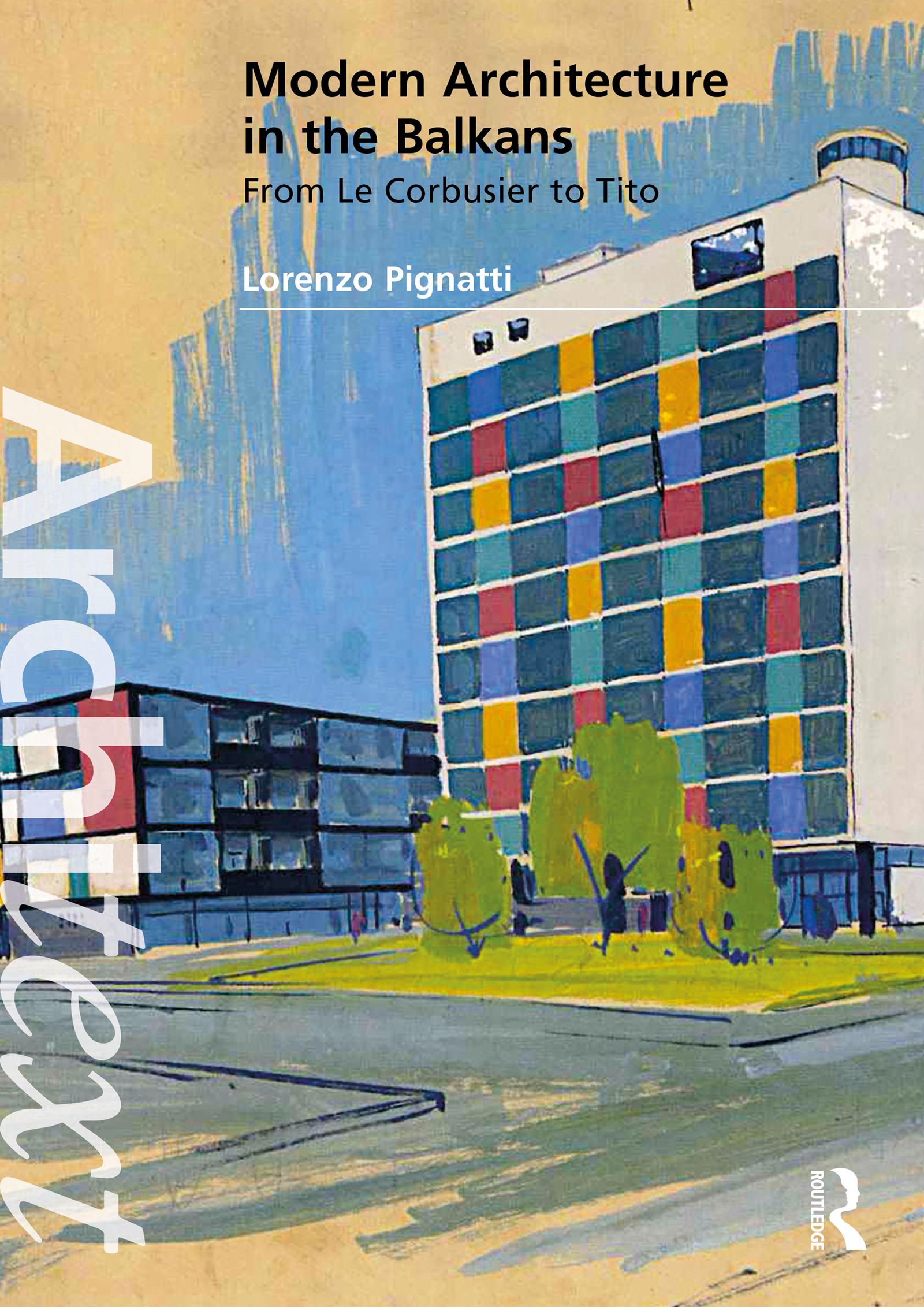
This book is an attempt to comprehend the reasons for modernity in the Balkans, beginning with the famous Journey to the East undertaken by Charles-Édouard Jeanneret in 1911; a journey during which the future Le Corbusier was the first to appreciate the originality of the region’s architecture. However, the modernity that developed after the Second World War would not have existed without the figure of Josip Broz Tito. With political and cultural acumen, this partisan and charismatic leader of Yugoslavia promoted a process of “socialist modernisation” that looked both east and west, while holding fast to a faith in a political ideology interpreted with freedom and originality. Le Corbusier and Tito are therefore the two central figures of this book. While there is no direct relationship between them, this book presents a series of intersecting relations, beginning with the interpretation of Yugoslavia’s cities and architecture, to trace a path that gives this region an unquestionably central position in the international architectural panorama of the twentieth century.
Betala smidigt med kort, Klarna, Apple Pay eller Google Pay. Är du inte nöjd har du alltid 14 dagars ångerrätt. Läs mer i våra villkor. Har du några frågor, mejla oss på hello@memmo.org.
Memmo gör det enklare att plugga – var du än är i världen. Hos oss samlar du kursböcker och smarta studieverktyg på ett och samma ställe: sammanfattningar, quiz, poddar och flashcards. Och så Ted, din studiekompis som svarar på allt du undrar. Över 75 000 studenter pluggar redan här – byggt för att du ska lära dig snabbare och stressa mindre.