
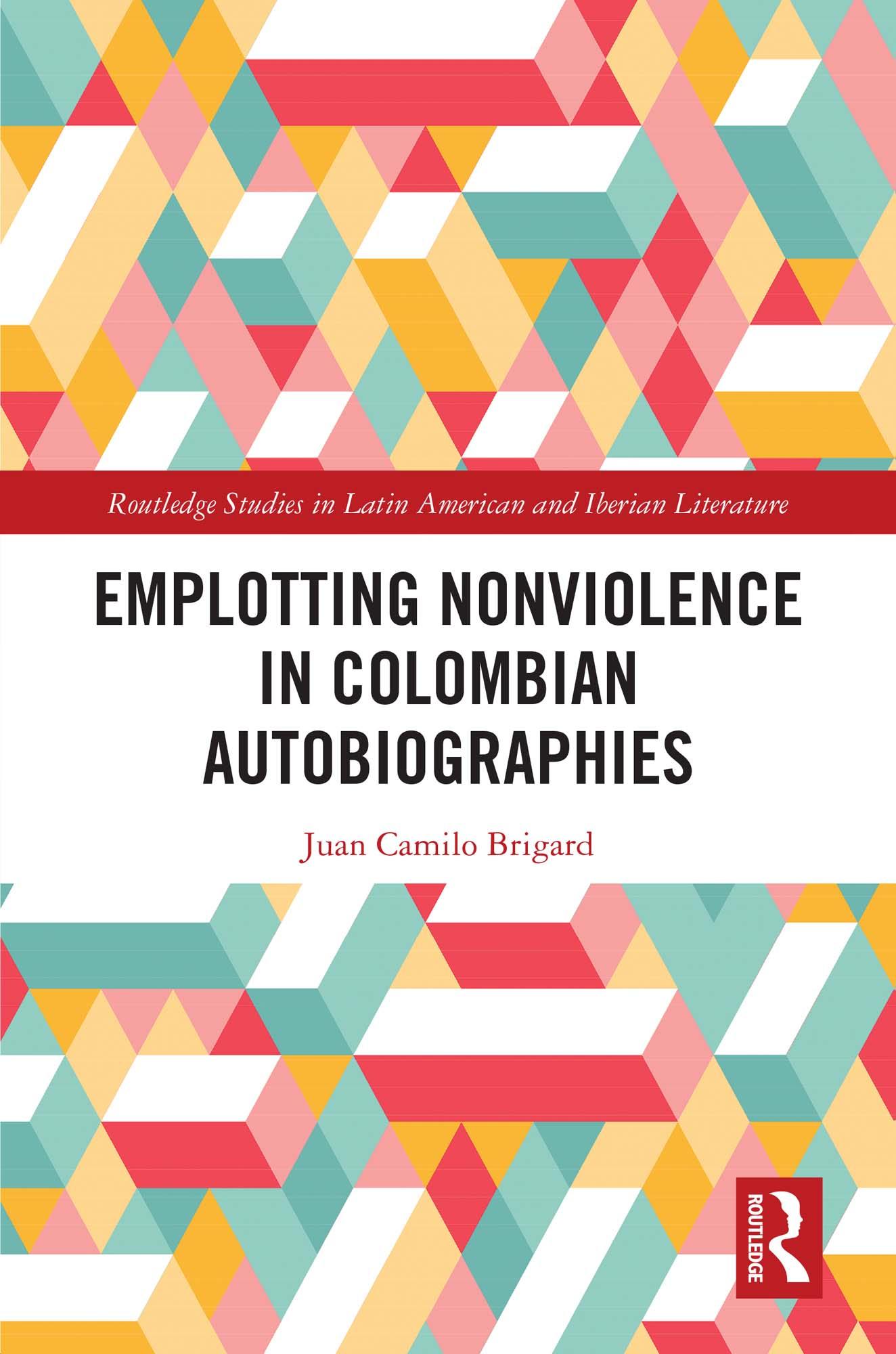
How do individuals upholding an ethos of nonviolence tell their life narratives in places ravaged by armed conflict? With an understanding of violence and nonviolence as socially contingent concepts, Emplotting Nonviolence in Colombian Autobiographies focuses on the life writings of three Colombian social movement leaders (the U’wa Esperanza-Aguablanca’s Tengo los pies en la cabeza, the Afrocolombian Rudecindo Castro’s Calle caliente, and the LGBTQ+ artivist Manuel Antonio Velandia’s De homosexual a marica sujeto de derechos) and contrasts them with the memoirs of a hegemonic ex-president (Álvaro Uribe’s No Lost Causes). These autobiographies are analyzed using a "contextual narratology of contingency". This is a narrative approach that examines "emplotment" —the structuring of storytelling sequences and its narrative devices— in the light of historical literary genres. Moreover, through a context-sensitive literary lens, this approach emphasizes each book’s rhetoric of group-oriented self-representation, or "collective narration" and the way literary genres inflect the representation of nonviolence.
Betala smidigt med kort, Klarna, Apple Pay eller Google Pay. Är du inte nöjd har du alltid 14 dagars ångerrätt. Läs mer i våra villkor. Har du några frågor, mejla oss på hello@memmo.org.
Memmo gör det enklare att plugga – var du än är i världen. Hos oss samlar du kursböcker och smarta studieverktyg på ett och samma ställe: sammanfattningar, quiz, poddar och flashcards. Och så Ted, din studiekompis som svarar på allt du undrar. Över 50 000 studenter pluggar redan här – byggt för att du ska lära dig snabbare och stressa mindre.