
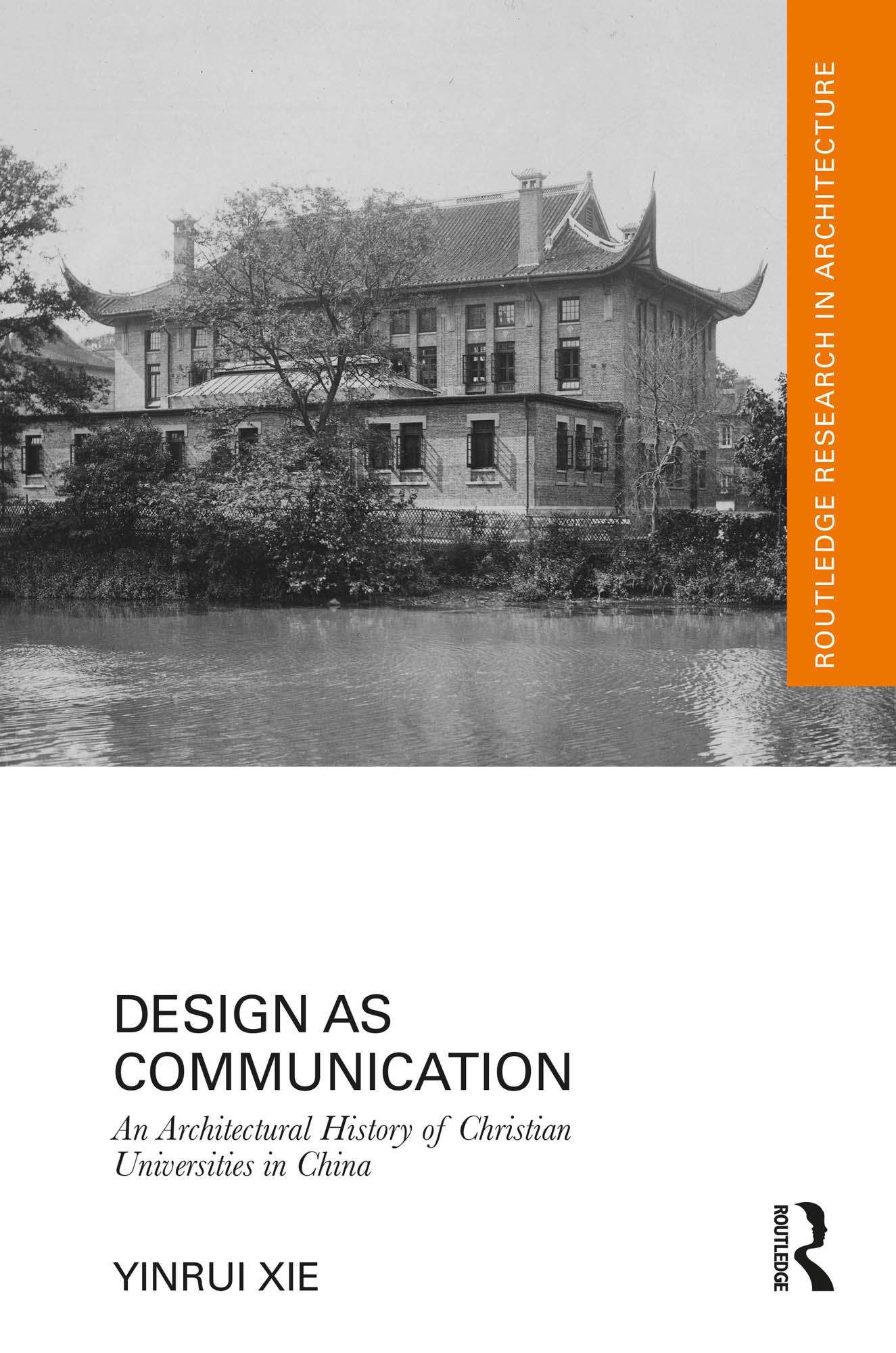
This book explores the architectural history of Christian universities in China, revealing how quasi‑colonial power interaction and cross‑cultural communication of meaning were channelled through religious and educational architecture in modern China.
The Christian universities in China witnessed an experimental representation of Chinese architectural identity, as the country – subject to an informal version of colonialism – struggled to become a modern nation‑state and to rethink its identity. This book offers new knowledge to the prospering postcolonial studies of the architectural history of Asian countries, deepening our understanding of the scope and content of the nuanced colonial encounters between the East and the West, and the relationship between architecture and power. Borrowing ideas from architectural semiotics, this book explores how architectural meaning has been interpreted and sometimes modified by its audience(s), whose voice has been largely ignored in traditional architectural historical studies. It provides a unique scope to further understand the communicative function of architecture, throwing light upon the broader socio‑cultural dialogue between China and the Western world in the twentieth century.
Design as Communication will be an enriching reference for those interested in the architectural dialogue between China and the West, architecture and postcolonialism and the localisation of Christianity in the world.
Betala smidigt med kort, Klarna, Apple Pay eller Google Pay. Är du inte nöjd har du alltid 14 dagars ångerrätt. Läs mer i våra villkor. Har du några frågor, mejla oss på hello@memmo.org.
Memmo gör det enklare att plugga – var du än är i världen. Hos oss samlar du kursböcker och smarta studieverktyg på ett och samma ställe: sammanfattningar, quiz, poddar och flashcards. Och så Ted, din studiekompis som svarar på allt du undrar. Över 75 000 studenter pluggar redan här – byggt för att du ska lära dig snabbare och stressa mindre.