
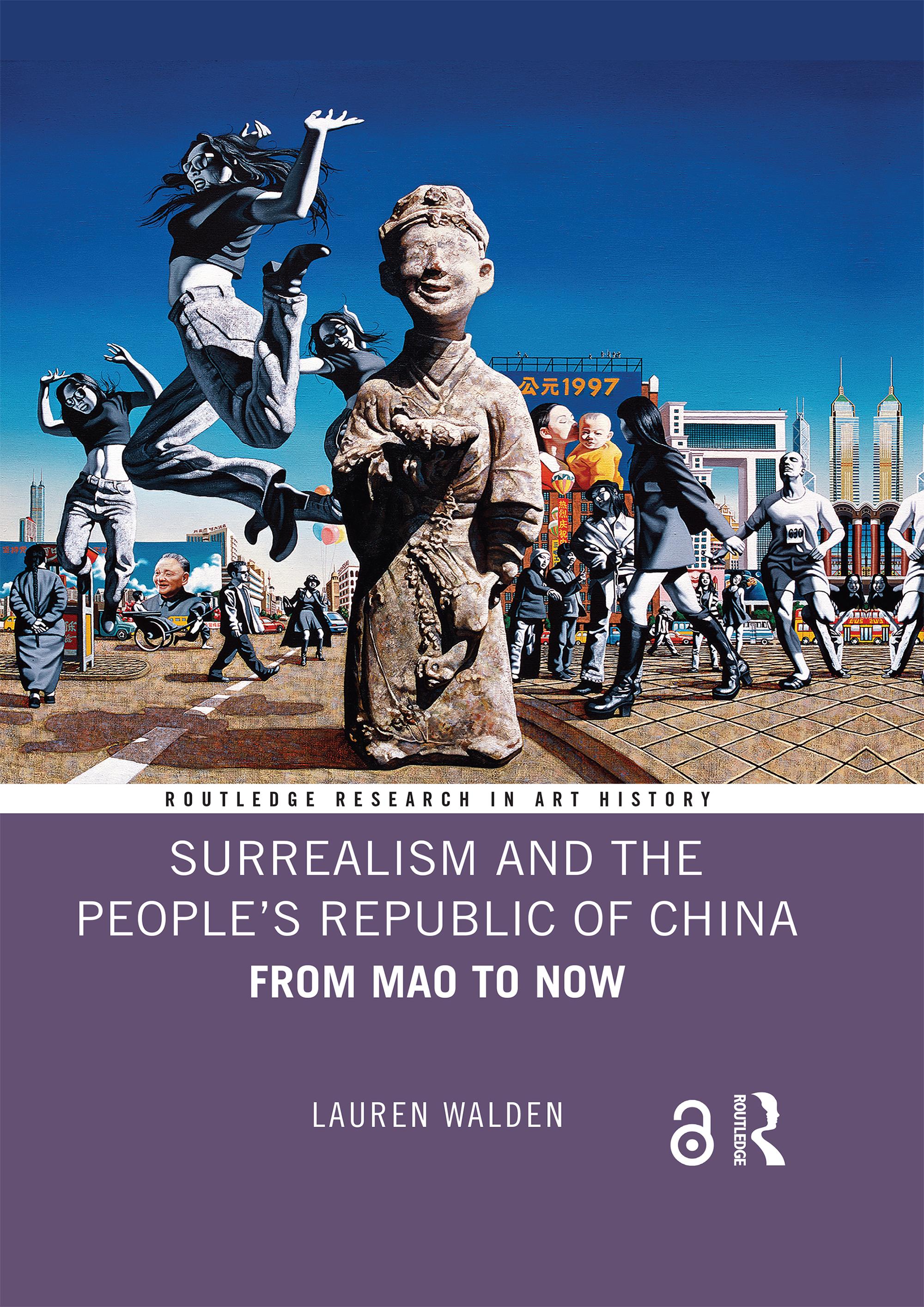
This study investigates cultural exchange between the Surrealist movement and the People’s Republic of China (1949-present).
Surrealist art was officially prohibited under Mao’s rule (1949-1976). However, the book interrogates potent tensions in clandestinely created surrealist artworks by Zhao Shou and Sha Qi, who discovered the movement while studying abroad. Furthermore, Walden explores how several European Surrealists aligned Chinese calligraphy with automatism as well as Michel Leiris and Marcel Mariën’s travels to Maoist China and their diametrically opposed visions of the nation. Amidst post-socialism, the book posits that the ’85 New Wave consciously employed Surrealism to process the traumatic Cultural Revolution (1966-1976) and react to newfound societal freedoms. Subsequently, the volume considers why a new artistic tendency of ‘surrealist pop’ emerged in the 1990s. At present, Lauren Walden reveals how Surrealism has become officialised and even promoted by Chinese authorities owing to revolutionary resonances between traditional Chinese art and the western avant-garde.
The book will be of interest to scholars working in art history, Chinese studies, and Surrealism.
Chapter 4 of this book is freely available as a downloadable Open Access PDF at http://www.taylorfrancis.com under a Creative Commons Attribution-Non Commercial-No Derivatives (CC BY-NC-ND) 4.0 license
Betala smidigt med kort, Klarna, Apple Pay eller Google Pay. Är du inte nöjd har du alltid 14 dagars ångerrätt. Läs mer i våra villkor. Har du några frågor, mejla oss på hello@memmo.org.
Memmo gör det enklare att plugga – var du än är i världen. Hos oss samlar du kursböcker och smarta studieverktyg på ett och samma ställe: sammanfattningar, quiz, poddar och flashcards. Och så Ted, din studiekompis som svarar på allt du undrar. Över 75 000 studenter pluggar redan här – byggt för att du ska lära dig snabbare och stressa mindre.