
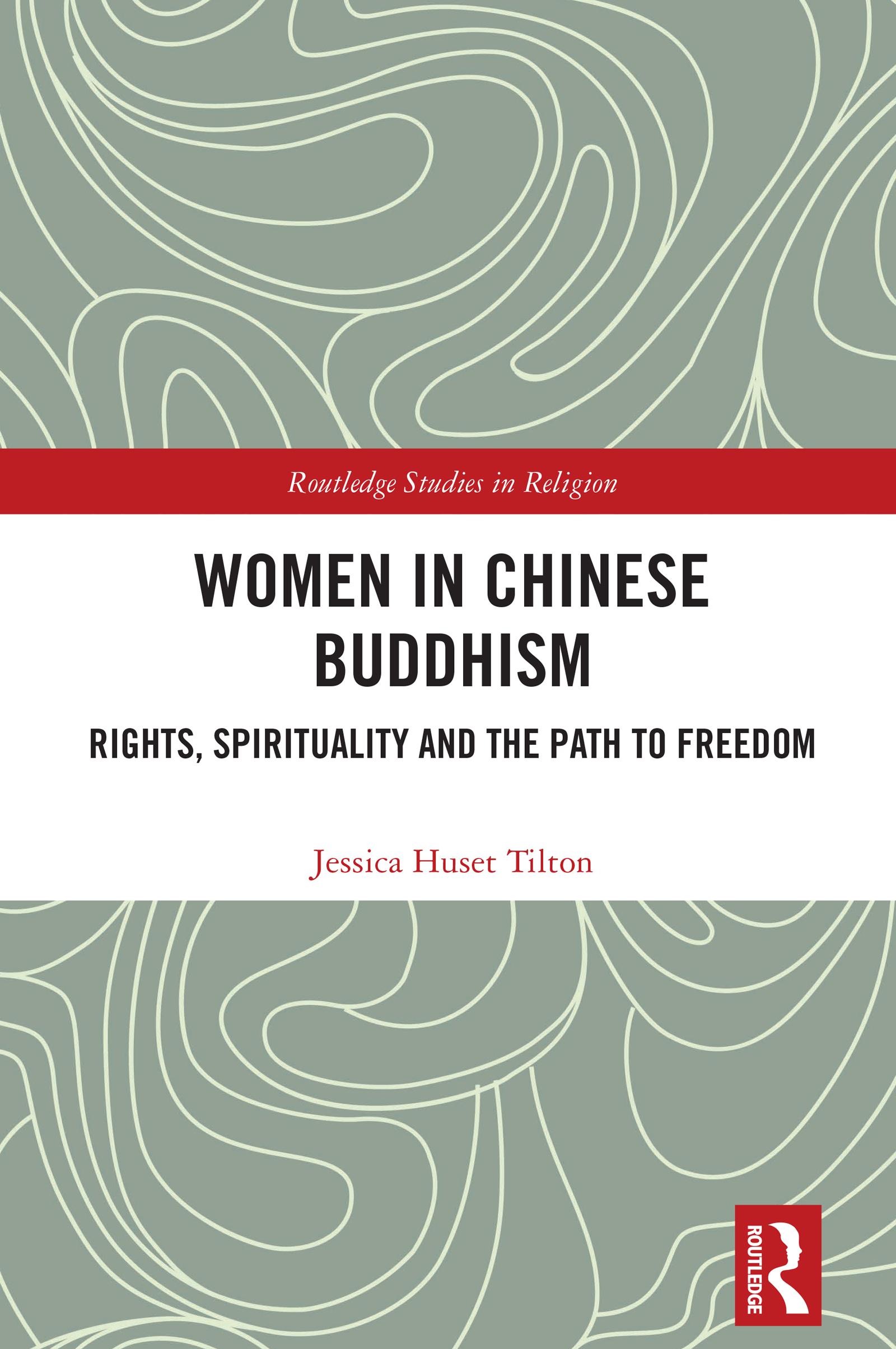
Tilton examines how cultural, political and economic forces exert pressures on the levels of freedom and equality for female Buddhists within the Buddhist community as well as women’s rights within society.
The book charts women’s spiritual paths over four periods, beginning with the Buddha and his revolutionary stance on women, to the creation of a fully ordained female Saṅgha in China—which peaked during the Tang dynasty—and finally to its resurgence in the late Qing and early Republic period, ending with a sharp decline to near extinction during the Mao Zedong years (1949–1976). As the nun and lay communities arise directly from the broader female community, Tilton argues that there is a direct correlation between women’s rights issues and those of liberties for Buddhist women within the Saṅgha. Specifically, women’s equality within “this world” as well as their right to achieve liberation from “this world,” or saṃsāra.
Charting the evolution of Buddhist women in China across multiple centuries, this book is a valuable resource for academics, researchers and students of Asian Studies, Buddhist Studies, as well as those interested in the intersection of gender and religion.
Betala smidigt med kort, Klarna, Apple Pay eller Google Pay. Är du inte nöjd har du alltid 14 dagars ångerrätt. Läs mer i våra villkor. Har du några frågor, mejla oss på hello@memmo.org.
Memmo gör det enklare att plugga – var du än är i världen. Hos oss samlar du kursböcker och smarta studieverktyg på ett och samma ställe: sammanfattningar, quiz, poddar och flashcards. Och så Ted, din studiekompis som svarar på allt du undrar. Över 50 000 studenter pluggar redan här – byggt för att du ska lära dig snabbare och stressa mindre.