
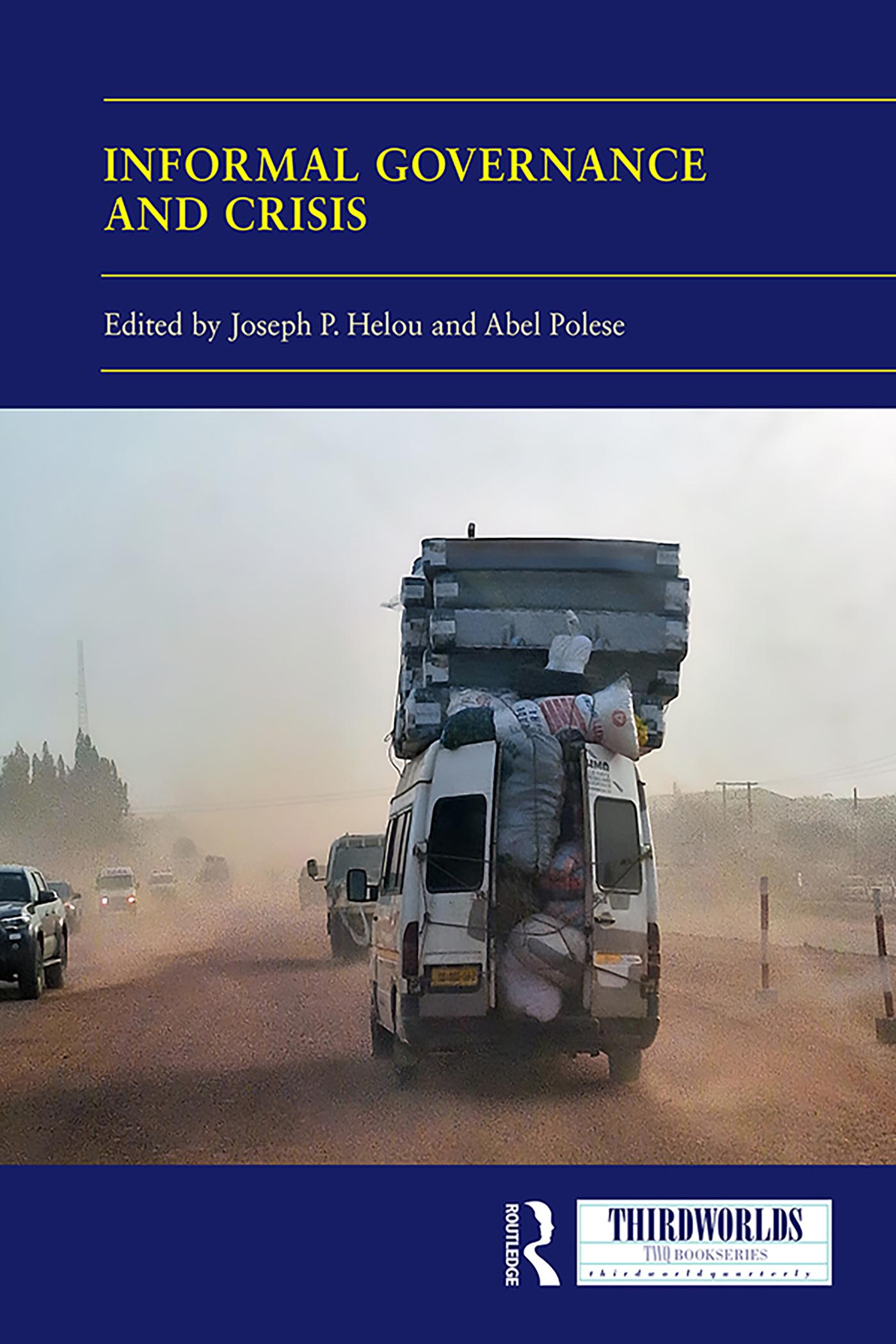
This book examines the impact of crises on people’s lives by walking readers through several case studies from Mali, Niger, Kyrgyzstan, Brazil, Lebanon, Libya and several escape routes and entry points, such as the Canary Islands, into the European Union. It conceptualizes crises as events that disrupt political, social and economic orders, thus breeding ad hoc people-led solutions. These informal people-led coping strategies re-define existing social systems, challenge political orders and transcend the pre-existing economic conventions. The book shows how an increase in the volume and scope of informal practices, in addition to the repetition of these practices over time, culminate in the rise of new modes of governance. It reveals that these new governance dynamics can supplant the state, defy state rules and/or complement state capacities. The analyses and reflections in this book provide policy makers with valuable insights to deal with governance in post-crises situations, while recognizing the role of informality in this process.
This book is intended for students, researchers and scholars of migration studies, political science, and international relations. It also offers valuable perspectives for policymakers and practitioners working in the fields of governance, crisis management, and social development.
The chapters in this book were originally published as a special issue of Third World Quarterly.
Betala smidigt med kort, Klarna, Apple Pay eller Google Pay. Är du inte nöjd har du alltid 14 dagars ångerrätt. Läs mer i våra villkor. Har du några frågor, mejla oss på hello@memmo.org.
Memmo gör det enklare att plugga – var du än är i världen. Hos oss samlar du kursböcker och smarta studieverktyg på ett och samma ställe: sammanfattningar, quiz, poddar och flashcards. Och så Ted, din studiekompis som svarar på allt du undrar. Över 50 000 studenter pluggar redan här – byggt för att du ska lära dig snabbare och stressa mindre.