
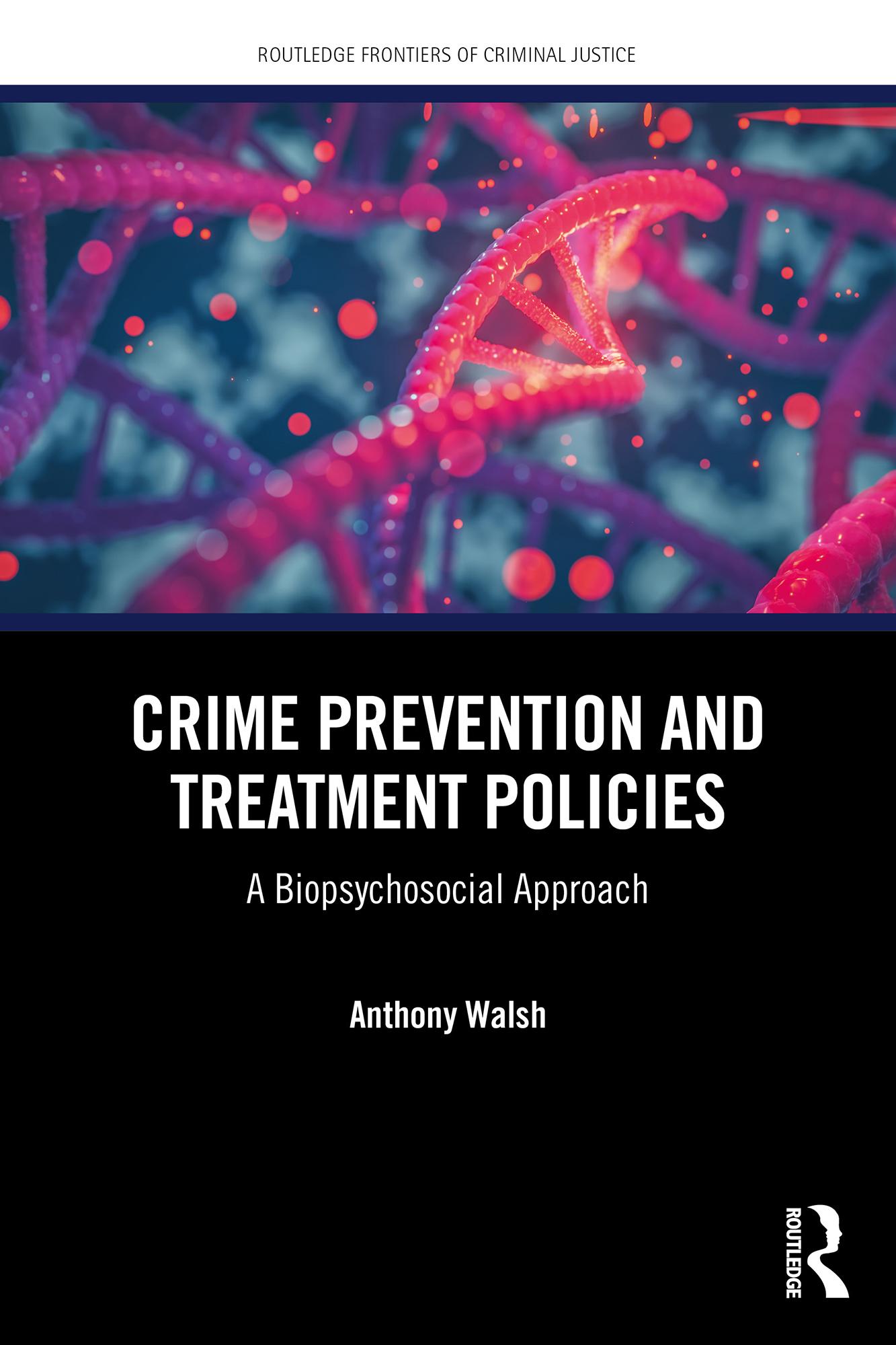
This book shows how to use biopsychosocial assessment for crime prevention and to achieve more individualized treatment for those who commit crimes. Author Anthony Walsh, a prominent figure in biosocial criminology for more than four decades, examines the treatment policy recommendations of major criminological theories and how they might be improved by integrating relevant biopsychosocial insights. Walsh contends that sound crime prevention and treatment policies must be based on empirical evidence derived from theories about the causes of crime if they are to reduce incarceration rates. The biopsychosocial perspective improves on traditional theories by examining all putative causes of crime from the micro to the macro— from neurons to neighborhoods— and should thus improve prevention and treatment efforts.
The understanding of the genetic, neurobiological, and physiological components of antisocial behavior has improved exponentially over the past three decades. The relevant biological measures (e.g., genotyping, hormone assays, autonomic system arousal levels, resting heart rates) are routinely examined in university labs for research purposes. This book shows how measures of these components can be fruitfully integrated into the risk- need- responsivity model of offender treatment.
Offering a fresh perspective, this book is essential for both scholars and practitioners wishing to explore treatment modalities that consider the biological aspects of criminality.
Betala smidigt med kort, Klarna, Apple Pay eller Google Pay. Är du inte nöjd har du alltid 14 dagars ångerrätt. Läs mer i våra villkor. Har du några frågor, mejla oss på hello@memmo.org.
Memmo gör det enklare att plugga – var du än är i världen. Hos oss samlar du kursböcker och smarta studieverktyg på ett och samma ställe: sammanfattningar, quiz, poddar och flashcards. Och så Ted, din studiekompis som svarar på allt du undrar. Över 50 000 studenter pluggar redan här – byggt för att du ska lära dig snabbare och stressa mindre.