
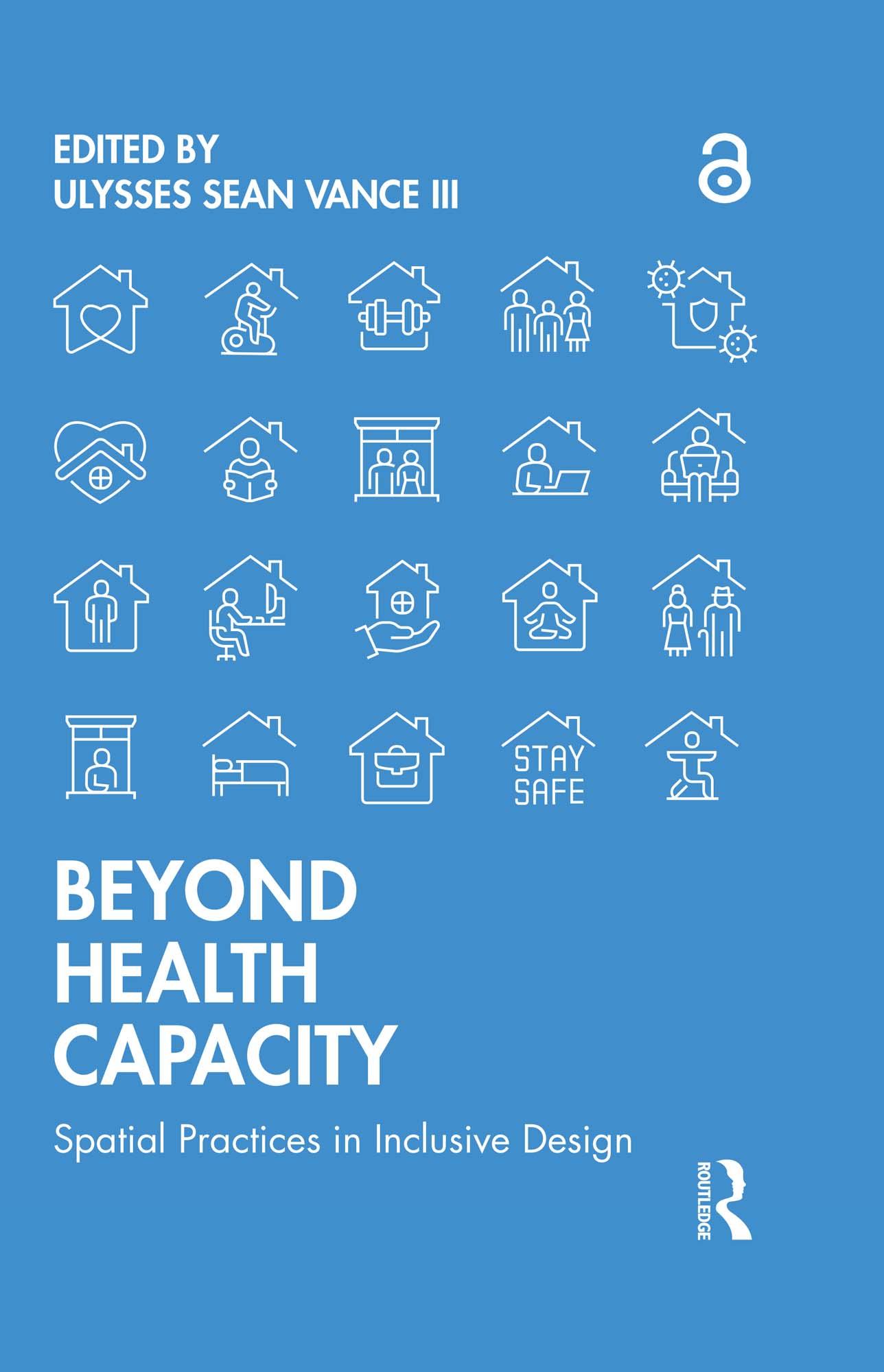
Beyond Health Capacity: Spatial Practices in Inclusive Design sheds light on the systemic challenges communities with limited access to medical support and health maintenance have endured. It emphasizes how approaching medical interventions through non-traditional health facilities can positively impact health's social and environmental impact. Health capacity is an emerging consideration for optimizing a building design to meet health criteria based on physical, virtual, historical, or social space. These emerging practices can be focused on by interrogating the role of planning, construction, and urban design in addressing public health needs, alongside considering access and social justice as an agency in design. This book reflects on past and present efforts interrogating the practical application of inclusive design practices in resolving the spatial challenges of health reform.
By focusing on examples experienced during the pandemic and after, each chapter offers an overview documenting these experiences as approaches to these new competencies, reimagining urbanism around health, and proposing new criteria for the future of healthcare.
This book is essential for students and practitioners working in architecture, community planning, urban design, landscape architecture, and public health.
The Open Access version of this book, available at http://www.taylorfrancis.com, has been made available under a Creative Commons Attribution-Non Commercial-No Derivatives (CC BY-NC-ND) 4.0 license.
Betala smidigt med kort, Klarna, Apple Pay eller Google Pay. Är du inte nöjd har du alltid 14 dagars ångerrätt. Läs mer i våra villkor. Har du några frågor, mejla oss på hello@memmo.org.
Memmo gör det enklare att plugga – var du än är i världen. Hos oss samlar du kursböcker och smarta studieverktyg på ett och samma ställe: sammanfattningar, quiz, poddar och flashcards. Och så Ted, din studiekompis som svarar på allt du undrar. Över 75 000 studenter pluggar redan här – byggt för att du ska lära dig snabbare och stressa mindre.