
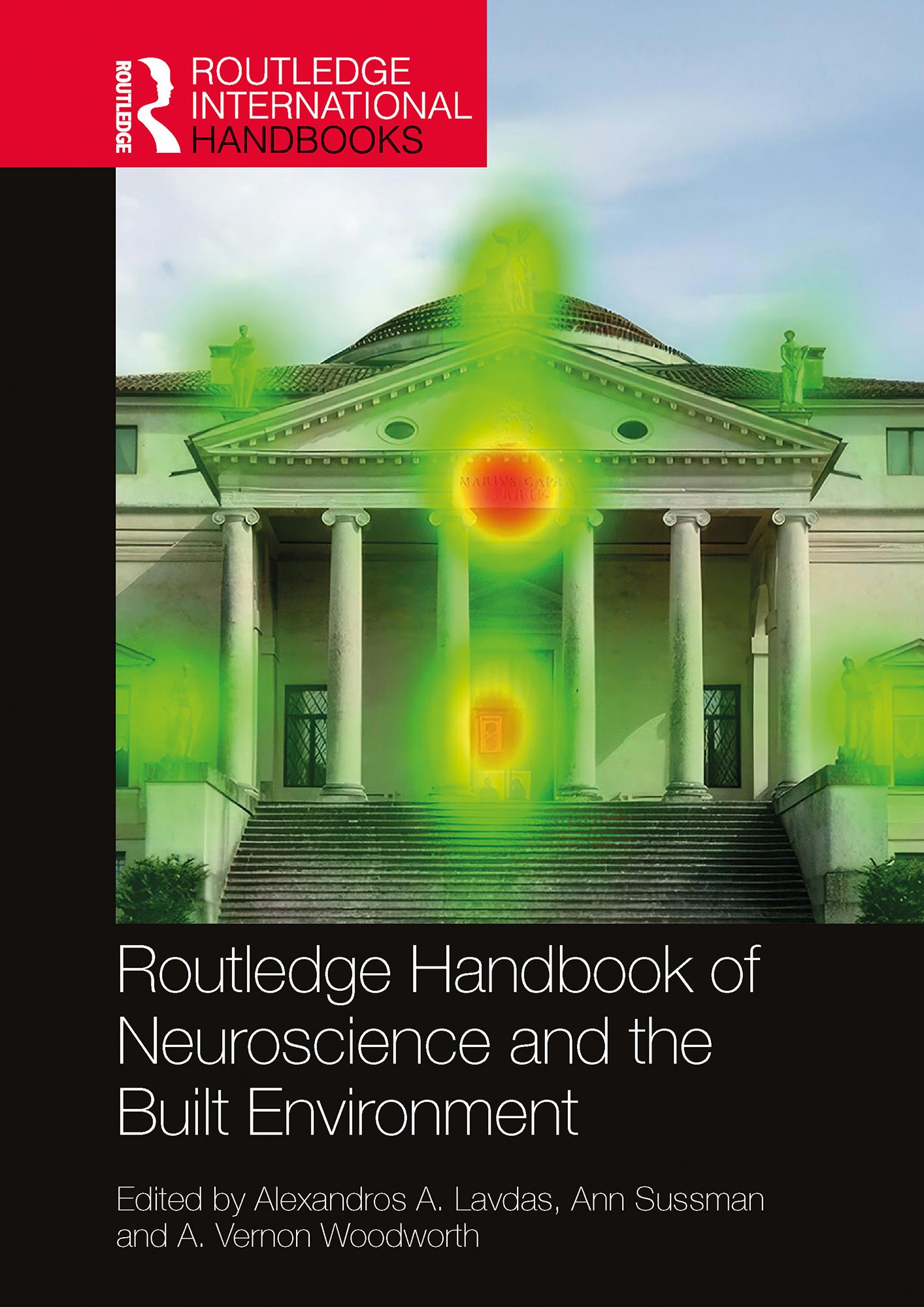
According to the OECD (Organization for Economic Cooperation and Development), in the
21st century, we are living in a New Age of Biology, acknowledging the rapid development
of transformative findings in the life sciences. The Routledge Handbook of Neuroscience and
the Built Environment shows how these new findings impact architecture, planning, and
design, changing our understanding how people respond to their surroundings, and how
these environments can be optimized for human well-being.
A total of 31 chapters, presented in six sections, discuss human perception, the need
for connection, and how design impacts health and well-being, through topics such as
neuroaesthetics, color, memory and place, proportion, sound, neurophenomenology,
neurodiversity, biophilia, beauty, artificial intelligence, among many others. Expert
international contributors look to answer key questions as follows: What do architects and
designers need to know about neuroscience? How does architecture and design impact us
non-consciously? Why is acknowledging the human subliminal experience important? What
tools can designers use to “see” our subliminal behaviors?
This volume will be important reading for the design community, whether practicing,
educating, or studying, as well as policy makers and public health professionals.
Betala smidigt med kort, Klarna, Apple Pay eller Google Pay. Är du inte nöjd har du alltid 14 dagars ångerrätt. Läs mer i våra villkor. Har du några frågor, mejla oss på hello@memmo.org.
Memmo gör det enklare att plugga – var du än är i världen. Hos oss samlar du kursböcker och smarta studieverktyg på ett och samma ställe: sammanfattningar, quiz, poddar och flashcards. Och så Ted, din studiekompis som svarar på allt du undrar. Över 75 000 studenter pluggar redan här – byggt för att du ska lära dig snabbare och stressa mindre.