
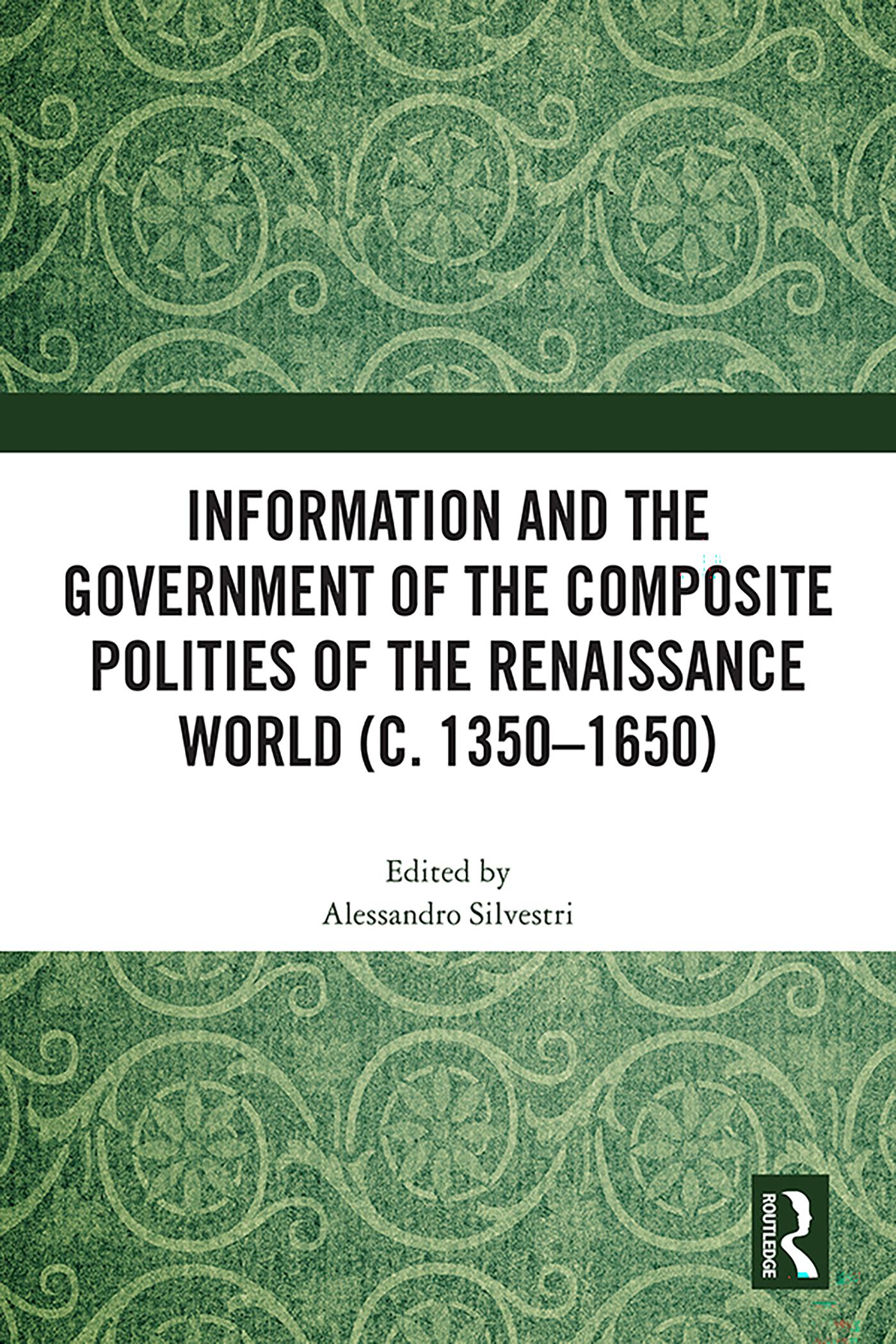
This book examines the role of information as a crucial means for governance and negotiation, through which Renaissance rulers and governments managed the composite polities under their control.
The Renaissance world was characterized by the presence of numerous composite polities and political unions, consisting of distinct territories governed by a single ruler or government. These entities varied in scale, ranging from medium-sized polities including cities and lordships to thalassocracies encompassing distant and sometimes lands separated by sea, and vast global empires comprising multiple territories and diverse populations. The chapters in this book explore how information enabled authorities to monitor events within their dominions and colonies, shape policies and decision-making processes, and interact and negotiate with local political societies. The diverse examples presented in this volume illustrate how information, communication, and archival strategies varied across regions, adapting to the constitutional structure of each polity and their geographical scope.
This volume is essential reading for students, researchers, and academics interested in political history, information studies, historical governance and European studies. The chapters in this book were originally published as a special issue of European Review of History.
Betala smidigt med kort, Klarna, Apple Pay eller Google Pay. Är du inte nöjd har du alltid 14 dagars ångerrätt. Läs mer i våra villkor. Har du några frågor, mejla oss på hello@memmo.org.
Memmo gör det enklare att plugga – var du än är i världen. Hos oss samlar du kursböcker och smarta studieverktyg på ett och samma ställe: sammanfattningar, quiz, poddar och flashcards. Och så Ted, din studiekompis som svarar på allt du undrar. Över 50 000 studenter pluggar redan här – byggt för att du ska lära dig snabbare och stressa mindre.