
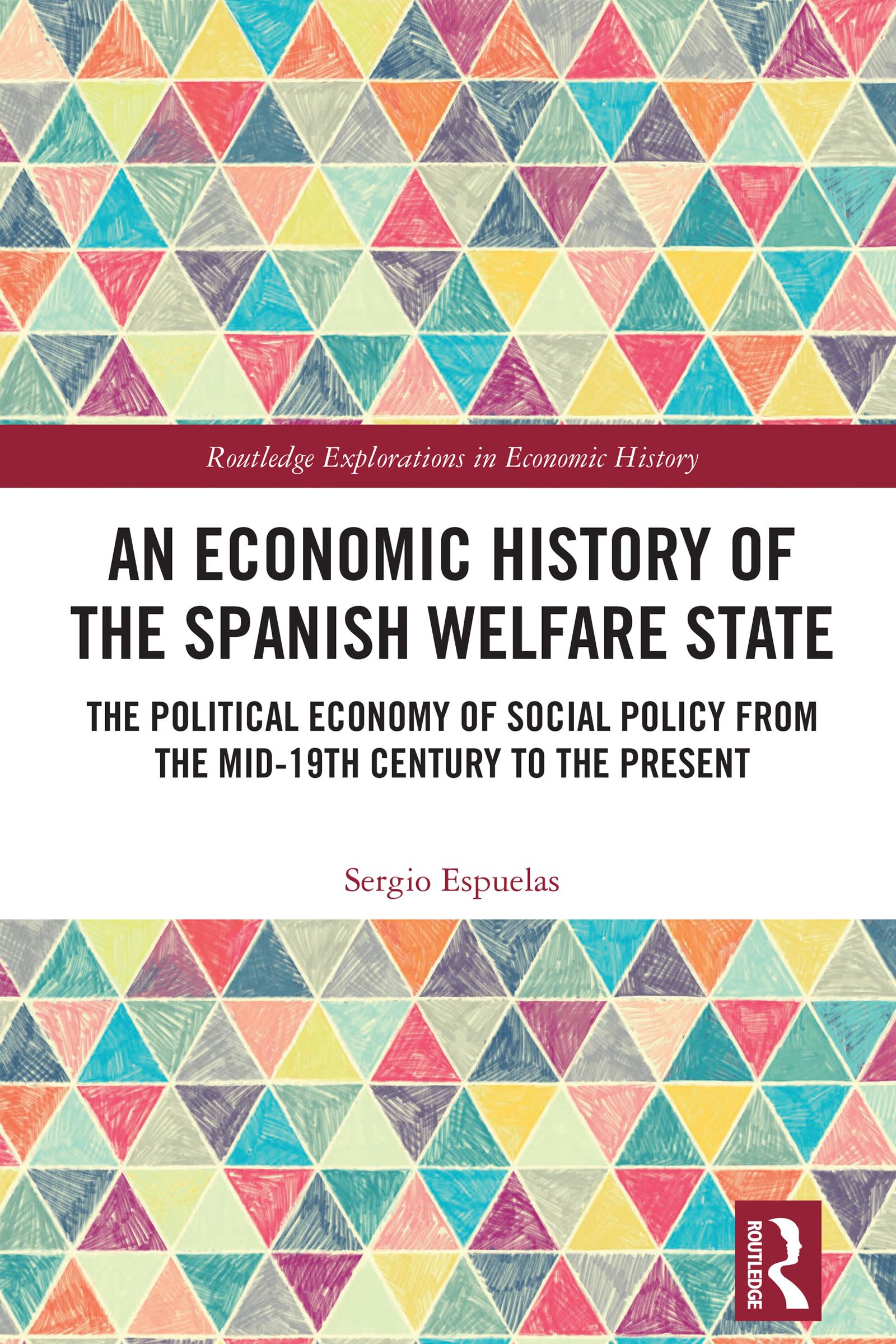
This monograph analyses the evolution of the welfare state in Spain from qualitative and quantitative perspectives. It basically relies on estimates of public social spending from 1850 to the present and offers comparisons with the rest of Europe.
As a whole, the volume sheds light on the historical, political, and economic conditions at play during the relatively late development of the Spanish welfare state. Three key driving factors are explored: the political regime, social inequality, and Spain’s exposure to international markets. While economic backwardness and demographic factors explain part of the story, Espuelas demonstrates that inequality explains much of the pre-1936 gap; the lack of democracy and the Franco dictatorship were crucial up to the 1970s, and globalization, rather than having a clear positive or negative effect, has mainly influenced the way social policy is financed.
This volume will be of interest to advanced students and researchers of economic history, welfare states, European history, and social policy.
Betala smidigt med kort, Klarna, Apple Pay eller Google Pay. Är du inte nöjd har du alltid 14 dagars ångerrätt. Läs mer i våra villkor. Har du några frågor, mejla oss på hello@memmo.org.
Memmo gör det enklare att plugga – var du än är i världen. Hos oss samlar du kursböcker och smarta studieverktyg på ett och samma ställe: sammanfattningar, quiz, poddar och flashcards. Och så Ted, din studiekompis som svarar på allt du undrar. Över 50 000 studenter pluggar redan här – byggt för att du ska lära dig snabbare och stressa mindre.