
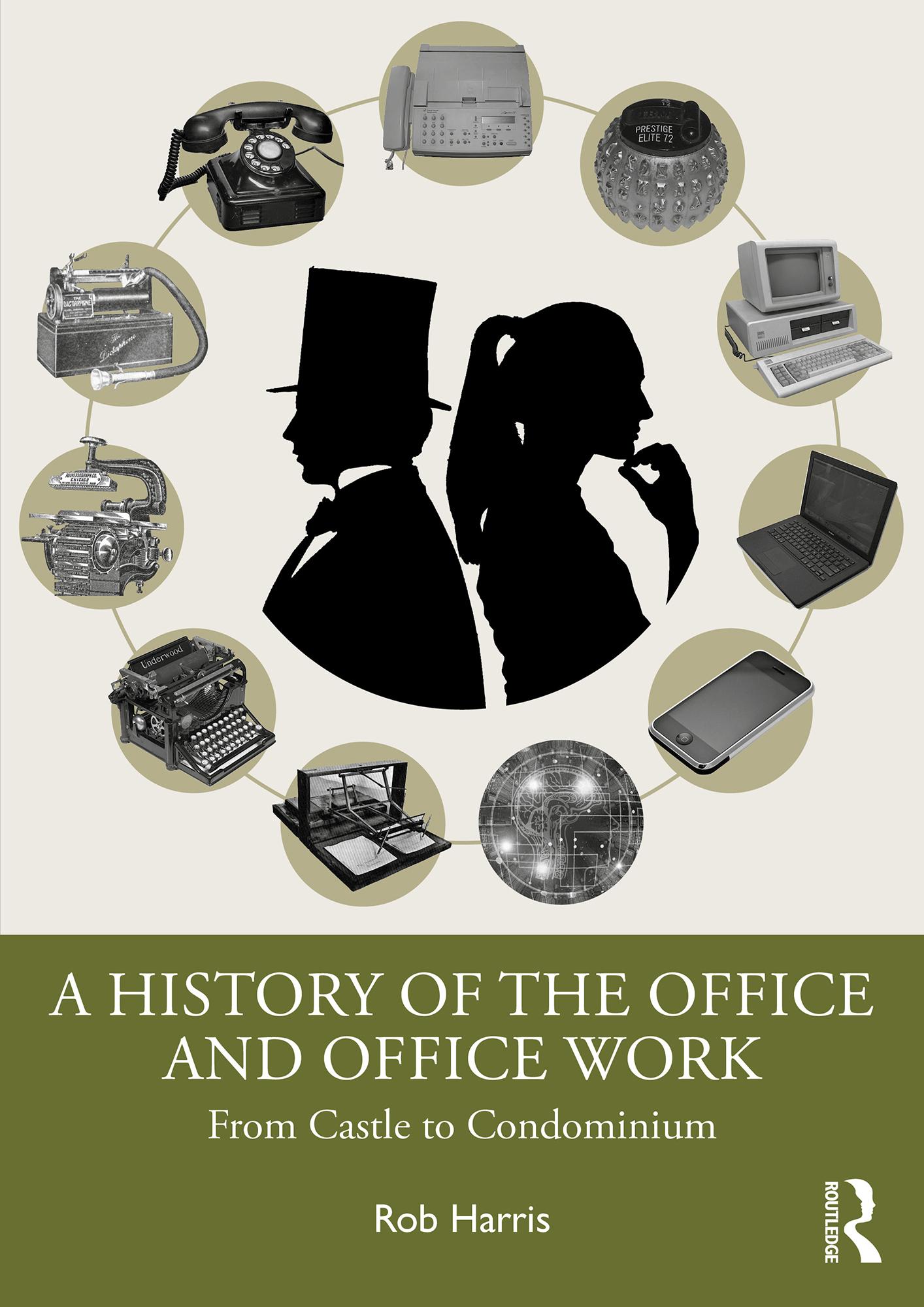
This book brings together the office and office working as an economic construct, as a business function, as a building type and as a mode of work. It explores social and economic relations, and it traces the evolution of work and the environment and equipment needed to support it over the last 400 years. In so doing, it helps to fill a void in popular understanding of the office.
The role of the office has been examined over the past three years in ways that it has never been examined before. Whilst the existential crisis arising from COVID-19 has settled somewhat, there remain big questions over the future of office workers and office real estate. This book is a timely, well-researched and fascinating contribution to the debate.
Rob Harris explores how the nature of work has changed, and continues to change, placing the events surrounding COVID-19 into a longer-term perspective and asking what is the future of the office? Will it go through a radical reinvention? How will office work evolve in the future? Whither office buildings? The book emphasises the continuum of change and that today’s events are simply the latest stage of change, rather than something entirely novel.
This book will be of interest to anyone with a stake in the built environment, whether as an investor, occupier, owner, manager or advisor. It is equally accessible to those with a non-technical background, including students on courses such as economic history, economics, geography, real estate and urban planning.
Betala smidigt med kort, Klarna, Apple Pay eller Google Pay. Är du inte nöjd har du alltid 14 dagars ångerrätt. Läs mer i våra villkor. Har du några frågor, mejla oss på hello@memmo.org.
Memmo gör det enklare att plugga – var du än är i världen. Hos oss samlar du kursböcker och smarta studieverktyg på ett och samma ställe: sammanfattningar, quiz, poddar och flashcards. Och så Ted, din studiekompis som svarar på allt du undrar. Över 75 000 studenter pluggar redan här – byggt för att du ska lära dig snabbare och stressa mindre.