
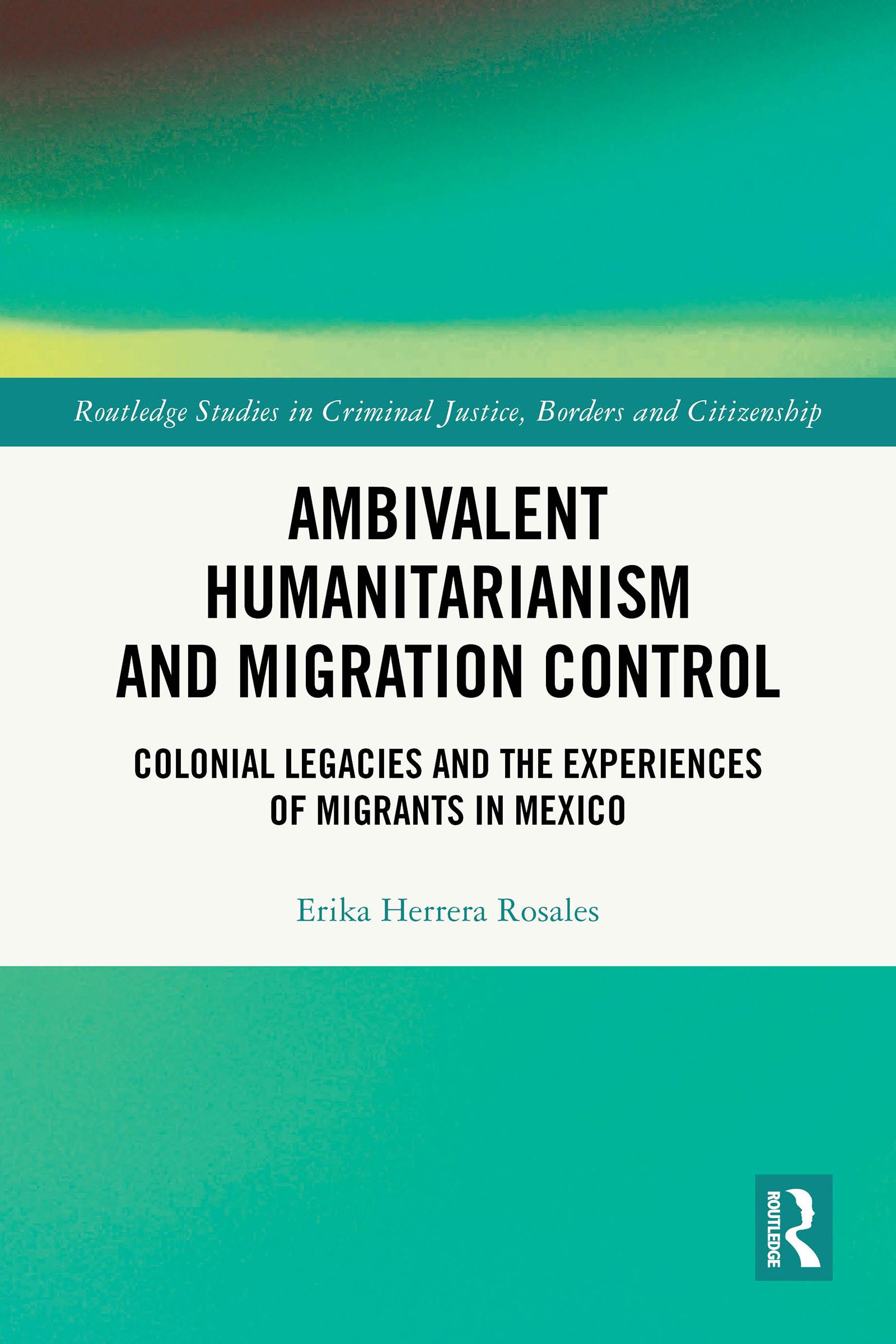
Ambivalent Humanitarianism and Migration Control explores the complex relationship between migrants and local aid organisations. These organisations have become indisputably relevant and highly regarded as allies to Northern Central American migrants trying to reach the United States. Thus, this book examines the implications of humanitarian actors in migration governance and bordering practices, which have serious and long-lasting effects on the lives of migrants.
Through an in-depth research in Mexico, this book suggests that humanitarian organisations are ambivalent institutions because they intend to help and support individuals while reinforcing social and power inequalities. It explores the narratives, roles, and practices of humanitarian workers, and, at the same time, addresses migrants’ resistance. From an interdisciplinary approach that employs critical humanitarian perspectives, post/decolonial theories, and criminological studies, this study provides a comprehensive analysis of migration governance and migrants’ agency.
A highly informative, insightful, and engaging read, Ambivalent Humanitarianism and Migration Control will appeal to students, scholars, and researchers in migration studies, border studies, sociology, and critical criminology. Given its international scope, it also will be of interest to academics, practitioners, and people in Latin America, the United States, the UK, Europe, and beyond.
Betala smidigt med kort, Klarna, Apple Pay eller Google Pay. Är du inte nöjd har du alltid 14 dagars ångerrätt. Läs mer i våra villkor. Har du några frågor, mejla oss på hello@memmo.org.
Memmo gör det enklare att plugga – var du än är i världen. Hos oss samlar du kursböcker och smarta studieverktyg på ett och samma ställe: sammanfattningar, quiz, poddar och flashcards. Och så Ted, din studiekompis som svarar på allt du undrar. Över 50 000 studenter pluggar redan här – byggt för att du ska lära dig snabbare och stressa mindre.