
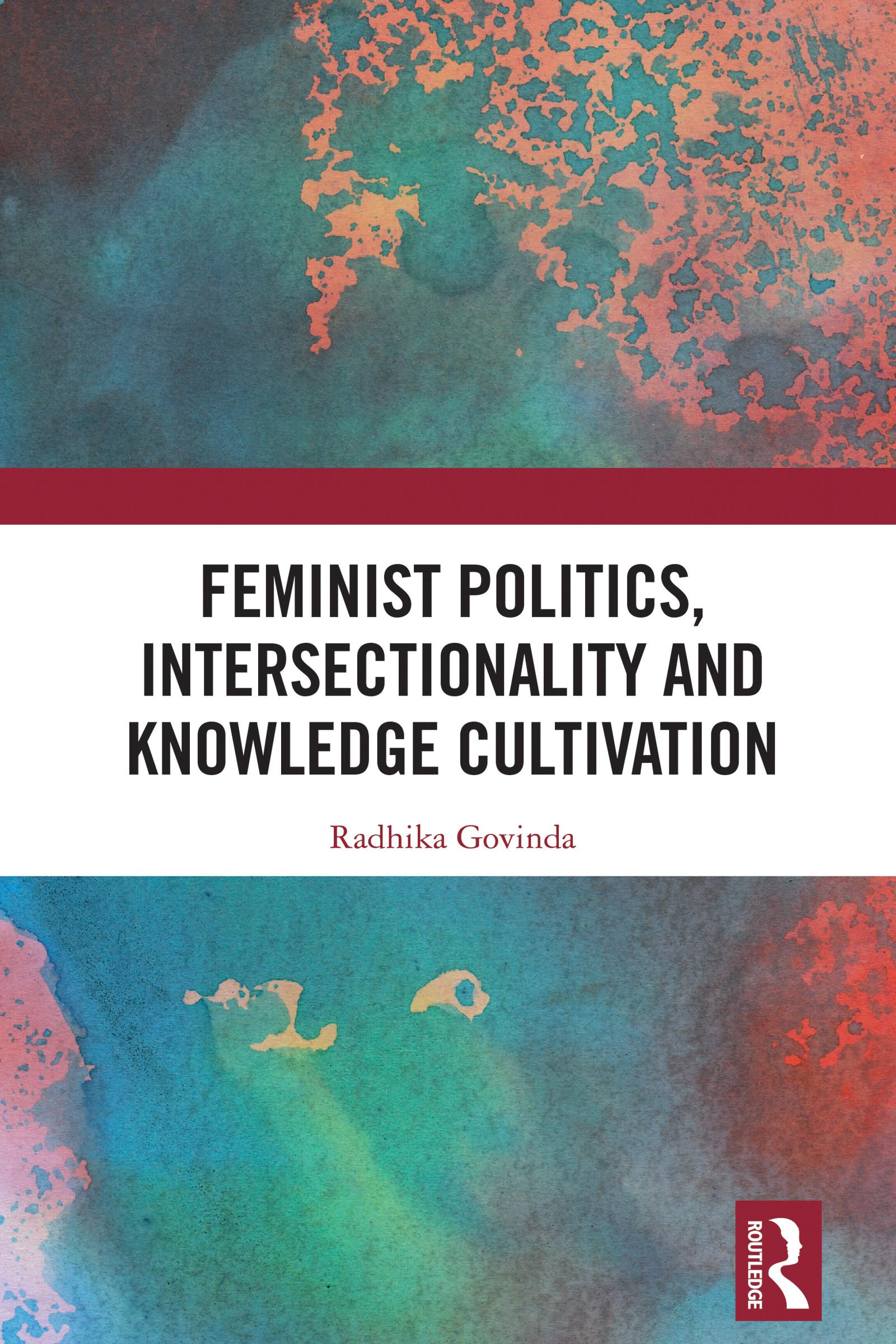
In Feminist Politics, Intersectionality and Knowledge Cultivation, Radhika Govinda engages with intersectionality – as critical theory, as critical methodology and as critical pedagogy – to make sense of feminist politics in India and beyond, and knowledge-making on feminist politics, as such. In doing so, she makes a case for theory-making, conducting empirical research and classroom teaching to be understood as integral parts of knowledge cultivation, each feeding into the other. Differently put, the book encapsulates Govinda’s engagement, spanning fifteen years and four case studies, exploring what insights an intersectional lens throws up, and how these insights complicate our understandings of marginality, privilege and solidarity in the field of women’s and gender studies, in feminist classrooms, in women’s and social movements, in particular NGO-led feminist activism, state-led development initiatives and digital feminist campaigns, and in everyday social relations in rural and urban spaces. Uncovering, interrogating and disrupting the politics of coloniality and feminist complicity is an important running thread in the book. Through a reflexive account of her own location and practice in the academy at the cusp of the global north and the global south, Govinda highlights the importance of being attentive to intersectional positionality and to the contextual specificities of engaging in feminist politics and knowledge-making in the age of global neoliberalism.
Betala smidigt med kort, Klarna, Apple Pay eller Google Pay. Är du inte nöjd har du alltid 14 dagars ångerrätt. Läs mer i våra villkor. Har du några frågor, mejla oss på hello@memmo.org.
Memmo gör det enklare att plugga – var du än är i världen. Hos oss samlar du kursböcker och smarta studieverktyg på ett och samma ställe: sammanfattningar, quiz, poddar och flashcards. Och så Ted, din studiekompis som svarar på allt du undrar. Över 50 000 studenter pluggar redan här – byggt för att du ska lära dig snabbare och stressa mindre.