
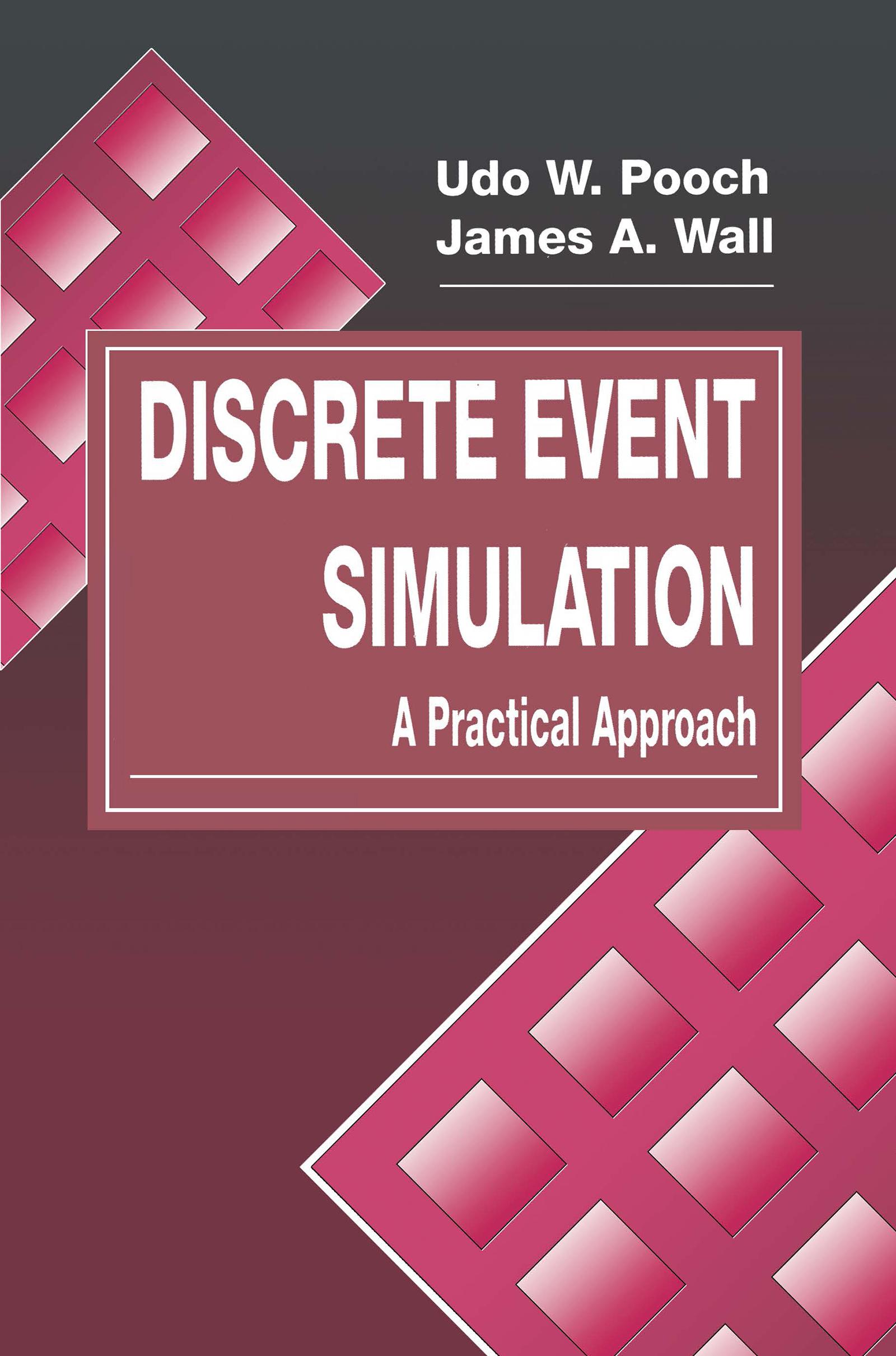
Discrete Event Simulation is a process-oriented text/reference that utilizes an eleven-step model to represent the simulation process from problem formulation to implementation and documentation. The book presents the necessary level of detail required to fully develop a model that produces meaningful results and considers the tools necessary to interpret those results. Sufficient background information is provided so that the underlying concepts of simulation are understood.
Major topics covered in Discrete Event Simulation include probability and distributional theory, statistical estimation and inference, the generation of random variates, verification and validation techniques, time management methods, experimental design, and programming language considerations. The book also examines distributed simulation and issues related to distributing the physical process over a network of tightly coupled processors. Topics covered in this area include deadlock, synchronization, rollback, event management, and communication processes.
Fully worked examples and numerous practical exercises have been drawn from the engineering disciplines and computer science, although they have been structured so that they will be useful as well to other disciplines such as economics, business administration, and management science. The presentation of techniques and methods in Discrete Event Simulation make it an ideal text/reference for all practitioners of discrete event simulation.
Betala smidigt med kort, Klarna, Apple Pay eller Google Pay. Är du inte nöjd har du alltid 14 dagars ångerrätt. Läs mer i våra villkor. Har du några frågor, mejla oss på hello@memmo.org.
Memmo gör det enklare att plugga – var du än är i världen. Hos oss samlar du kursböcker och smarta studieverktyg på ett och samma ställe: sammanfattningar, quiz, poddar och flashcards. Och så Ted, din studiekompis som svarar på allt du undrar. Över 50 000 studenter pluggar redan här – byggt för att du ska lära dig snabbare och stressa mindre.