
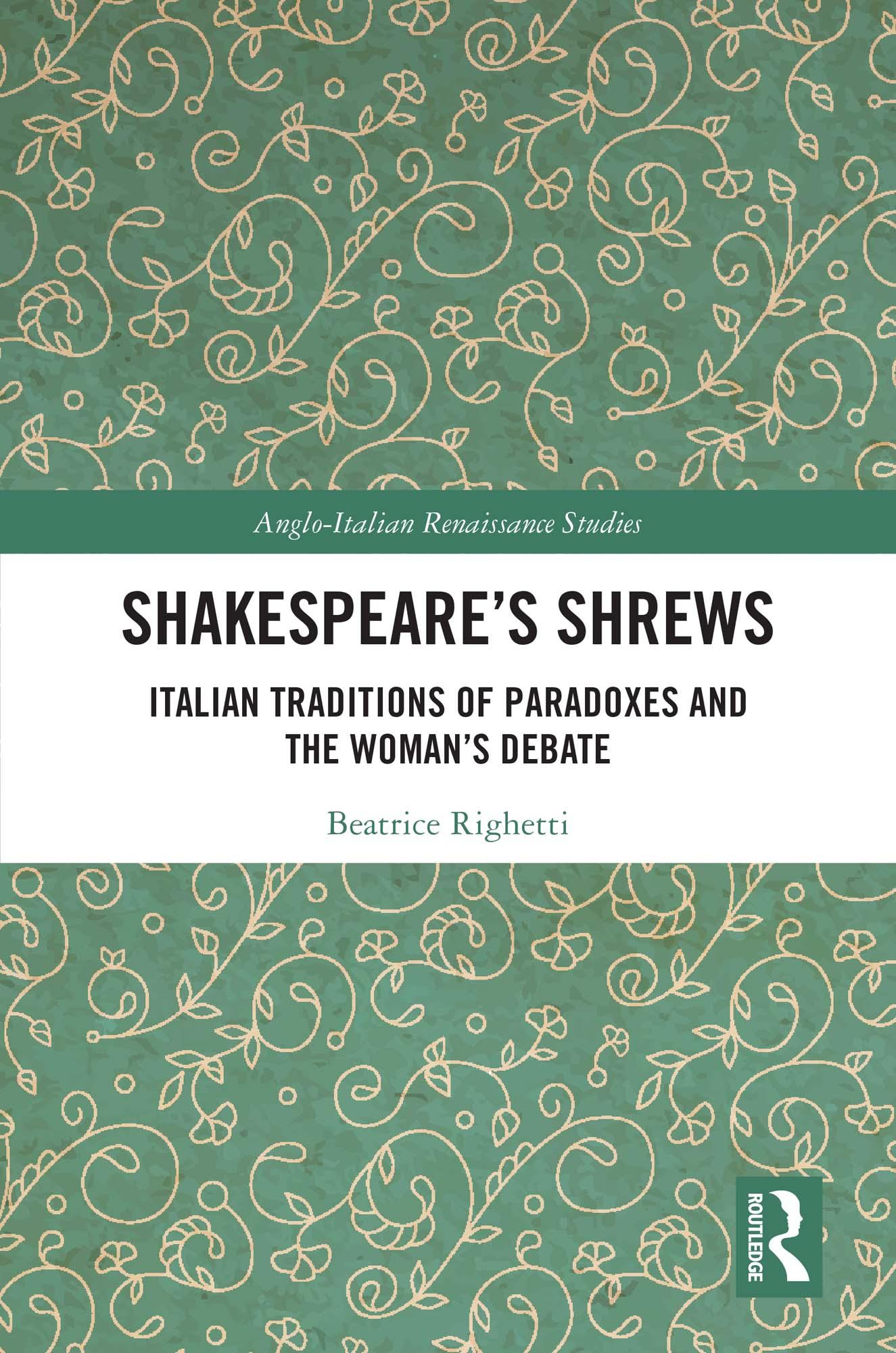
Shakespeare’s Shrews: Italian Traditions of Paradoxes and the Woman’s Debate investigates the echoes of two early modern discourses—paradoxical writing and the woman’s question or querelle des femmes—in the representation of the “Shakespearean shrew” in The Taming of the Shrew, Much Ado About Nothing, and Othello.
This comparative cross‑cultural study explores the English reception of these traditions through the circulation, translation, and adaptation of Italian works such as Ludovico Ariosto’s Orlando Furioso, Baldassare Castiglione’s Il libro del cortegiano, and Ercole and Torquato Tasso’s Dell’ammogliarsi. The enticing interplay of these two discourses is further complicated by their presence in the writing of early modern male and female authors. The examination of Shakespeare’s adaptation of these traditions in his “shrew” character highlights two key findings: the thematic fragmentation of the woman’s question and the evolving role of paradoxes, from figures of speech to “figures of thought”, both influenced by the gender of the speaker.
Betala smidigt med kort, Klarna, Apple Pay eller Google Pay. Är du inte nöjd har du alltid 14 dagars ångerrätt. Läs mer i våra villkor. Har du några frågor, mejla oss på hello@memmo.org.
Memmo gör det enklare att plugga – var du än är i världen. Hos oss samlar du kursböcker och smarta studieverktyg på ett och samma ställe: sammanfattningar, quiz, poddar och flashcards. Och så Ted, din studiekompis som svarar på allt du undrar. Över 50 000 studenter pluggar redan här – byggt för att du ska lära dig snabbare och stressa mindre.