
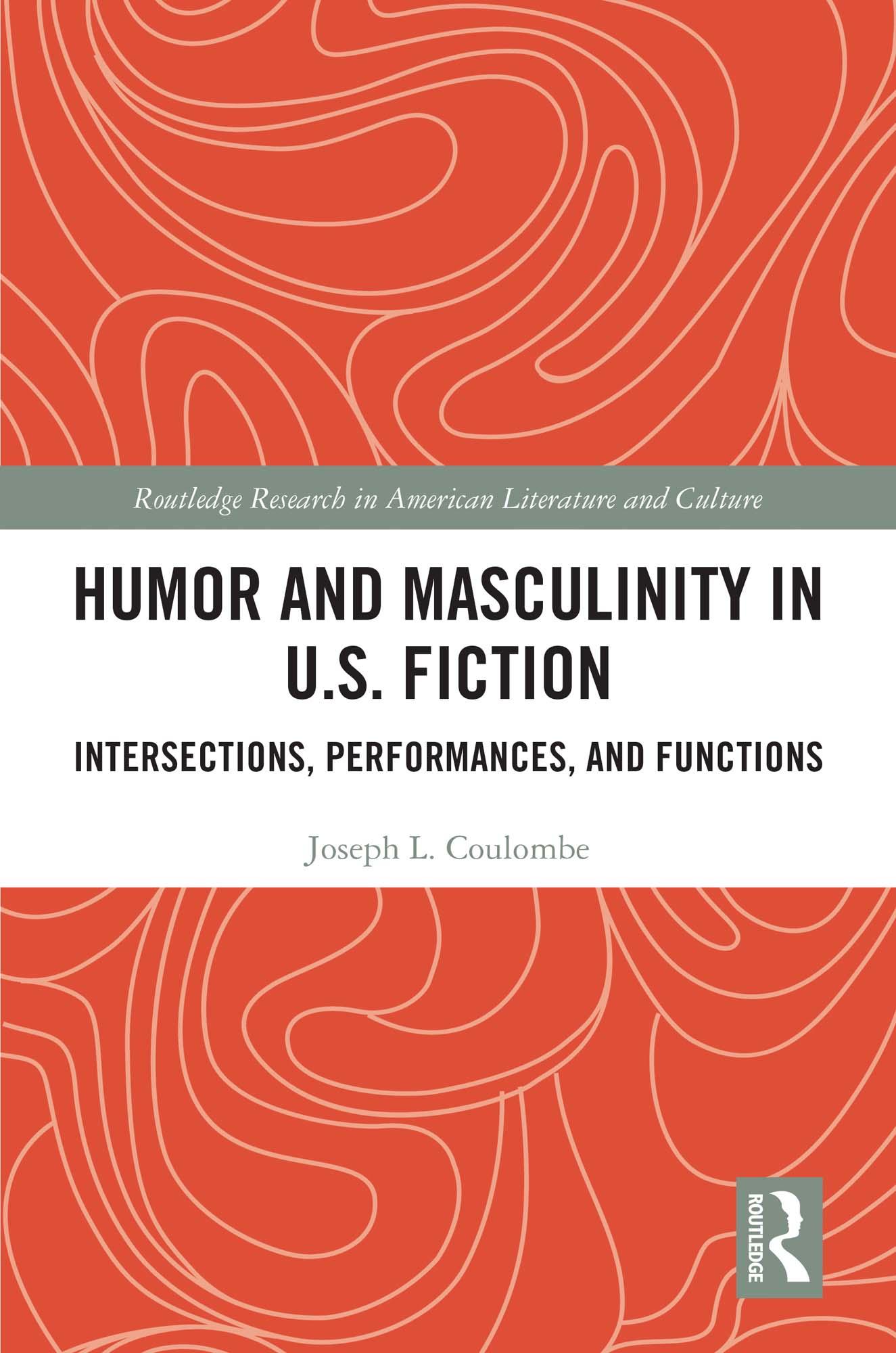
Humor and Masculinity in U.S. Fiction offers a pragmatic and theoretically informed model for analyzing how humor and gender intersect in key U.S. texts, bringing much-needed attention to the complex ways that humor can support and/or subvert reductive masculine codes and behaviors. Its argument builds upon three major humor theories – the incongruity theory, superiority theory, and relief theory – to analyze how humor is used to negotiate the shifting constructions of masculinity and manhood in American culture and literature. Focusing on explicit textual references to joking, pranks, and laughter, Humor and Masculinity in U.S. Fiction offers well-supported, original interpretations of works by Mark Twain, Owen Wister, Dorothy Parker, Zora Neale Hurston, Joseph Heller, Philip Roth, and Sherman Alexie. The primary goal of Humor and Masculinity in U.S. Fiction is to understand the multiple ways that humor performs and interrogates masculinity in seminal U.S. texts.
Betala smidigt med kort, Klarna, Apple Pay eller Google Pay. Är du inte nöjd har du alltid 14 dagars ångerrätt. Läs mer i våra villkor. Har du några frågor, mejla oss på hello@memmo.org.
Memmo gör det enklare att plugga – var du än är i världen. Hos oss samlar du kursböcker och smarta studieverktyg på ett och samma ställe: sammanfattningar, quiz, poddar och flashcards. Och så Ted, din studiekompis som svarar på allt du undrar. Över 50 000 studenter pluggar redan här – byggt för att du ska lära dig snabbare och stressa mindre.