
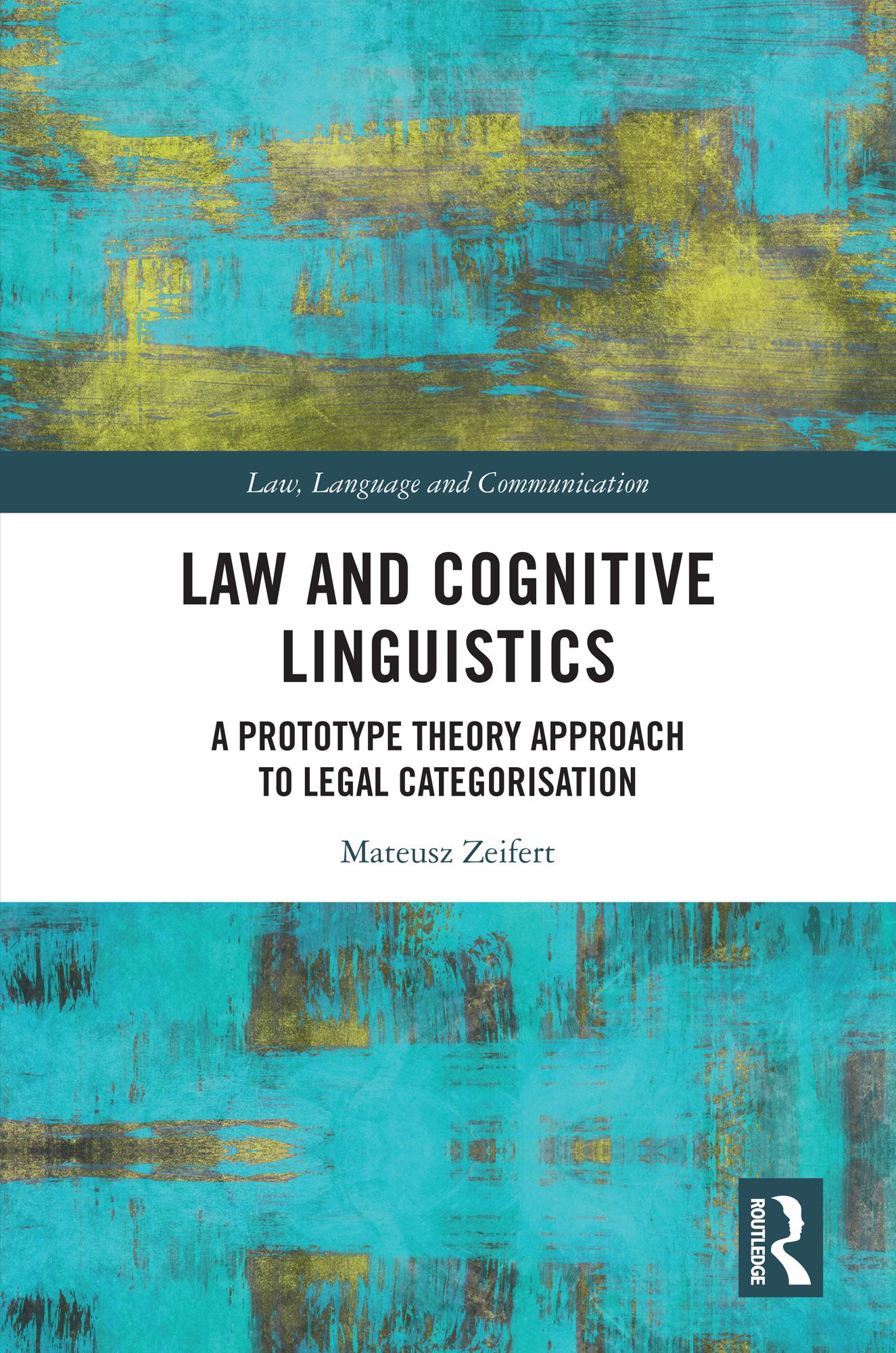
This book advances the prototype theory of categorisation within a legal context. The work adopts a multidisciplinary approach and draws on insights from cognitive psychology, cognitive linguistics, and analytic philosophy to discuss semantic problems present in law. Designed as a bridge between cognitive linguistics and legal theory, it argues that categorisation is a crucial cognitive operation for the application of law and that theories of categorisation are relevant to legal theory. It makes the case that the prototype approach is better suited than more formal approaches usually utilised in jurisprudence to explaining many familiar linguistic problems found in law, such as vagueness, polysemy, the flexibility of meaning, the generality of language, context dependence of meaning, linguistic indeterminacy, and so on. The book focuses on problems of semantic analysis in law, both in concrete cases, that is, particular cases before courts, and, at the theoretical level, on methods of statutory interpretation. It will be a valuable resource for academics and researchers working in the areas of Law and Language, Legal Theory, Legal Philosophy, and Legal Linguistics.
Betala smidigt med kort, Klarna, Apple Pay eller Google Pay. Är du inte nöjd har du alltid 14 dagars ångerrätt. Läs mer i våra villkor. Har du några frågor, mejla oss på hello@memmo.org.
Memmo gör det enklare att plugga – var du än är i världen. Hos oss samlar du kursböcker och smarta studieverktyg på ett och samma ställe: sammanfattningar, quiz, poddar och flashcards. Och så Ted, din studiekompis som svarar på allt du undrar. Över 50 000 studenter pluggar redan här – byggt för att du ska lära dig snabbare och stressa mindre.