
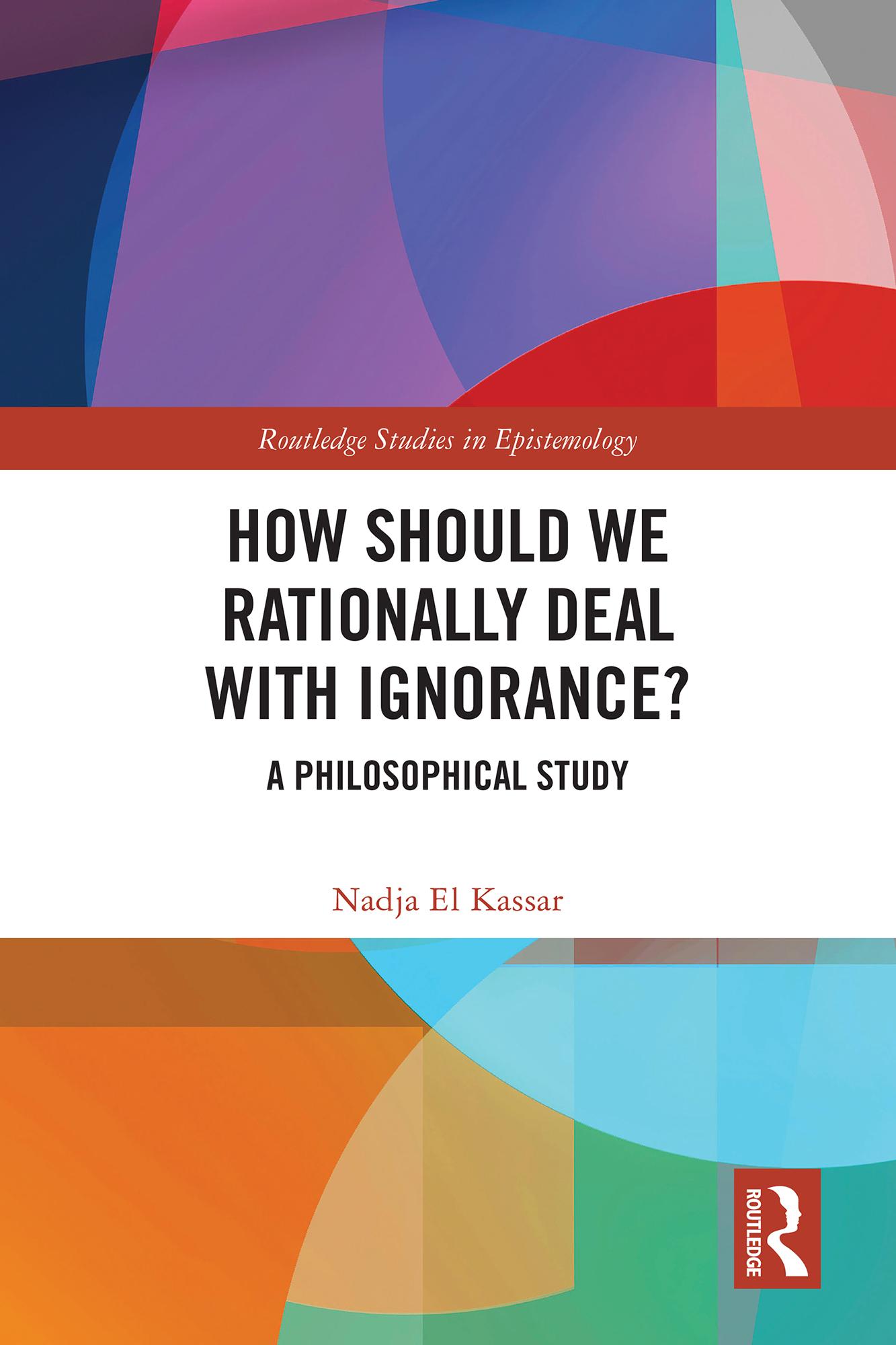
This book addresses two questions that are highly relevant for epistemology and for society: What is ignorance and how should we rationally deal with it? It proposes a new way of thinking about ignorance based on contemporary and historical philosophical theories.
In the first part of the book, the author shows that epistemological definitions of ignorance are quite heterogeneous and often address different phenomena under the label "ignorance." She then develops an integrated conception of ignorance that recognizes doxastic, attitudinal, and structural constituents of ignorance. Based on this new conception, she carves out suggestions for dealing with ignorance from the history of philosophy that have largely been overlooked: virtue-theoretic approaches based on Aristotle and Socrates, consequentialist approaches derived from James, and deontological approaches based on Locke, Clifford, and Kant. None of these approaches individually provide a satisfying approach to the task of rationally dealing with ignorance, and so the author develops an alternative maxim-based answer that extends Kant’s maxims of the sensus communis to the issue of ignorance. The last part of the book applies this maxim-based answer to different contexts in medicine and democracies.
How Should We Rationally Deal with Ignorance? will appeal to scholars and advanced students working in epistemology, political philosophy, feminist philosophy, and the social sciences.
Betala smidigt med kort, Klarna, Apple Pay eller Google Pay. Är du inte nöjd har du alltid 14 dagars ångerrätt. Läs mer i våra villkor. Har du några frågor, mejla oss på hello@memmo.org.
Memmo gör det enklare att plugga – var du än är i världen. Hos oss samlar du kursböcker och smarta studieverktyg på ett och samma ställe: sammanfattningar, quiz, poddar och flashcards. Och så Ted, din studiekompis som svarar på allt du undrar. Över 50 000 studenter pluggar redan här – byggt för att du ska lära dig snabbare och stressa mindre.