
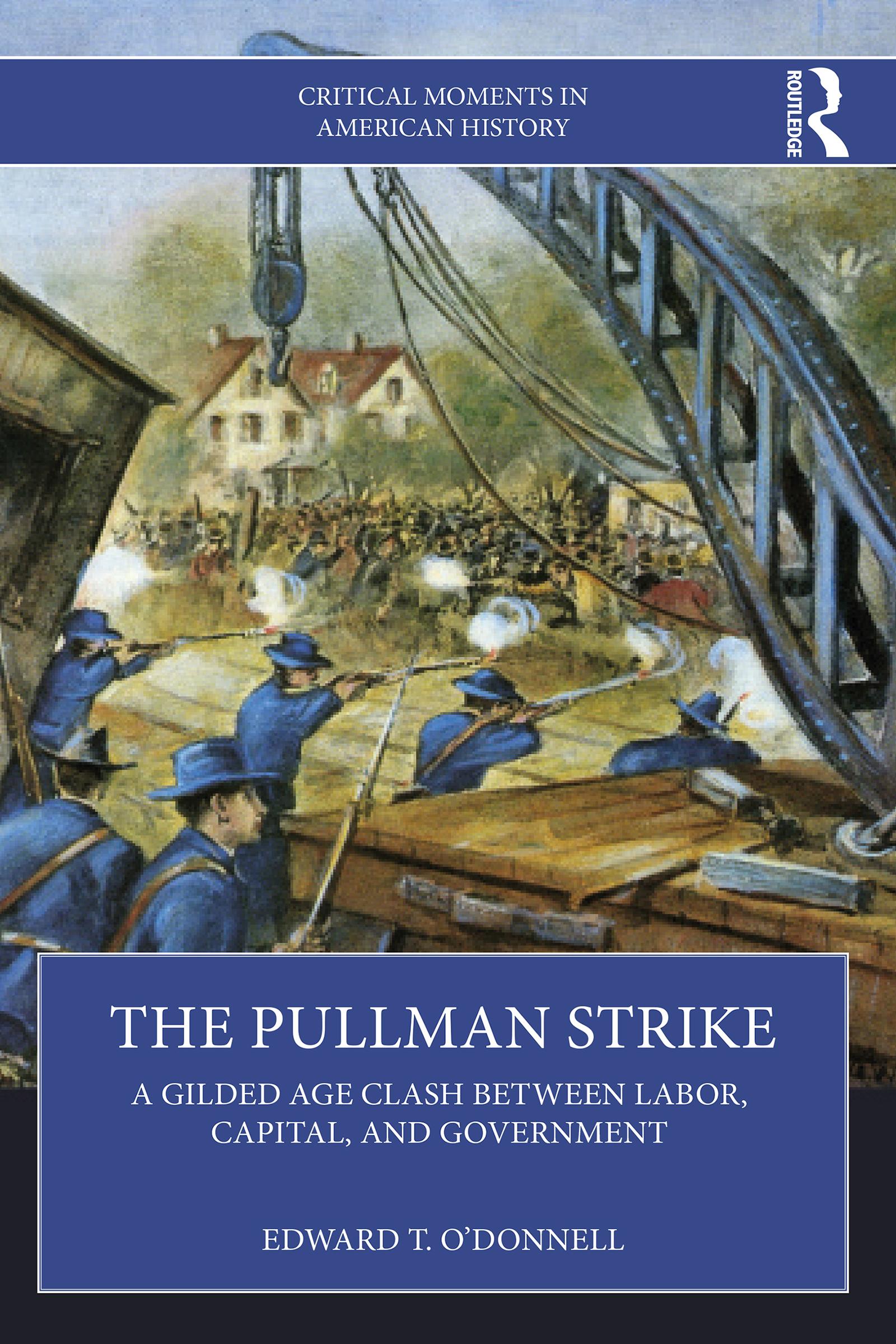
This book examines the 1894 Pullman Strike, one of the most consequential clashes between labor and capital that paralyzed America’s railroad system.
The Gilded Age saw rapid economic growth, expansion of industrialization, and real wage growth. Yet between 1800 and 1900 there were nearly 37,000 strikes, and the Pullman Strike reflected the broad dissatisfaction and unrest among American workers. The book consists of an engaging narrative, analysis of existing scholarship, sidebars, and primary source documents which collectively answer why the Pullman Strike is so critical to the American Experience: it exposed the limits of paternalistic capitalism, revealed the extraordinary power of big business, introduced the use of injunctions to stop strikes, and launched the career of the iconic labor leader Eugene Debs. Overall, it reveals what struggles workers encountered when forming unions, the changing role of government regarding the economy, and the threat that unchecked big business posed to democracy.
The Pullman Strike is useful for all undergraduate students who study the Gilded Age, industrial relations, and labor, urban, and economic history in the United States.
Betala smidigt med kort, Klarna, Apple Pay eller Google Pay. Är du inte nöjd har du alltid 14 dagars ångerrätt. Läs mer i våra villkor. Har du några frågor, mejla oss på hello@memmo.org.
Memmo gör det enklare att plugga – var du än är i världen. Hos oss samlar du kursböcker och smarta studieverktyg på ett och samma ställe: sammanfattningar, quiz, poddar och flashcards. Och så Ted, din studiekompis som svarar på allt du undrar. Över 50 000 studenter pluggar redan här – byggt för att du ska lära dig snabbare och stressa mindre.