
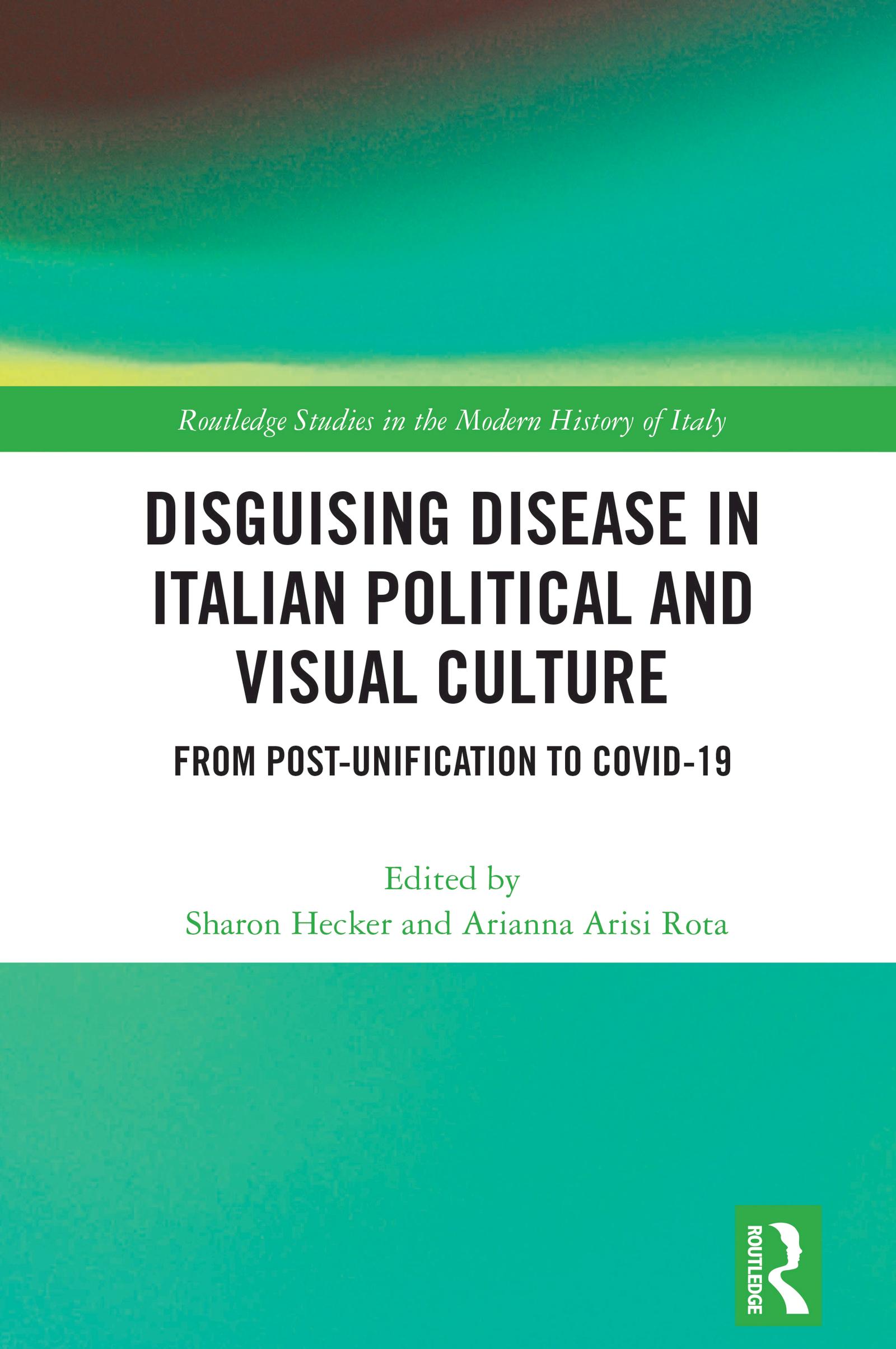
Although considered an isolated event, the Italian government’s initial resistant response to COVID-19 has deep historical roots. This is the first interdisciplinary book to critically examine the ongoing phenomenon of disguising contagious disease in Italy from Unification to the present.
The book explores how governments, public opinion, social entities and cultural production have avoided or sublimated contagion during cholera, typhoid, syphilis, malaria, HIV and COVID-19 to impose narratives of the nation’s healthy body in Italy and its colonies. Examples range from a tuberculosis sanatorium in Capri that masked as a luxury hotel and hideaway for queer couples to an obscure but talented professor who found a new cure for syphilis; from denial of disease in governmental actions to sublimated representations in Italian art, literature and films such as Luchino Visconti’s cinematic adaptation of Thomas Mann’s Death in Venice to a sociological study of the need to include fragile figures based on the lessons of COVID-19.
Intended for scholars, students and general readers interested in the history of medicine, political and cultural history, and Italian studies, this volume shows how contagious diseases clash with the official narrative of emerging modernized urban settings and challenge the desire for political and economic stability.
Betala smidigt med kort, Klarna, Apple Pay eller Google Pay. Är du inte nöjd har du alltid 14 dagars ångerrätt. Läs mer i våra villkor. Har du några frågor, mejla oss på hello@memmo.org.
Memmo gör det enklare att plugga – var du än är i världen. Hos oss samlar du kursböcker och smarta studieverktyg på ett och samma ställe: sammanfattningar, quiz, poddar och flashcards. Och så Ted, din studiekompis som svarar på allt du undrar. Över 50 000 studenter pluggar redan här – byggt för att du ska lära dig snabbare och stressa mindre.