
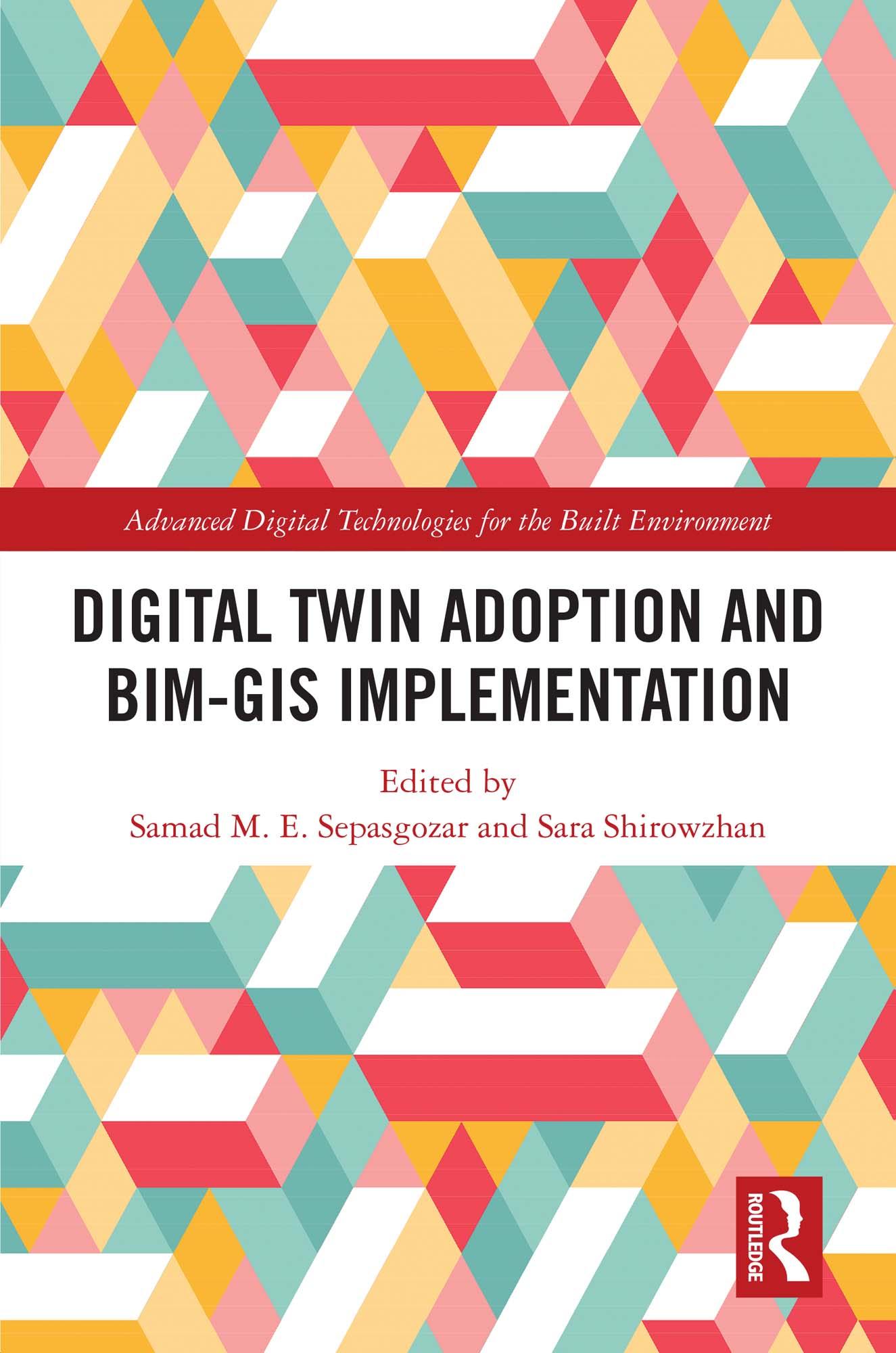
The aim of this edited book volume is to present new concepts, and applications of Digital Twin and relevant tools in the built environment context. The book identifies key organisational factors that influence the adoption of technology within the architectural service industry, setting the stage for a deeper understanding of the shift towards digital methodologies.
The book introduces the Digital Twin Readiness Level framework, a modified metric system with ten levels of risk‑based maturity and an empirical development of a Digital Twin Adoption Model. Furthermore, the text ventures into immersive virtual environments and their applications, showcasing innovative practices that enhance learning and operational efficiency.
Additionally, the book examines the integration of Building Information Modelling (BIM) and Geographic Information Systems (GIS), revealing new workflows for creating 3D models of cities. A focus on Australia’s government‑funded infrastructure projects offers insights into the values and acceptance criteria for these technologies, providing a comprehensive overview of their practical implications and future potential. This book is essential reading for practitioners, engineers, and managers involved in any phase of the built environment from design to operation and other architectural, engineering, and construction (AEC) stakeholders who are a part of digital transformations, as well as researchers, educators, and students interested in the field.
Betala smidigt med kort, Klarna, Apple Pay eller Google Pay. Är du inte nöjd har du alltid 14 dagars ångerrätt. Läs mer i våra villkor. Har du några frågor, mejla oss på hello@memmo.org.
Memmo gör det enklare att plugga – var du än är i världen. Hos oss samlar du kursböcker och smarta studieverktyg på ett och samma ställe: sammanfattningar, quiz, poddar och flashcards. Och så Ted, din studiekompis som svarar på allt du undrar. Över 75 000 studenter pluggar redan här – byggt för att du ska lära dig snabbare och stressa mindre.