
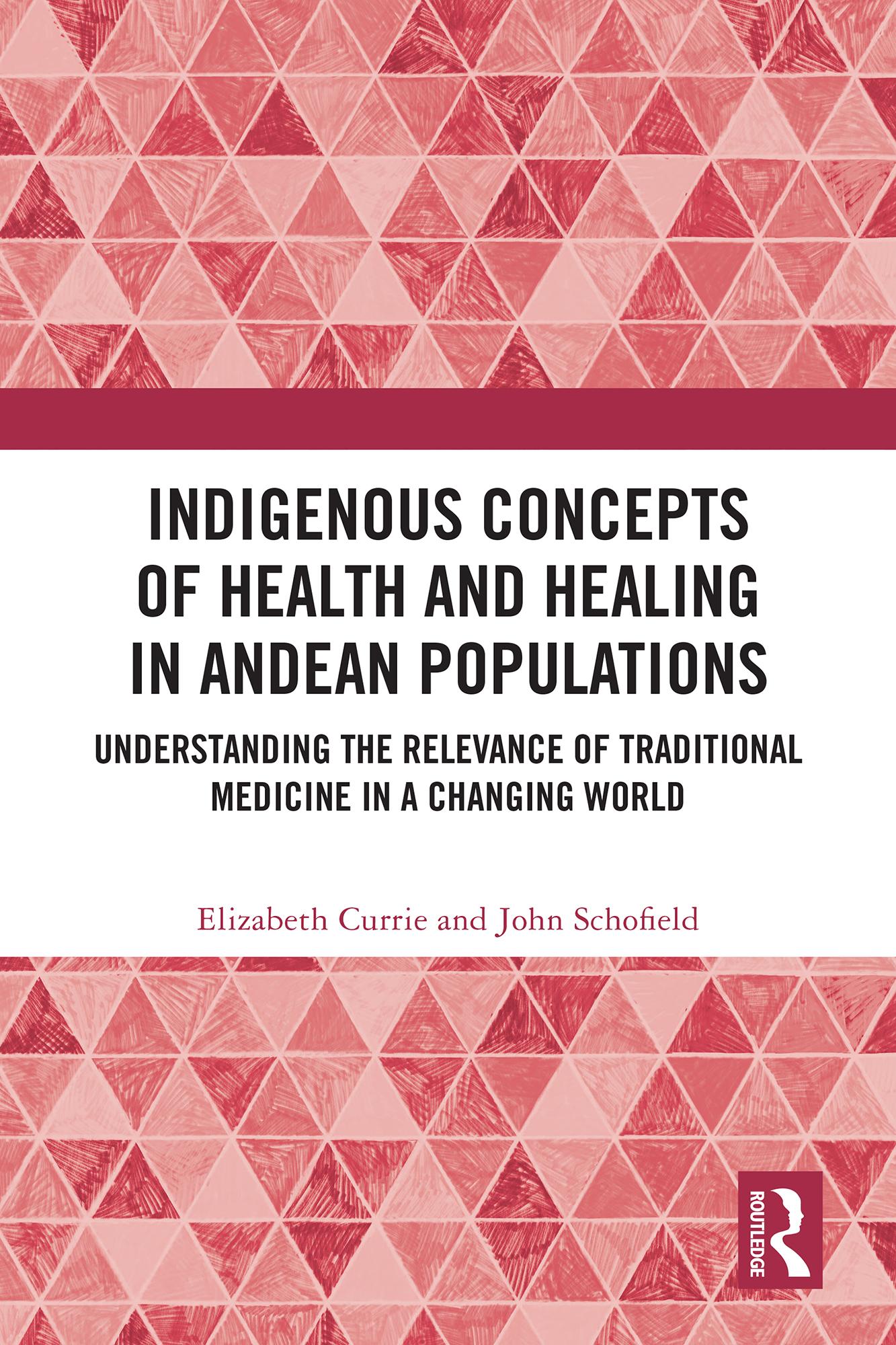
This book uses archaeology and ethnohistory to explore the evidence for the survival of ancestral beliefs and practices related to health and healing in Indigenous Andean communities.
The authors argue that through determining the nature of the survival of beliefs around health and healing, important insights are gained into how people develop adaptive strategies for survival in a way that allows a continuity of identity and integrity. The book works through various stages of research to arrive at its conclusions. Firstly, through archaeology and ethnohistory, it establishes a ‘baseline’ of key ancestral (pre-European) Indigenous Andean beliefs related to health, illness and healing. It then proceeds to review the evidence for the survival of these ancestral beliefs and practices related to Indigenous pre-European Andean epistemologies and ontologies. Analysing the results of the first two sections, the final part reflects on the narratives around ancestral beliefs and practices and how they influence lived experience in the contemporary world. In essence, this book deals with the question 'How do people manage change?', a universal question relevant to humanity at any time, and stresses the need to recognise the significance of cultural diversity, intangible heritage and plurality.
This interdisciplinary study is for researchers in ethnohistory, anthropology, medical anthropology, archaeology, history, heritage and Indigenous studies.
Betala smidigt med kort, Klarna, Apple Pay eller Google Pay. Är du inte nöjd har du alltid 14 dagars ångerrätt. Läs mer i våra villkor. Har du några frågor, mejla oss på hello@memmo.org.
Memmo gör det enklare att plugga – var du än är i världen. Hos oss samlar du kursböcker och smarta studieverktyg på ett och samma ställe: sammanfattningar, quiz, poddar och flashcards. Och så Ted, din studiekompis som svarar på allt du undrar. Över 50 000 studenter pluggar redan här – byggt för att du ska lära dig snabbare och stressa mindre.