
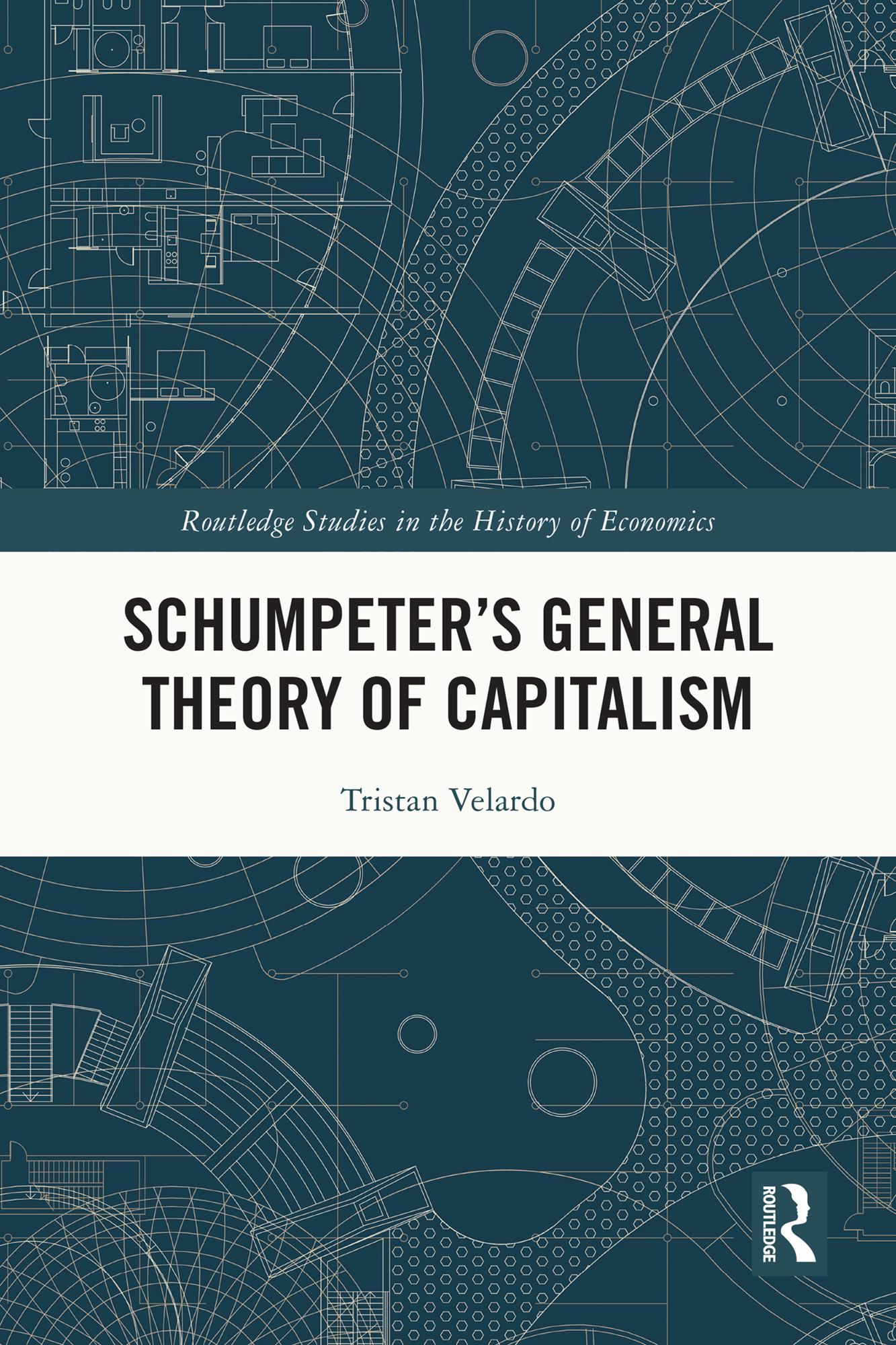
Joseph A. Schumpeter made multiple contributions to economic science and beyond. Drawing on this wide range of writings, this book argues that Schumpeter provided a theoretical account of capitalism as a total phenomenon. It methodically reconstructs the “general theory” of capitalism present in Schumpeter's work and shows its consistency and limits.
The book identifies three key dimensions of a Schumpeterian general theory of capitalism. First, capitalism is defined at its core as a form or method of economic change: the entrepreneur disrupts a static, equilibrium economy (which is the foundation of all economic activities) with the introduction of an innovation. He is an unbalancing and disruptive force. Second, capitalism is defined as an institutional order composed of private property, private initiative for private profit and credit. Finally, capitalism is defined as a "civilization" or culture: a set of values, attitudes, and beliefs.
The general theory thus accounts for capitalism as an economic form (innovation and entrepreneurship) which is the source of economic change; supported and enabled by a particular institutional order without which innovation would remain a dead letter (private property, private profit, and credit); all this generates the culture of capitalism. This book will be of interest to readers in the history of economic thought, economic theory, innovation, political economy, and social theory.
Betala smidigt med kort, Klarna, Apple Pay eller Google Pay. Är du inte nöjd har du alltid 14 dagars ångerrätt. Läs mer i våra villkor. Har du några frågor, mejla oss på hello@memmo.org.
Memmo gör det enklare att plugga – var du än är i världen. Hos oss samlar du kursböcker och smarta studieverktyg på ett och samma ställe: sammanfattningar, quiz, poddar och flashcards. Och så Ted, din studiekompis som svarar på allt du undrar. Över 50 000 studenter pluggar redan här – byggt för att du ska lära dig snabbare och stressa mindre.