
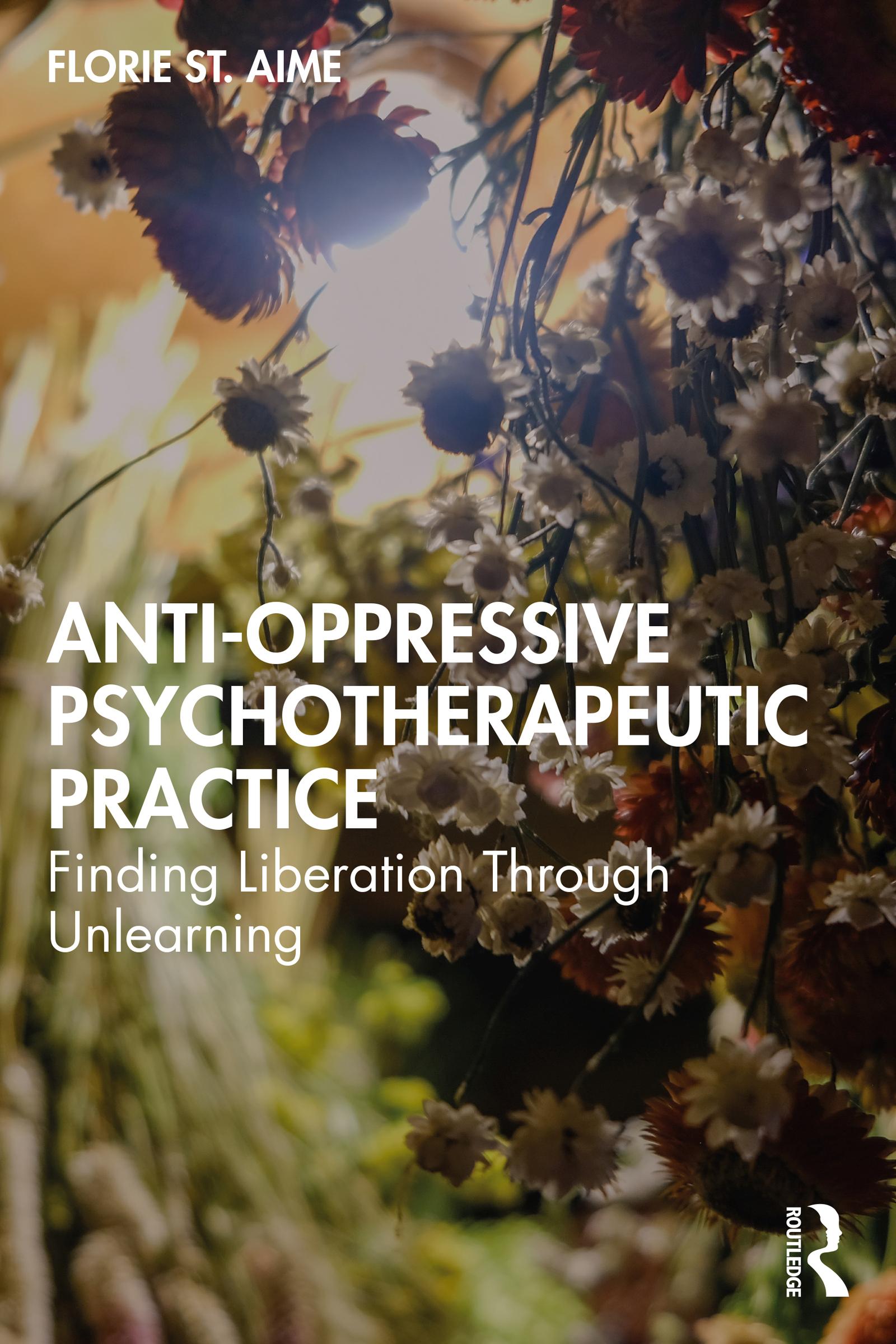
This book supports mental health practitioners in showing how they personally intersect with oppression, helping them explore how it shows up in their practice and providing them with tools to offer anti-oppressive care.
Written in an accessible and spiritual tone, chapters discuss the human need for connection as well as demonstrate the oppression through a social, neuroscientific, and biological lens as something that resides and can be passed on generationally. St. Aime interrogates the idea of the moral cloak symbiotic with whiteness and encourages readers to separate themselves from their profession to become a reflective rather than defensive clinician. She defines anti-oppressive practice as a clinical approach that considers the systemic, intergenerational, sociocultural and political influences on the lives of individuals and identifies the pillars of anti-oppressive practice as interconnectedness, interdependence, boundless curiosity, and vulnerability. With chapters including both experimental and practical exercises to use with clients as well as alone, this book encourages clinicians to undergo the process of unlearning the internalized oppressions that exist within themselves to change the therapeutic power exchange and provide the best care possible.
This book is essential reading for clinical social workers in practice and in training, as well as for psychotherapists, counselors, marriage and family therapists, and other mental health practitioners.
Betala smidigt med kort, Klarna, Apple Pay eller Google Pay. Är du inte nöjd har du alltid 14 dagars ångerrätt. Läs mer i våra villkor. Har du några frågor, mejla oss på hello@memmo.org.
Memmo gör det enklare att plugga – var du än är i världen. Hos oss samlar du kursböcker och smarta studieverktyg på ett och samma ställe: sammanfattningar, quiz, poddar och flashcards. Och så Ted, din studiekompis som svarar på allt du undrar. Över 50 000 studenter pluggar redan här – byggt för att du ska lära dig snabbare och stressa mindre.