
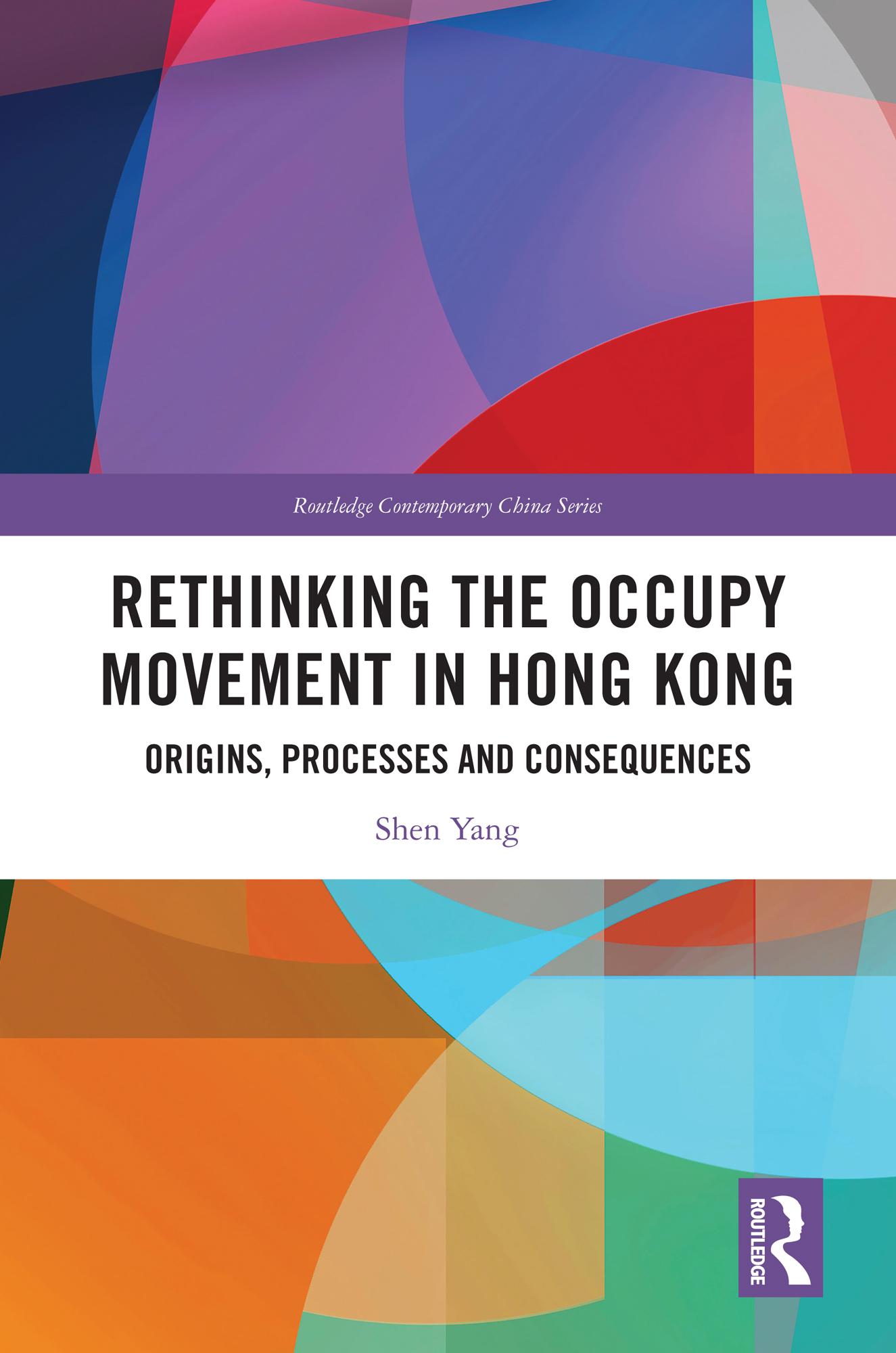
Yang examines the political process of the Occupy Movement spanning from January 2013, when the “Occupy Central with Love and Peace” (OCLP) campaign was initiated, to December 2014, when the Occupy Movement finally ended. This book adopts an actor-centered approach in the study of democratization and places civil society as the focus of the analysis.
The OCLP campaign was an attempt to transfer leadership of democratization from political parties to civil society, while the incorporation of Deliberation Days further let ordinary participants decide on the electoral proposals. The democratic ideals of civil society activists and the mobilization of radical democrats led the campaign to enter a radical position. The Chinese government interpreted democratization in Hong Kong from a regime security perspective and took a hardliner position. After the Occupy Movement finally occurred, the leadership of civil society and the conception of civil disobedience contained the radical protesters. However, after the movement, civil society organizations were blamed for its failure, and contention in Hong Kong became more transgressive and decentralized.
This book is a valuable resource for scholars of Hong Kong’s Politics and a relevant case study for those studying the dynamics of social movements and the civil society strategy in democratic transition.
Betala smidigt med kort, Klarna, Apple Pay eller Google Pay. Är du inte nöjd har du alltid 14 dagars ångerrätt. Läs mer i våra villkor. Har du några frågor, mejla oss på hello@memmo.org.
Memmo gör det enklare att plugga – var du än är i världen. Hos oss samlar du kursböcker och smarta studieverktyg på ett och samma ställe: sammanfattningar, quiz, poddar och flashcards. Och så Ted, din studiekompis som svarar på allt du undrar. Över 50 000 studenter pluggar redan här – byggt för att du ska lära dig snabbare och stressa mindre.