
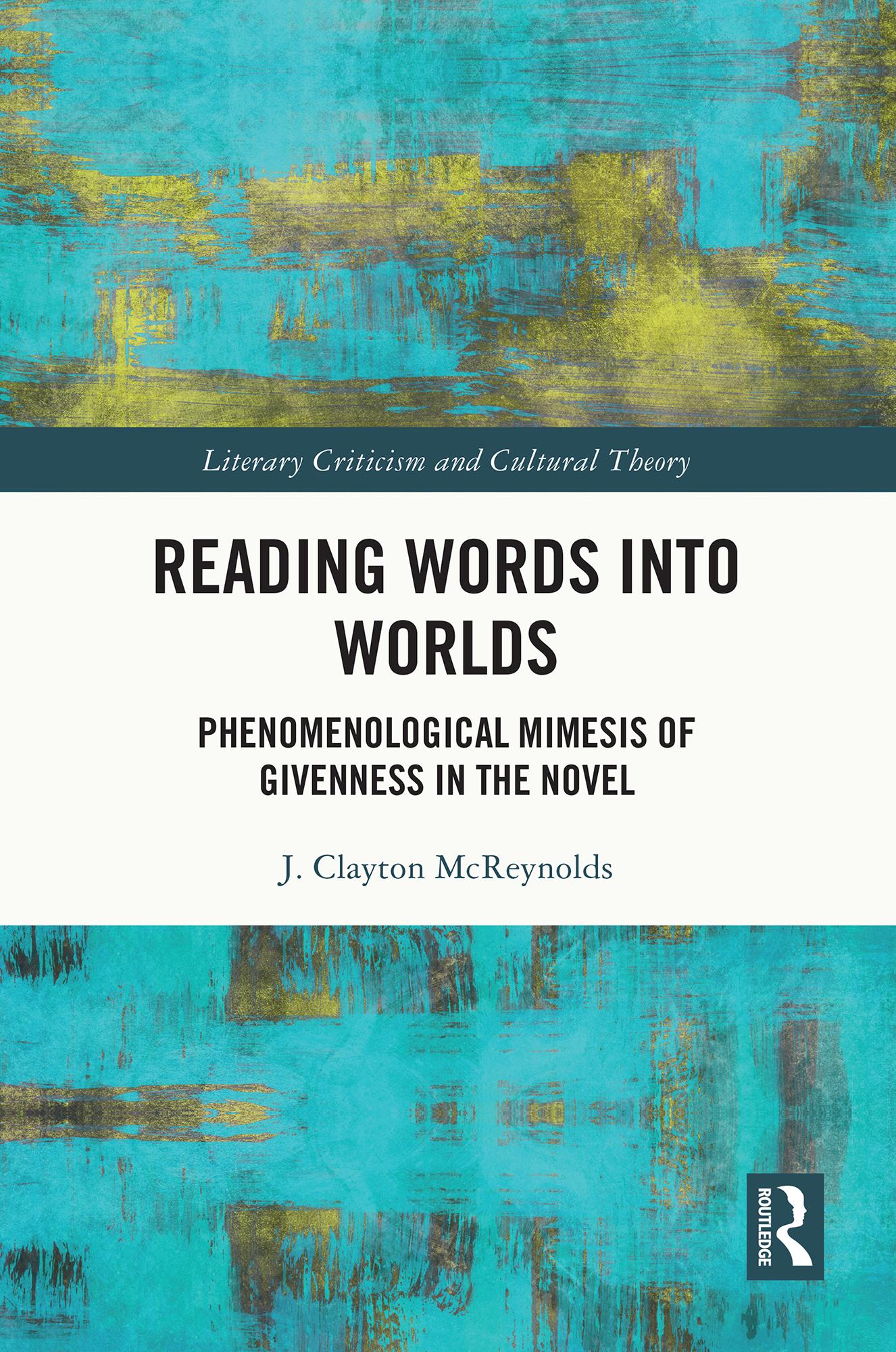
Reading Words into Worlds asks how it is that reading a novel can feel in some ways like being-in-a-world. The book explores how novels give themselves to readers in ways that mimetically resemble our phenomenological reception of given beings in reality. McReynolds refers to this process as phenomenological mimesis of givenness, and he draws on the phenomenological philosophy of Husserl, Heidegger, and Jean-Luc Marion to explore how masterful novels can make reading ink marks on a page feel like seeing things, feeling things, and meeting (even loving) others. McReynolds blends rigorous phenomenological study with a personable style, first laying out his theory in detail and then applying that theory through close studies of his reading experiences of four British realist masterpieces: Defoe’s Robinson Crusoe, Austen’s Northanger Abbey, Eliot’s Middlemarch, and Hardy’s Jude the Obscure. Ultimately, this book offers a grounded phenomenology of novel-reading, illuminating what gives novels such power to not only thrill readers—but to change them.
Betala smidigt med kort, Klarna, Apple Pay eller Google Pay. Är du inte nöjd har du alltid 14 dagars ångerrätt. Läs mer i våra villkor. Har du några frågor, mejla oss på hello@memmo.org.
Memmo gör det enklare att plugga – var du än är i världen. Hos oss samlar du kursböcker och smarta studieverktyg på ett och samma ställe: sammanfattningar, quiz, poddar och flashcards. Och så Ted, din studiekompis som svarar på allt du undrar. Över 50 000 studenter pluggar redan här – byggt för att du ska lära dig snabbare och stressa mindre.