
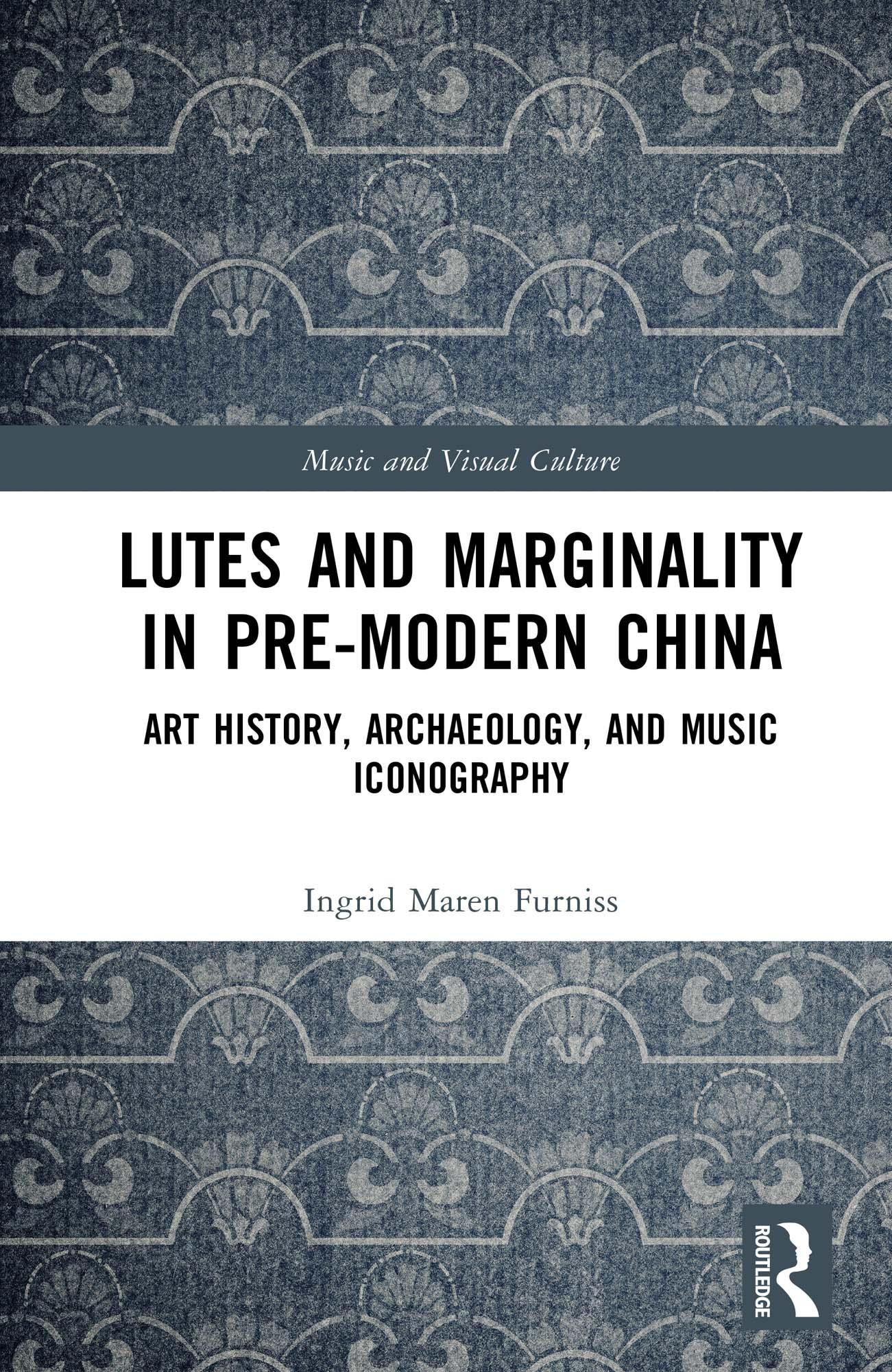
Lutes and Marginality in Pre-Modern China traces the complex history of lutes as they moved from the far west into China, and how these instruments became linked to various forms of social, cultural, ethnic, and religious marginality within and at China’s borders.
The book argues that the lute, a musical instrument that likely originated in the Near East or Central Asia, became a highly charged object replete with associations of ethnic and political identity, social status, and gender in China across the third to seventeenth centuries, and as such, offers a crucial vehicle for understanding interactions between the Chinese center and periphery. Using a richly interdisciplinary perspective that brings together music history, performance studies, archaeology, and art history, the author draws together the visual evidence for the history of Chinese lutes and analyzes the political and cultural dimensions of their depictions in art. In exploring the lute’s reception across time and space, this book illuminates the shifting relationships between China and cultures along its frontier, as well as the dynamics of gender and social status within China’s center.
Comprehensive in scope, Lutes and Marginality in Pre-Modern China offers new insights for scholars of pre-modern China, art history, archaeology, music history, ethnomusicology, and Silk Road and frontier studies.
Betala smidigt med kort, Klarna, Apple Pay eller Google Pay. Är du inte nöjd har du alltid 14 dagars ångerrätt. Läs mer i våra villkor. Har du några frågor, mejla oss på hello@memmo.org.
Memmo gör det enklare att plugga – var du än är i världen. Hos oss samlar du kursböcker och smarta studieverktyg på ett och samma ställe: sammanfattningar, quiz, poddar och flashcards. Och så Ted, din studiekompis som svarar på allt du undrar. Över 50 000 studenter pluggar redan här – byggt för att du ska lära dig snabbare och stressa mindre.