
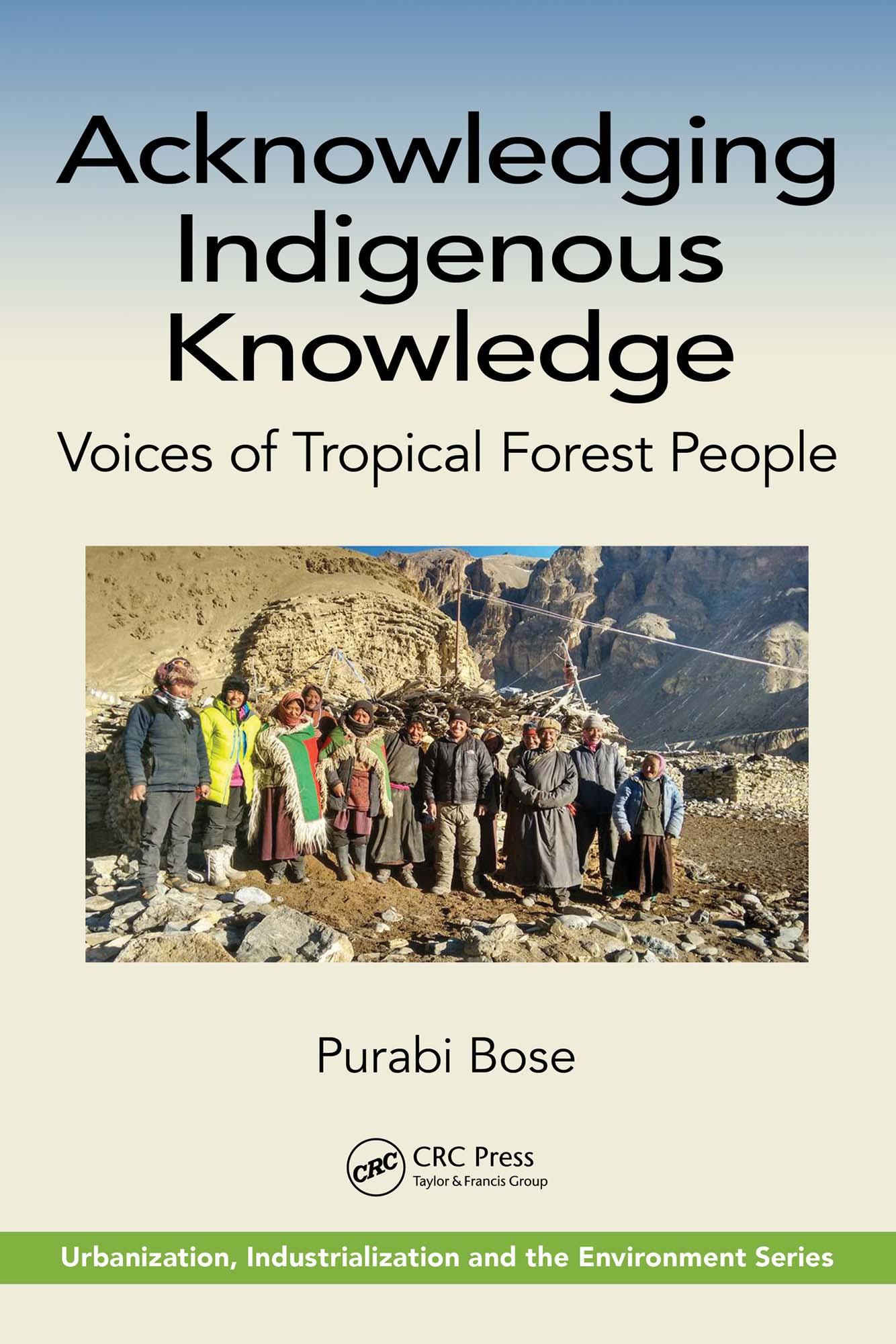
This book explores how the landscapes in indigenous territories are rapidly changing due to increased global industrial demand. This deforestation and urbanization have isolated the indigenous people from practicing ‘traditional ways of life.’ Portrayed in this book is the indigenous people’s perspective of their indigenous knowledge (IK) about the environment and why losing IK is a threat to humans, wildlife, and nature. Insight is shared into why acknowledging IK as a science can help solve climate change, food and nutrition insecurity, and increasing new types of pandemics through evidence‑based stories from indigenous people.
Features:
• Bridges the fractured space between science and nature.
• Documents the perspectives of indigenous peoples about their ancestral knowledge.
• Provides ethnographic qualitative comparative case studies of forest‑dwelling indigenous peoples over a 19‑year period.
• Covers largely remote indigenous territories of ten tropical countries in the Global South.
• Provides evidence‑based stories examining indigenous knowledge’s role in the tropics in preserving diverse landscapes and providing nature‑based solutions.
Betala smidigt med kort, Klarna, Apple Pay eller Google Pay. Är du inte nöjd har du alltid 14 dagars ångerrätt. Läs mer i våra villkor. Har du några frågor, mejla oss på hello@memmo.org.
Memmo gör det enklare att plugga – var du än är i världen. Hos oss samlar du kursböcker och smarta studieverktyg på ett och samma ställe: sammanfattningar, quiz, poddar och flashcards. Och så Ted, din studiekompis som svarar på allt du undrar. Över 50 000 studenter pluggar redan här – byggt för att du ska lära dig snabbare och stressa mindre.