
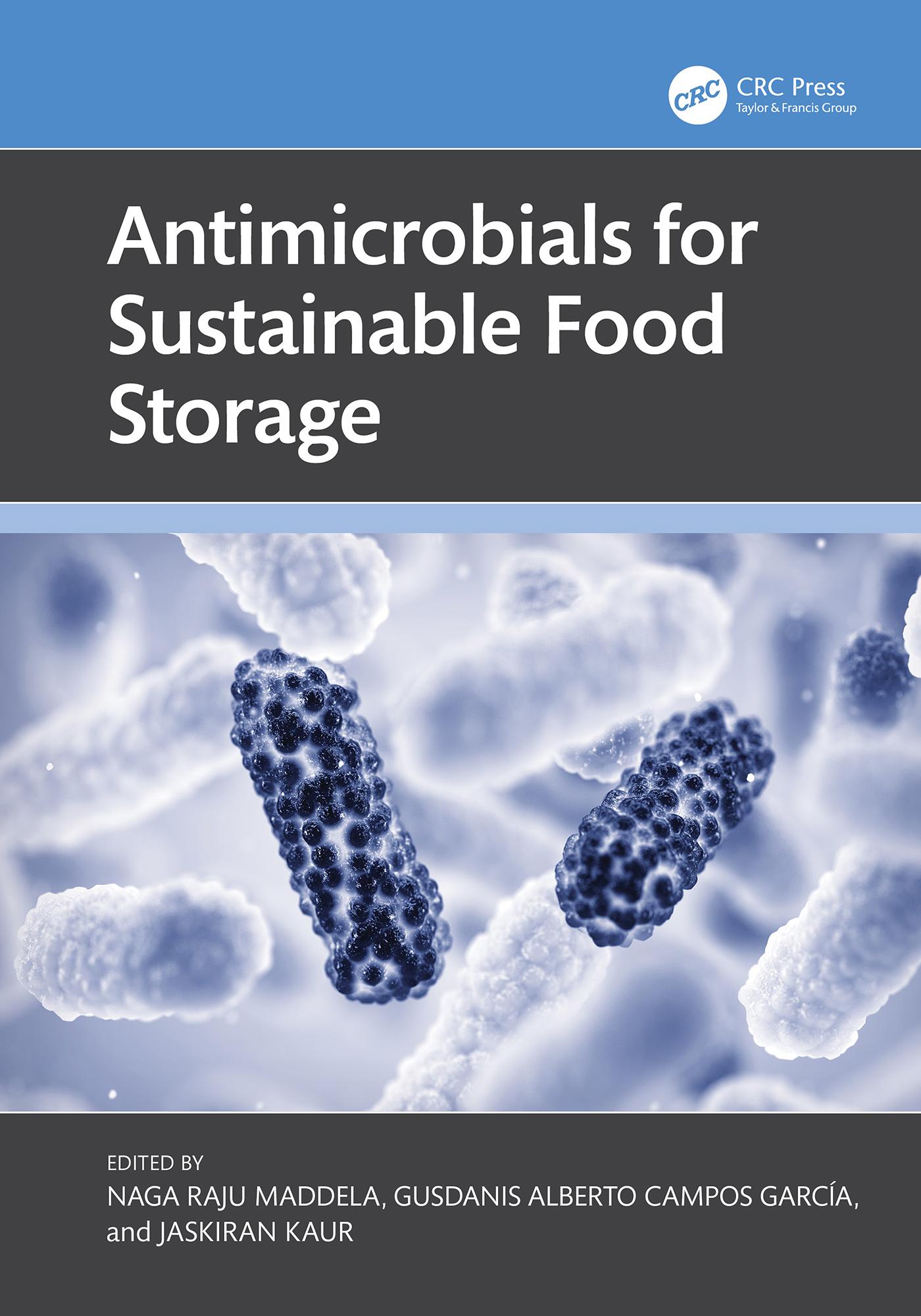
Finding natural substances is worthwhile in food preservation. The principal motivation behind this edited volume, Antimicrobials for Sustainable Food Storage, is to collect and present widespread knowledge in the domain of sustainable food ingredients with antimicrobial properties. The book consists of two sections. The first section of this volume is about food ingredients as antimicrobials, and the second section discusses the recent advances in the applications of food ingredients.
Interplay of various environmental factors favors the growth of different microorganisms during the food preservation process. Growth of undesirable microorganisms negatively influences the taste, smell, color, and texture of food. Therefore, sustainable food preservation is a challenging issue. Though several chemicals have emerged, inevitable health effects are commonly encountered by food preserve chemicals.
Microbial products (nisin, enterocin, pentosin, sakacin, and pediocin) have immense importance in prolonging the shelf life of food substances by controlling food spoilage and pathogenic microbes. Yeasts and cyanobacteria are also potential candidates in the supply of food ingredients with significant antimicrobial properties. However, limited awareness of antimicrobials as food ingredients and the unavailability of a single source of the latest insights on such food ingredients in one place led to the motivation to produce this work.
Key Features:
- Provides insights on natural antimicrobials in food preservation
- Underlines the importance of sustainable food packaging
- Offers knowledge on emerging trends in antimicrobial-based food storage
Diverse applications are covered in different chapters. This book covers various antimicrobials as food preservatives, such as metabolites, natural products, essential oils, nanomaterials, L-arginine, polyphenols, phaeophyceae, and horchata. There are also chapters that focus on the applicability and prospective studies of essential oils, edible biofilms, biodegradable antimicrobials, and nanostructured lipid carriers in the food sector and the method for encapsulation of antimicrobials.
Betala smidigt med kort, Klarna, Apple Pay eller Google Pay. Är du inte nöjd har du alltid 14 dagars ångerrätt. Läs mer i våra villkor. Har du några frågor, mejla oss på hello@memmo.org.
Memmo gör det enklare att plugga – var du än är i världen. Hos oss samlar du kursböcker och smarta studieverktyg på ett och samma ställe: sammanfattningar, quiz, poddar och flashcards. Och så Ted, din studiekompis som svarar på allt du undrar. Över 50 000 studenter pluggar redan här – byggt för att du ska lära dig snabbare och stressa mindre.