
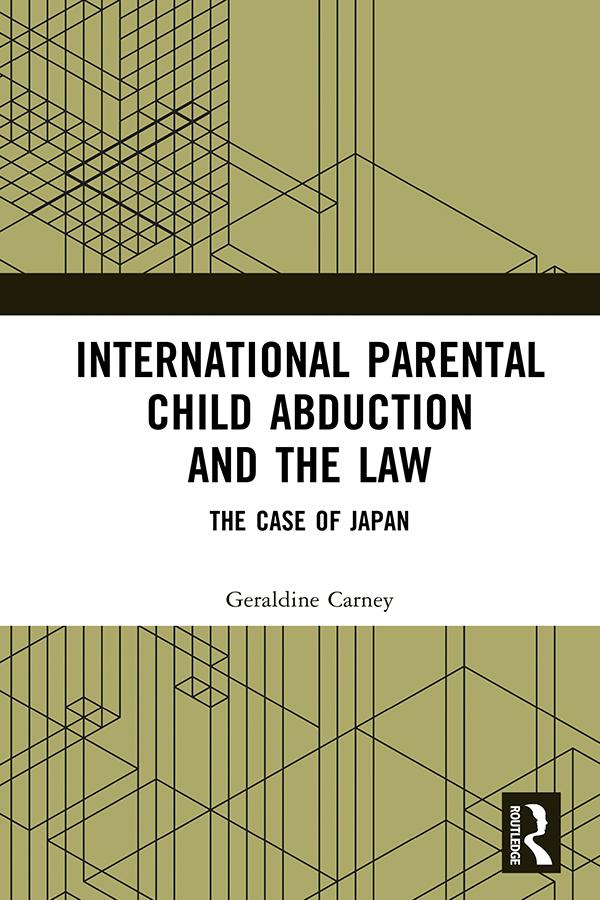
Japan has faced widespread scrutiny for failing to properly address international parental child abduction involving its citizens. This book examines how and why Japan has come to have this tarnished image, its response, and how it might manage these disputes in the future. In particular, the book explores how Japan engages with international legal frameworks to manage international parental child abduction and what this means, in reality, for Japanese people and others who come under its wide umbrella. A focus of this examination is how the key international treaty, the Hague Convention of 25 October 1980 on the Civil Aspects of International Child Abduction, has fared since being introduced in Japan in 2014. Case studies of parental child abduction involving Japan are used throughout to illustrate the legal and social concepts discussed in the book. The struggles of both abducting and left-behind parents across fluid international borders reveal seismic social and philosophical shifts in Japan that continue to shape its legal landscape. This book will be a useful resource for students of Japanese Studies, Sociolegal Studies, Comparative Law and International Law.
Betala smidigt med kort, Klarna, Apple Pay eller Google Pay. Är du inte nöjd har du alltid 14 dagars ångerrätt. Läs mer i våra villkor. Har du några frågor, mejla oss på hello@memmo.org.
Memmo gör det enklare att plugga – var du än är i världen. Hos oss samlar du kursböcker och smarta studieverktyg på ett och samma ställe: sammanfattningar, quiz, poddar och flashcards. Och så Ted, din studiekompis som svarar på allt du undrar. Över 50 000 studenter pluggar redan här – byggt för att du ska lära dig snabbare och stressa mindre.