
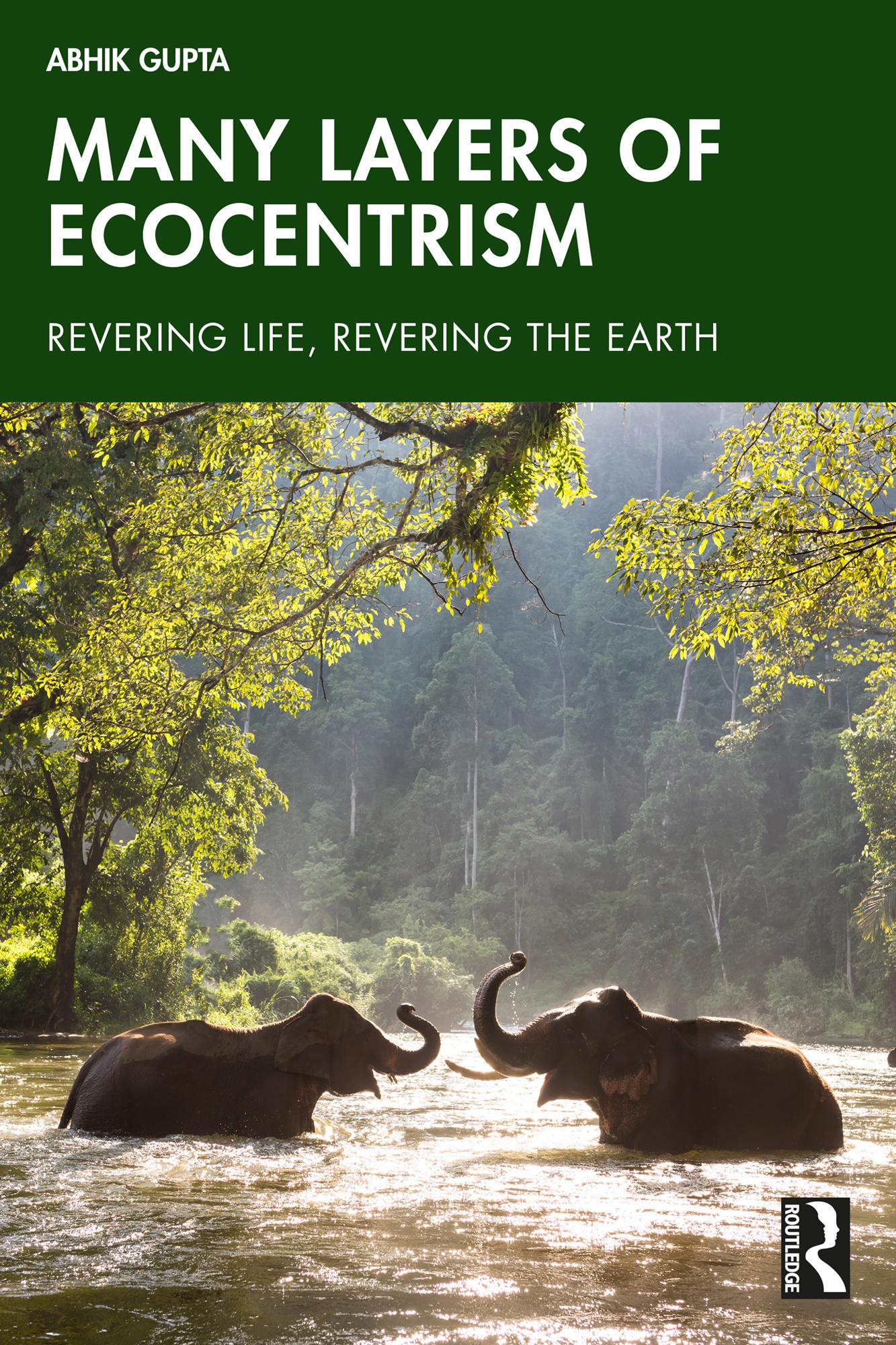
This book unveils the myriad streams of ecocentric thoughts that have been flowing through the human mind – in indigenous communities, in the wisdom of philosophers, in the creative expressions of poets and writers – sometimes latent, but sometimes more explicit. The strength of this book lies in the fact that it attempts to show that ecocentrism had not emerged suddenly as a distinct line of philosophical thought or found its place among the various normative approaches toward nature, but the seeds of ecocentrism had always been running through human societies. Thus, this book not only emphasizes the “unity of life” but also reveals the inherent unity of all hues of ecocentrism. The book adopts a multidisciplinary approach, which is essential to dwell on a topic like ecocentrism which permeates the domains of disciplines as disparate as science, philosophy, religion, normative ethics, myths and folklore, poetry, and literature, among others. Despite this eclectic approach, the book attempts to maintain continuity among the chapters and present these concepts in a simple form that will be easily accessible by readers from all conceivable backgrounds. This book would be useful to the students, researchers, and faculty from the fields of ecology and environmental science, philosophy, sociology, religious studies, and literature. It will also be an indispensable companion for all nature lovers, activists, and general readers interested in the emergence and evolution of environmental thoughts.
Betala smidigt med kort, Klarna, Apple Pay eller Google Pay. Är du inte nöjd har du alltid 14 dagars ångerrätt. Läs mer i våra villkor. Har du några frågor, mejla oss på hello@memmo.org.
Memmo gör det enklare att plugga – var du än är i världen. Hos oss samlar du kursböcker och smarta studieverktyg på ett och samma ställe: sammanfattningar, quiz, poddar och flashcards. Och så Ted, din studiekompis som svarar på allt du undrar. Över 50 000 studenter pluggar redan här – byggt för att du ska lära dig snabbare och stressa mindre.