
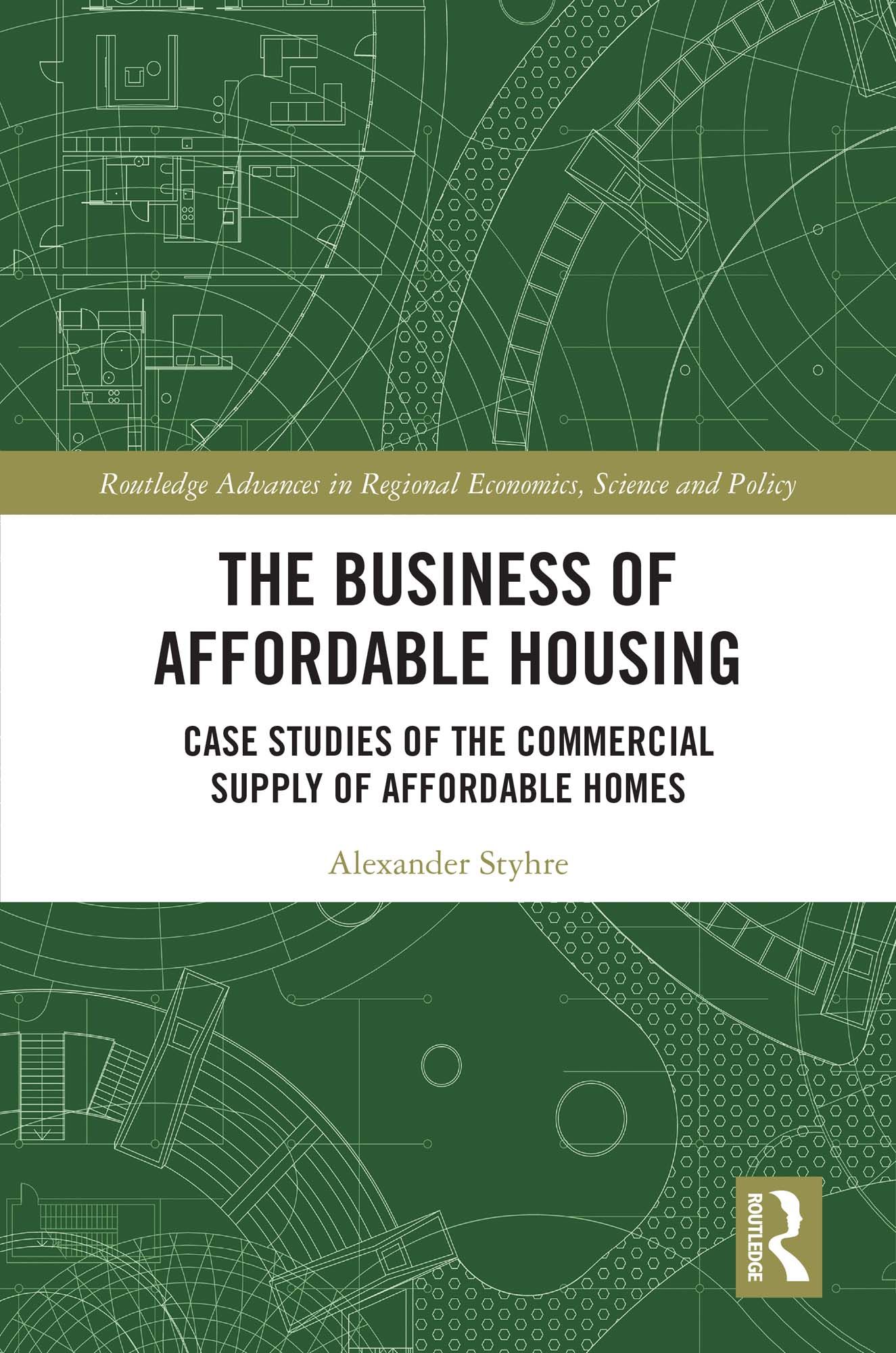
Despite the conventional wisdom that affordable housing, either in the form of homeownership or through access to rental units, has beneficial effects for households, society, and the economy more broadly, there is a noteworthy lack of empirical studies of housing development and construction companies or building societies that actively work to supply this asset class in the economy. There are several reasons for this condition, including the “thin market” for such business activities. This book offers a case study that includes two Swedish housing development companies that have targeted a market niche for affordable homes that few other companies and market actors are concerned with.
One company is part of a major construction company conglomerate which produces prefabricated housing modules to better serve the low-end niche of the housing market. The other company is a municipality-owned housing development company that acts on the basis of market practices and rules but that also on policymakers’ stated ambition to provide affordable homes for the residents in the municipality, the largest municipality in a major Swedish metropolitan area. Taken together, the study of these two companies provides first-hand insights into how the production of affordable homes takes place in a real-world economy.
The book is of relevance for a variety of readers, including graduate students, management scholars, policymakers, and management consultants.
Betala smidigt med kort, Klarna, Apple Pay eller Google Pay. Är du inte nöjd har du alltid 14 dagars ångerrätt. Läs mer i våra villkor. Har du några frågor, mejla oss på hello@memmo.org.
Memmo gör det enklare att plugga – var du än är i världen. Hos oss samlar du kursböcker och smarta studieverktyg på ett och samma ställe: sammanfattningar, quiz, poddar och flashcards. Och så Ted, din studiekompis som svarar på allt du undrar. Över 75 000 studenter pluggar redan här – byggt för att du ska lära dig snabbare och stressa mindre.