
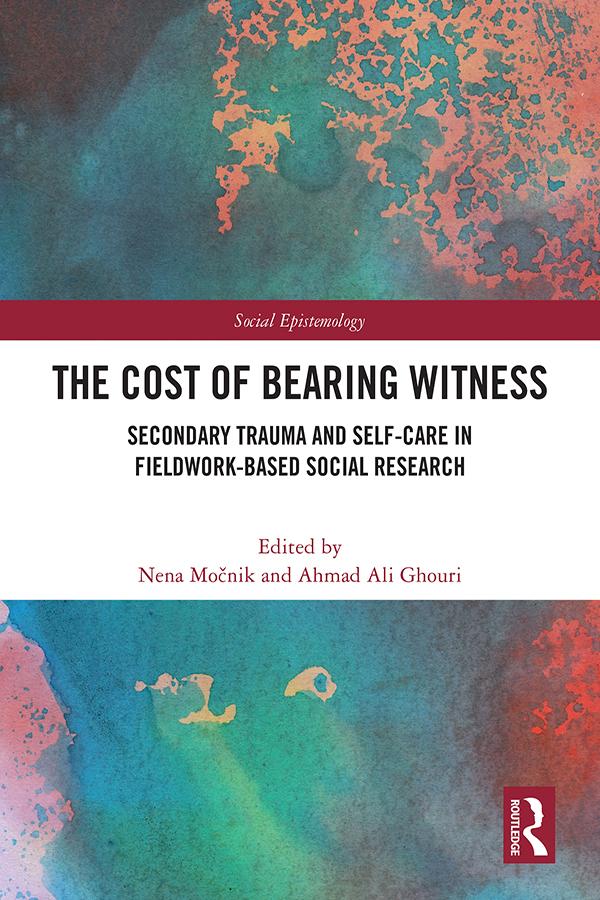
This highly interdisciplinary volume fills the gap in research ethics that has so far omitted to address the psychological, physiological, and socio-political impacts on researchers conducting field-based social research in traumatic environments.
The chapters in this book discuss various facets of secondary trauma from different methodological and theoretical perspectives, geographic, and historical contexts, and address a wide range of questions spanning from recent complex topics to semi-historical events and future concerns causing traumatic anxiety. While most chapters explore the process of healing and recovery from traumatic experiences during fieldwork-based research, few chapters also propose constructive approaches for developing personal and institutional methodologies and techniques to better prepare researchers to cope with secondary trauma.
The book offers useful insights and concrete changes in research methodologies that can help minimize the risk of trauma and new approaches to preventing and handling the consequences of conducting field-based social research in traumatic environments. It was originally published as a special issue of Social Epistemology.
Betala smidigt med kort, Klarna, Apple Pay eller Google Pay. Är du inte nöjd har du alltid 14 dagars ångerrätt. Läs mer i våra villkor. Har du några frågor, mejla oss på hello@memmo.org.
Memmo gör det enklare att plugga – var du än är i världen. Hos oss samlar du kursböcker och smarta studieverktyg på ett och samma ställe: sammanfattningar, quiz, poddar och flashcards. Och så Ted, din studiekompis som svarar på allt du undrar. Över 50 000 studenter pluggar redan här – byggt för att du ska lära dig snabbare och stressa mindre.