
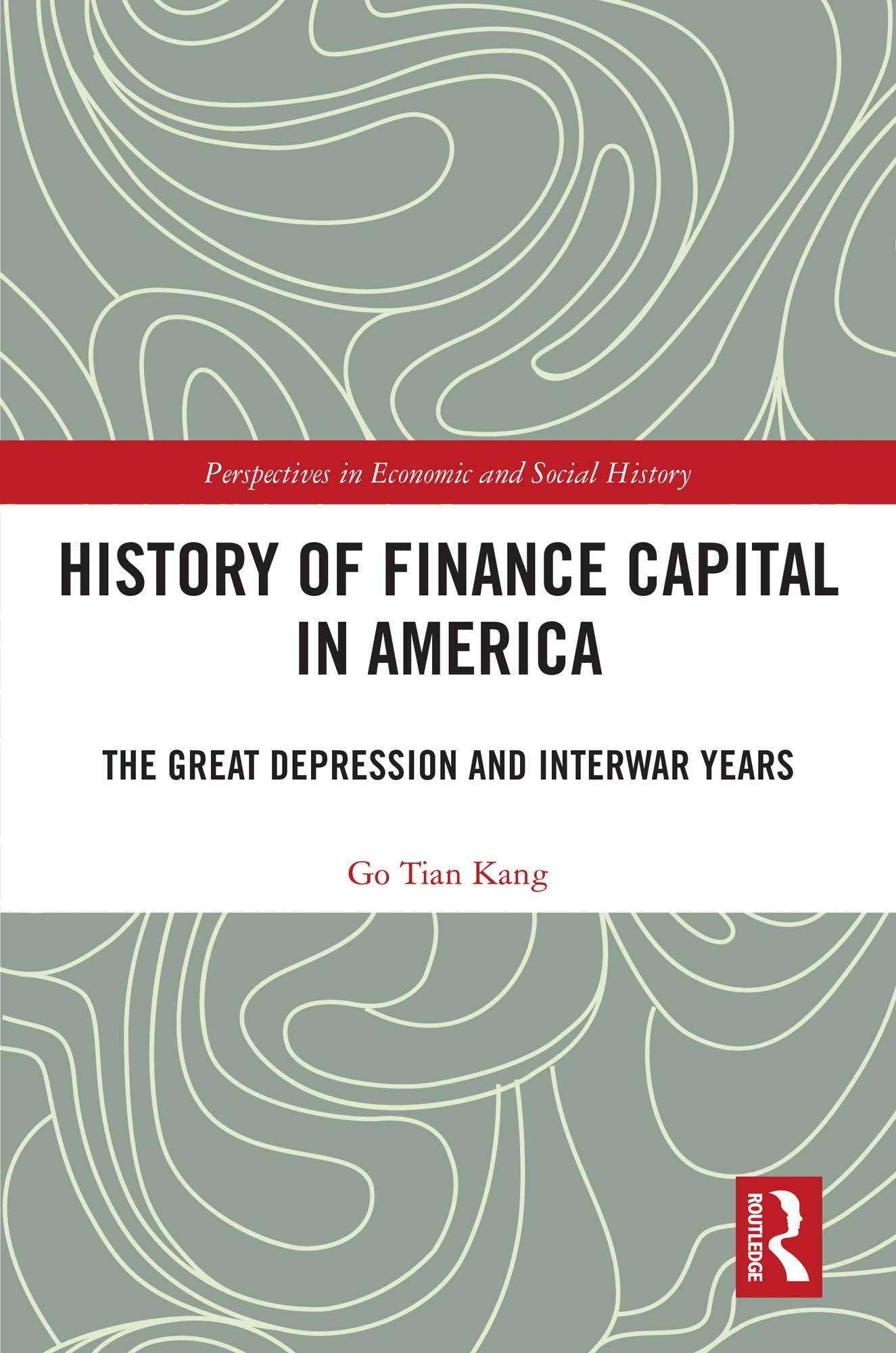
Go details through institutional analysis how major financial institutions (including banks and insurance companies), industries, and the U.S. government behaved and linked with each other during the Great Depression and interwar period.
Drawing on data that has not been widely used since the late thirties – including congressional hearings, financial data, and government reports concerning economic concentration in the Depression era – Go presents a general picture of American finance capital on the eve of World War II. He details the emergence of important new financial‑industrial powers in the 1920s that challenged the Wall Street’s established order on the eve of Great Depression, the response of the Wall Street’s finance capital to the challenge, and its renewed dominance as well as the growing community of interests between finance and industry under the Depression. He also points out the role of Wall Street’s finance capital in financing the Reconstruction Finance Corporation in 1932, the New Deal, and the emerging war economy.
With its coverage of primary sources, this book will interest researchers and advanced undergraduate students taking American history, political science, and institutional economics.
Betala smidigt med kort, Klarna, Apple Pay eller Google Pay. Är du inte nöjd har du alltid 14 dagars ångerrätt. Läs mer i våra villkor. Har du några frågor, mejla oss på hello@memmo.org.
Memmo gör det enklare att plugga – var du än är i världen. Hos oss samlar du kursböcker och smarta studieverktyg på ett och samma ställe: sammanfattningar, quiz, poddar och flashcards. Och så Ted, din studiekompis som svarar på allt du undrar. Över 50 000 studenter pluggar redan här – byggt för att du ska lära dig snabbare och stressa mindre.