
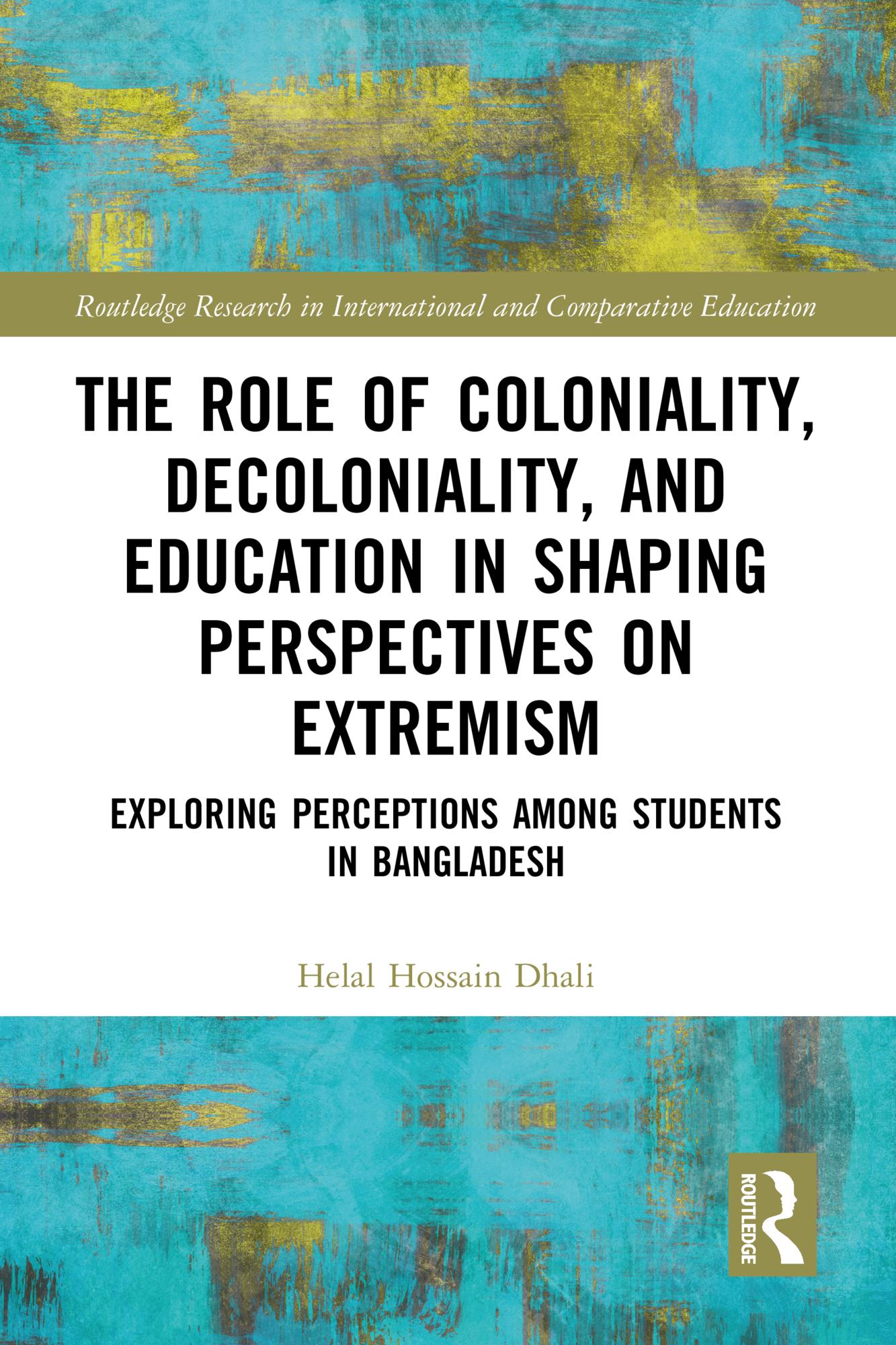
This book extends a comprehensive overview of the treatment of extremism in education in Bangladesh, using a study of perceptions among students to explore proactive measures for the prevention of various types and forms of extremism prevalent among youth.
It offers a critical, holistic, and student-centred study of the role of formal education in shaping perceptions of extremism and intersectional differences among individuals, drawing on data from university students. The author employs post-colonial theory and multicultural educational approaches to highlight how understandings of extremism differ across young adults and policymakers. Ultimately, it demonstrates that students’ overall understanding of extremism is much broader than that of policymakers, and how understandings differ between male and female students at the intersection of rural and urban locations and socio-economic positions. As such, it foregrounds a need to involve and organize formal education as a proactive means to raise awareness and counter all forms of extremism, through incorporating specific teaching strategies into pedagogical practices to foster an anti-communalist, humanistic, critical multicultural, and cosmopolitan outlook among students.
It will appeal to scholars and researchers with interests across multicultural education, comparative and international education, the sociology of education, extremism, and conflict and peace studies.
Betala smidigt med kort, Klarna, Apple Pay eller Google Pay. Är du inte nöjd har du alltid 14 dagars ångerrätt. Läs mer i våra villkor. Har du några frågor, mejla oss på hello@memmo.org.
Memmo gör det enklare att plugga – var du än är i världen. Hos oss samlar du kursböcker och smarta studieverktyg på ett och samma ställe: sammanfattningar, quiz, poddar och flashcards. Och så Ted, din studiekompis som svarar på allt du undrar. Över 50 000 studenter pluggar redan här – byggt för att du ska lära dig snabbare och stressa mindre.