
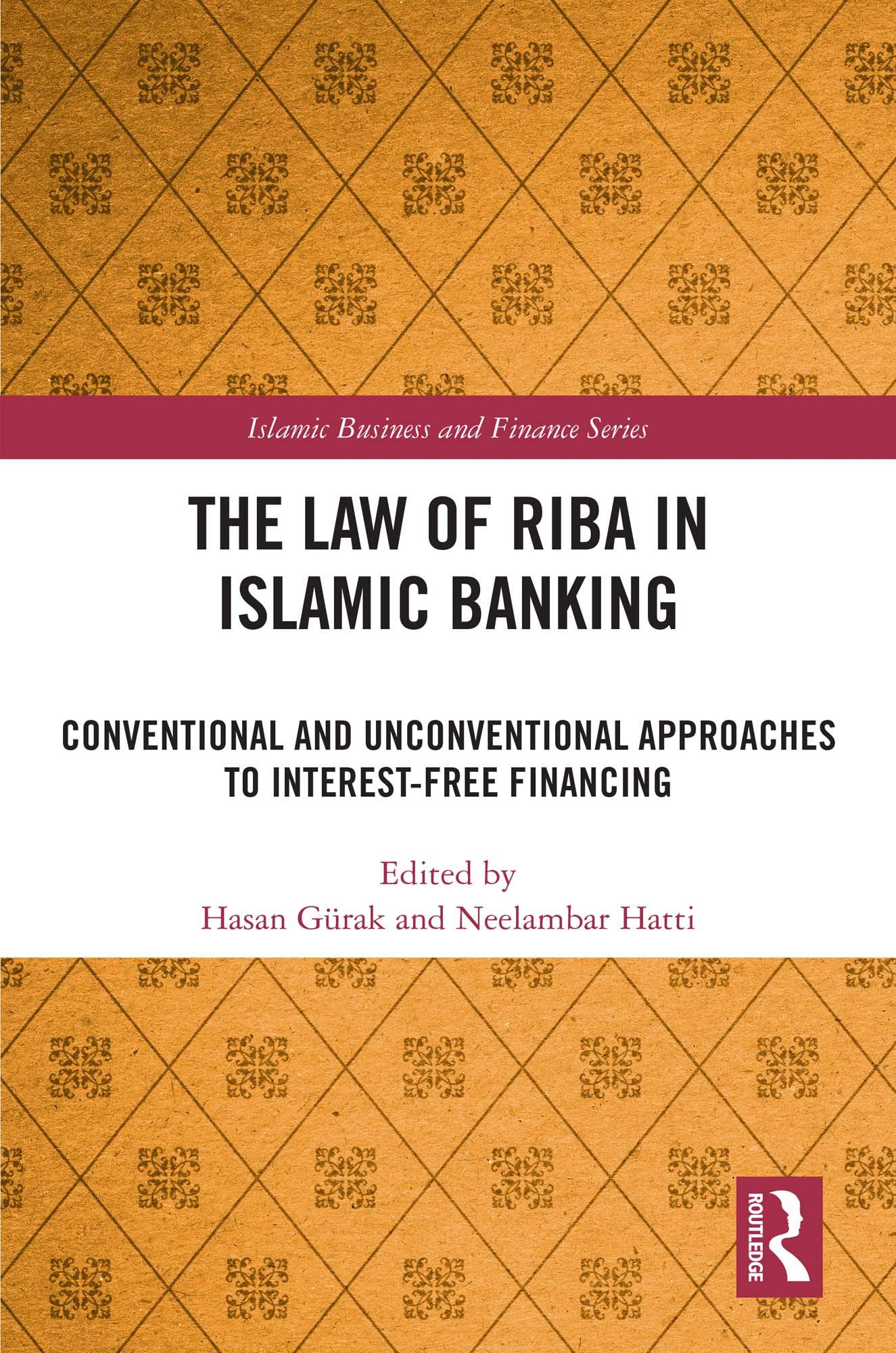
The issue of riba, that is, interest/the "excess" or "surplus" on loans is crucial for both Islamic and non-Islamic countries. Western economic systems use interest to distribute financial resources efficiently for investment and/or consumption, while Islamic economies pursue a completely different strategy for financing loans, which adheres to Islamic laws and prohibits the activities of conventional banking systems with regard to interest. This book argues that there is scope for new definitions and analysis based on alternative concepts which respect Islamic values and principles, yet pave the way for modification and debate.
The book comprises of two parts. Theoretical issues are dealt with in the first section. The first two chapters examine conventional Islamic views on the prohibition of riba, while Chapters 3 and 4 contain unprecedented and alternative theoretical analysis based on concepts such as "earned" (halal-permitted-legal) vs. "unearned" (haram-impermissible-illegal) income and SUKUK, that is, Islamic interest-free bonds. The second part of the book tackles another unconventional aspect of Islamic finance, that is, the concept of NAS. The book considers whether the NAS-influenced anti-inflationary interest policy was a success or failure. Empirical data is evaluated in terms of bank incomes, inflation rate, interest rate, and the distribution of income.
This book will be a useful guide for students, scholars, and researchers of Islamic banking and finance.
Betala smidigt med kort, Klarna, Apple Pay eller Google Pay. Är du inte nöjd har du alltid 14 dagars ångerrätt. Läs mer i våra villkor. Har du några frågor, mejla oss på hello@memmo.org.
Memmo gör det enklare att plugga – var du än är i världen. Hos oss samlar du kursböcker och smarta studieverktyg på ett och samma ställe: sammanfattningar, quiz, poddar och flashcards. Och så Ted, din studiekompis som svarar på allt du undrar. Över 50 000 studenter pluggar redan här – byggt för att du ska lära dig snabbare och stressa mindre.